
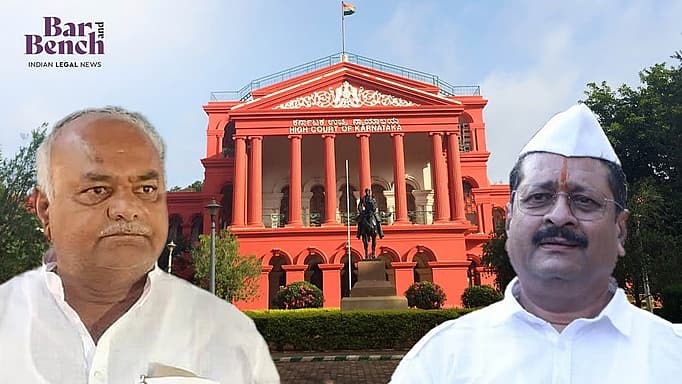
Karnataka HC: No Independent Witness Needed for Defamation Cognisance
Summary
- The Karnataka High Court dismissed a plea by expelled BJP MLA Basanagouda Ramangouda Patil Yatnal to quash a criminal defamation case.
- The case was filed by Congress MLA Shivananda S Patil over remarks made by Yatnal in a media interview broadcast on April 30, 2025.
- Yatnal argued the trial court erred by taking cognisance without examining a witness to confirm lowered reputation.
- The High Court ruled that magistrates are not invariably required to examine a witness other than the complainant at the cognisance stage of a defamation case.
- This requirement depends on the specific nature of the alleged imputation and the facts of the case, as per the former Section 499 IPC, now Section 356(1) BNS.
What Happened
The High Court's ruling explicitly stated that, at the stage where a magistrate takes cognisance of a criminal defamation complaint, there is no invariable requirement to insist on examining a witness other than the complainant.
The Karnataka High Court recently rejected a petition seeking to quash a criminal defamation case, a decision that upholds the proceedings against an expelled legislator. Justice Anant Ramanath Hegde presided over the ruling, which saw former BJP MLA Basanagouda Ramangouda Patil Yatnal's challenge to the criminal charges dismissed. The case stems from remarks Yatnal made concerning Congress MLA Shivananda S Patil.
These allegedly defamatory statements were broadcast during a media interview on April 30, 2025, appearing on the YouTube channel Gadinada Kranti. Yatnal had sought to have the criminal proceedings against him halted, contending that the initial trial court had made an error in its procedure. His plea specifically targeted the trial court's decision to take cognisance of the complaint without first ensuring the examination of an independent witness.
Legal Interpretation of Cognisance
Central to Yatnal's argument was the assertion that the trial court should have examined a witness, other than the complainant, who could confirm that Shivananda S Patil’s reputation had indeed been diminished in their personal estimation. This procedural point, Yatnal argued, was a prerequisite for the court to properly take cognisance of the defamation complaint. However, the Karnataka High Court firmly rejected this interpretation, clarifying the requirements for initiating such proceedings.
The High Court's ruling explicitly stated that, at the stage where a magistrate takes cognisance of a criminal defamation complaint, there is no invariable requirement to insist on examining a witness other than the complainant. This witness would typically be expected to testify that the complainant's reputation was lowered in their own estimation. The court emphasized that the necessity for such a witness examination is contingent upon the specific nature of the alleged imputation and the unique facts presented in each individual case. The ruling provides important clarity on the process of cognisance under the former Section 499 IPC, now Section 356(1) of the Bharatiya Nyaya Sanhita defamation provisions.
Implications for Defamation Cases
This significant ruling by the Karnataka High Court clarifies a crucial aspect of criminal defamation law in India, particularly concerning the initial stages of a case. The court's interpretation of Explanation-4 to the former Section 499 of the Indian Penal Code (IPC), now Section 356(1) of the Bharatiya Nyaya Sanhita (BNS), directly addresses the evidentiary burden at the cognisance stage. The court held that the phrase "in the estimation of others" does not impose a mandatory requirement for a non-complainant witness to be examined at the point of taking cognisance and issuing process.
Justice Anant Ramanath Hegde's decision means that magistrates are not compelled to seek external validation from a third-party witness regarding the lowering of reputation before proceeding with a criminal defamation case. This reduces a potential procedural hurdle for complainants and narrows a common ground for defendants like Patil Yatnal to quash defamation proceedings early on. The ruling underscores that the decision to examine a criminal defamation India witness beyond the complainant rests on the specific circumstances of the alleged defamatory act, rather than being a universal prerequisite. This Karnataka High Court defamation ruling will undoubtedly influence future prosecution and defense strategies in such matters.
Practical Implications
This ruling clarifies that magistrates are not invariably required to examine a witness other than the complainant at the cognisance stage of a criminal defamation case. Lawyers should be aware that this reduces the initial evidentiary burden for complainants and limits a common ground for challenging the initiation of defamation proceedings, impacting both prosecution and defense strategies in such cases.
Source
How does this affect you?
Get an AI analysis of this article grounded in your jurisdictions, practice areas, and any policy documents you've uploaded to Wansom.
Finish Reading the Full Story and the Expert Analysis.
Get the latest legal & regulatory intelligence in India
Wansom is AI and can make mistakes.