
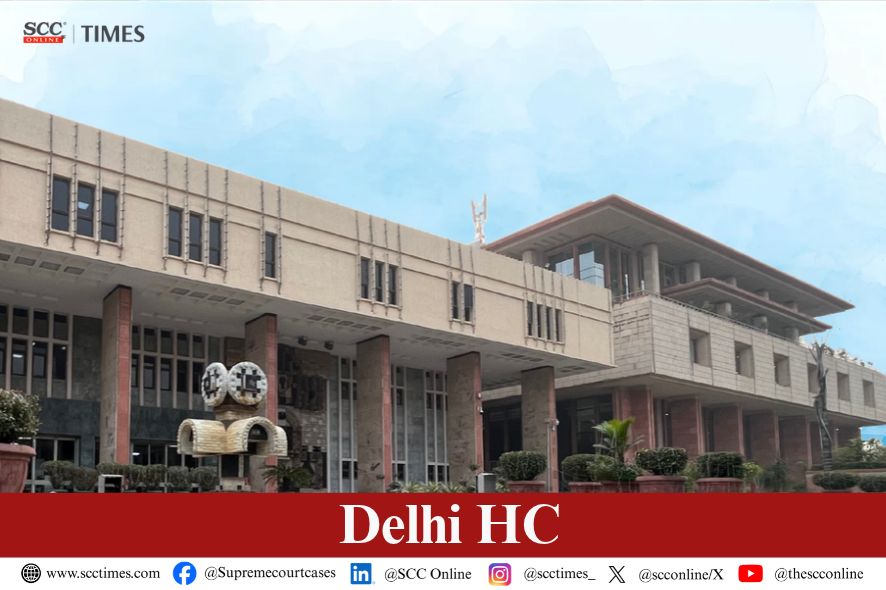
Delhi High Court: Review Petition Scope Strictly Defined
Summary
- The Delhi High Court recently clarified the strict scope of review petitions.
- Review petitions under Order 47 Rule 1 CPC cannot be used as a substitute for an appeal.
- A review is permissible only if there is an error apparent on the face of the record.
- Alternatively, a review can be sought upon the discovery of new and important evidence.
- These conditions prevent the re-litigation of cases under the guise of a review.
What Happened
The Delhi High Court recently underscored the precise boundaries governing review petitions, emphasizing that such applications cannot serve as a substitute for an appeal.
The Delhi High Court recently underscored the precise boundaries governing review petitions, emphasizing that such applications cannot serve as a substitute for an appeal. The court explicitly reiterated the stringent conditions under which a review of a previous order or judgment may be permitted, aligning its stance with established legal principles. This clarification is crucial for maintaining the integrity of the judicial process and preventing the misuse of review mechanisms.
Specifically, the High Court affirmed that a review petition, filed under Order 47 Rule 1 of the Code of Civil Procedure (CPC), is only permissible under very limited circumstances. These include the discovery of new and significant evidence or material that was not available despite due diligence at the time of the original proceedings. Furthermore, a review can be considered if there is an error clearly visible on the face of the record itself, indicating an obvious mistake that does not require a re-evaluation of the merits of the case.
The court's pronouncement serves as a reminder to litigants and legal practitioners alike that the power of review is not an avenue for re-arguing a case or seeking a fresh adjudication on points already decided. Instead, it is a narrow corrective measure designed to address specific, identifiable flaws or new information, ensuring that the finality of judicial decisions is upheld while allowing for rectification in exceptional situations.
Legal Context
The legal framework for review petitions in India is primarily enshrined in Order 47 Rule 1 of the Code of Civil Procedure, 1908. This provision grants courts the power to review their own judgments or orders, but strictly within defined parameters. The Delhi High Court's recent reiteration highlights these specific grounds, which are fundamentally distinct from the grounds for an appeal. An appeal involves a higher court examining the correctness of a lower court's decision on both facts and law, whereas a review is confined to the original court correcting its own limited errors.
One of the primary grounds for review, as emphasized by the court, is the presence of an "error apparent on the face of the record." This refers to an obvious and patent mistake that does not require any elaborate argument or detailed examination of evidence to be discerned. It is not an error that needs to be established by a long-drawn process of reasoning or by re-appreciating the evidence. Instead, it must be a self-evident mistake, such as a mathematical miscalculation, a clear oversight of a statutory provision, or a factual inaccuracy that is undeniable from the record itself. The Delhi High Court review powers are thus circumscribed to prevent a re-hearing under the guise of correcting an error.
The second crucial ground for review is the "discovery of new and important matter or evidence." For this ground to be invoked, the party seeking review must demonstrate that the new material was not within their knowledge or could not have been produced by them when the decree or order was passed, despite exercising due diligence. This condition ensures that parties cannot simply hold back evidence and then introduce it later to seek a review, thereby undermining the finality of judgments. The court's emphasis reinforces that this is not an opportunity to present a stronger case that could have been made earlier.
Why It Matters
The Delhi High Court's clear articulation of the scope of review petitions carries significant implications for the administration of justice and legal practice. By firmly stating that a "review not appeal in disguise" is the guiding principle, the court reinforces the fundamental distinction between these two remedies. This distinction is vital for maintaining judicial discipline and preventing an endless cycle of litigation, ensuring that judgments attain finality and parties can move forward.
For legal practitioners, this reiteration serves as a critical reminder regarding the strategic advice they provide to clients. Lawyers must carefully assess whether the grounds for a review petition genuinely fall within the narrow confines of Order 47 Rule 1 CPC. Filing a review application without a clear "error apparent face of record" or the "discovery new important evidence" that meets the stringent criteria is likely to be an exercise in futility, consuming judicial resources and incurring unnecessary costs for litigants.
Ultimately, the court's stance underscores the importance of a meticulous approach to litigation at every stage. It highlights that the review mechanism is an exceptional remedy, not a routine second chance to re-litigate a case. This judicial clarity helps to manage expectations, ensuring that parties understand the limited nature of "Delhi HC review petition scope" and the high bar for successfully challenging a judgment through this specific legal avenue.
Practical Implications
Lawyers must advise clients that review petitions under Order 47 Rule 1 CPC are strictly limited to errors apparent on the face of the record or discovery of new evidence, and cannot be used as a substitute for an appeal to re-argue a case, thus requiring careful assessment of grounds before filing.
Source
Source: Original reporting via SCC Times
How does this affect you?
Get an AI analysis of this article grounded in your jurisdictions, practice areas, and any policy documents you've uploaded to Wansom.
Finish Reading the Full Story and the Expert Analysis.
Get the latest legal & regulatory intelligence in India
Wansom is AI and can make mistakes.