
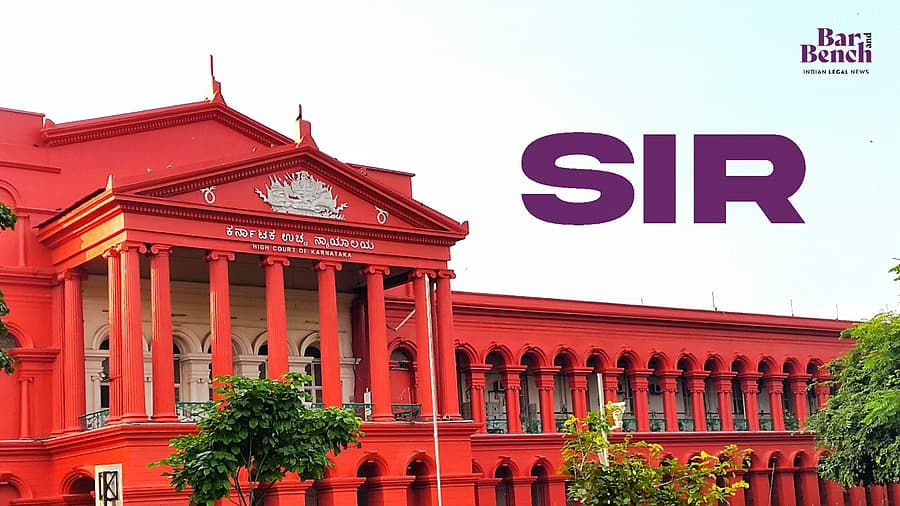
Karnataka High Court: Stays FIRs Against BJP Agents Over Voter Deletion
Summary
- The Karnataka High Court stayed criminal proceedings against two BJP booth agents accused of attempting to delete voters.
- Justice Anant Ramanath Hegde ruled that the FIRs were premature as the electoral authority had not decided on the Form 7 applications.
- The cases involved allegations of attempting to remove specific community voters during the Special Intensive Revision in Bengaluru.
- The court emphasized that the competent electoral officer, not the police, should first decide on voter deletion requests.
- The ruling highlights the importance of administrative process completion before initiating criminal charges in electoral matters.
What Happened
The court's decision effectively places a check on the immediate criminalization of actions within the electoral framework, advocating for a full administrative review before police intervention.
The Karnataka High Court recently intervened in cases involving two booth-level agents (BLAs) affiliated with the BJP, issuing a stay on criminal proceedings initiated against them. These agents, identified as GS Vasanthalakshmi and Deepak Singh R, were facing separate First Information Reports (FIRs) alleging their involvement in attempts to remove specific community voters' names from the electoral rolls. The incidents occurred within Bengaluru’s Malleshwaram Assembly constituency during the Special Intensive Revision (SIR) exercise, a period dedicated to updating voter lists.
The petitioners had challenged these FIRs, which claimed that Form 7 applications had been submitted with the intent to delete the names of voters from particular communities who were still residents of the constituency. One FIR, lodged at the Vyalikaval police station, pertained to applications seeking the deletion of 778 voters in Ward No. 64. A second, distinct FIR, registered at the Yeshwanthapura station, concerned objections related to 136 voters in Ward No. 45. Both Vasanthalakshmi and Singh, represented by Senior Advocate M Aruna Shyam, asserted their status as authorized agents of a political party, arguing they were fully entitled to submit such applications as part of the established electoral process in India. This Karnataka High Court BJP agents voter deletion stay marks a significant development in the ongoing scrutiny of electoral practices.
Legal Context and Court's Rationale
Justice Anant Ramanath Hegde, presiding over the cases, made a crucial observation regarding the timing of the police action. He noted that the FIRs appeared to be premature, particularly because the competent electoral authority had not yet rendered a decision on the Form 7 applications for voter deletion. The court orally questioned the basis for criminal charges, stating that the "concerned officer will decide" on the applications and asking, "What is the offence here?" This line of reasoning underscores the principle that administrative processes should typically run their course before criminal proceedings are initiated in such matters.
The court's stance highlights the procedural hierarchy in electoral disputes, emphasizing that the initial determination of the validity of voter deletion requests rests with the designated electoral authority. The petitioners' counsel had also argued that the complaints leading to the FIRs were premature, aligning with the court's view on the electoral authority decision prematurity. This ruling by Justice Anant Ramanath Hegde provides a critical perspective on the appropriate stage for police intervention in cases related to the Special Intensive Revision electoral rolls.
Why It Matters
This voter deletion FIR stay carries significant implications for the conduct of electoral processes and the interface between administrative and criminal law in India. The ruling clarifies that police action, specifically the registration of FIRs for alleged voter deletion attempts, may be deemed premature if a competent electoral authority has not yet adjudicated the underlying Form 7 applications. This emphasizes the primacy of the administrative review process, suggesting that criminal charges should not precede a definitive decision by the body specifically tasked with managing electoral rolls.
Lawyers advising political parties or individuals involved in electoral processes should particularly note this ruling. It underscores that the submission of Form 7 applications, even if contested, is part of a prescribed electoral procedure, and allegations related to these submissions should first be addressed by the electoral authority. The court's decision effectively places a check on the immediate criminalization of actions within the electoral framework, advocating for a full administrative review before police intervention. This approach ensures that the electoral authority's role in maintaining accurate voter lists is respected and that criminal proceedings are reserved for instances where clear offenses are established after due administrative process.
Practical Implications
Lawyers advising political parties or individuals involved in electoral processes should note this ruling as it clarifies the prematurity of police action in voter deletion cases before the competent electoral authority has rendered a decision on Form 7 applications, emphasizing the primacy of administrative process over criminal charges at an early stage.
Source
How does this affect you?
Get an AI analysis of this article grounded in your jurisdictions, practice areas, and any policy documents you've uploaded to Wansom.
Finish Reading the Full Story and the Expert Analysis.
Get the latest legal & regulatory intelligence in India
Wansom is AI and can make mistakes.