
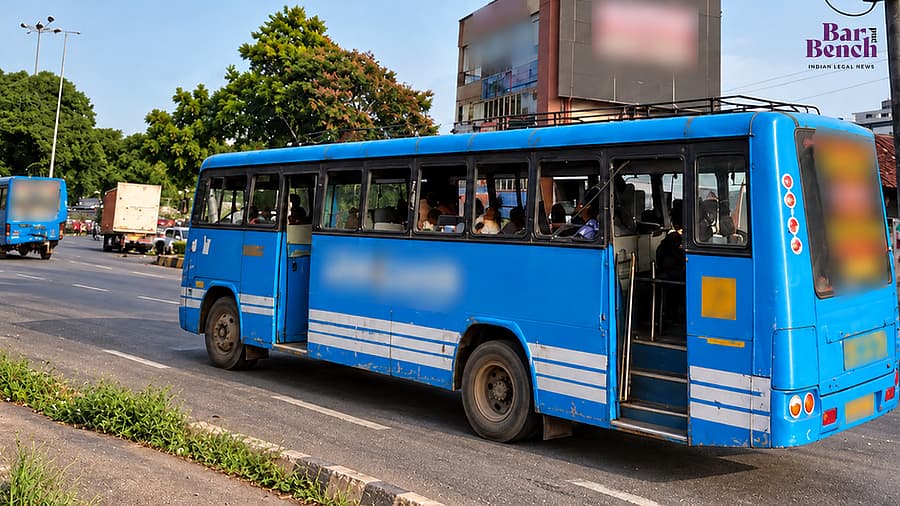
Kerala High Court: Rebukes Police on Private Bus Safety Enforcement
Summary
- The Kerala High Court heavily criticized traffic police for inadequate enforcement of road safety rules, especially concerning private buses.
- Justice Devan Ramachandran stated that any vehicle becomes a 'killing machine' if not driven carefully and called for stricter rule enforcement.
- The court rejected schedule timings as an excuse for reckless driving, emphasizing that safety cannot be compromised.
- Concerns arose from incidents in Kochi and Kannur, including a bus overtaking through a pedestrian area and another knocking down two people.
- This judicial stance signals increased scrutiny for private bus operators and greater accountability for traffic police in Kerala.
Judicial Scrutiny on Reckless Driving
The court firmly rejected the notion that adherence to schedule timings could ever justify endangering lives on the road.
The Kerala High Court recently delivered a sharp rebuke to traffic police authorities, expressing profound concern over the lax enforcement of road safety regulations across the state. This criticism was particularly directed at private bus operators, following a series of documented incidents involving dangerous and reckless driving practices.
During proceedings in the case of CP Ajithkumar & anr v State of Kerala & ors, Justice Devan Ramachandran, who was overseeing a matter related to road conditions and overall public safety, highlighted that any vehicle, irrespective of its type, can become a lethal instrument if not operated with extreme caution. He stressed the imperative for more stringent application of existing traffic laws to curb such hazardous behavior on public roads. The court's concerns regarding **Kerala High Court private bus safety** were initially triggered by reports of two specific incidents involving private buses in Kochi and Kannur during an earlier hearing.
Court Rejects Excuses for Dangerous Conduct
Justice Ramachandran directly challenged the authorities on their failure to ensure that buses remain confined to designated slow lanes, a measure that could significantly enhance safety. He also took strong exception to the common defense put forth by bus operators, who often cite the need to maintain strict schedule timings as a justification for their aggressive driving. The court firmly rejected the notion that adherence to schedule timings could ever justify endangering lives on the road.
In a powerful statement, Justice Ramachandran underscored that no schedule could serve as an excuse for actions that put human lives at risk. He reiterated his earlier observation, stating that a vehicle, whether a bus or a car, transforms into a 'killing machine' when not driven with the requisite caution. This judicial stance by **Justice Devan Ramachandran traffic** indicates a zero-tolerance approach to negligence, emphasizing that operational pressures do not supersede public safety.
Implications for Enforcement and Operators
This judicial intervention signals a significant shift towards heightened scrutiny of private bus operations and a more rigorous approach to **Kerala road safety enforcement**. The High Court's strong remarks are likely to compel traffic police to intensify their efforts in monitoring and penalizing instances of **reckless driving India**, particularly among commercial passenger vehicles. The focus on **traffic police accountability Kerala** suggests that enforcement agencies themselves will face greater pressure to demonstrate effective oversight.
For transport companies and compliance officers, this ruling implies a need for immediate review of operational protocols and driver training programs to ensure strict adherence to safety norms. The court's unequivocal rejection of 'timings' as an excuse for dangerous driving means that operators can no longer deflect responsibility for their drivers' actions. This could also have significant ramifications for **motor accident claims Kerala**, potentially leading to higher liability for operators in cases where reckless driving is a contributing factor, as the judiciary has clearly articulated its expectation for careful and responsible vehicle operation.
Practical Implications
Lawyers advising transport companies and compliance officers for private bus operators in Kerala should note the High Court's strong stance, which signals increased scrutiny, stricter enforcement of road safety rules, and potentially higher liability for reckless driving incidents.
Source
How does this affect you?
Get an AI analysis of this article grounded in your jurisdictions, practice areas, and any policy documents you've uploaded to Wansom.
Finish Reading the Full Story and the Expert Analysis.
Get the latest legal & regulatory intelligence in India
Wansom is AI and can make mistakes.