
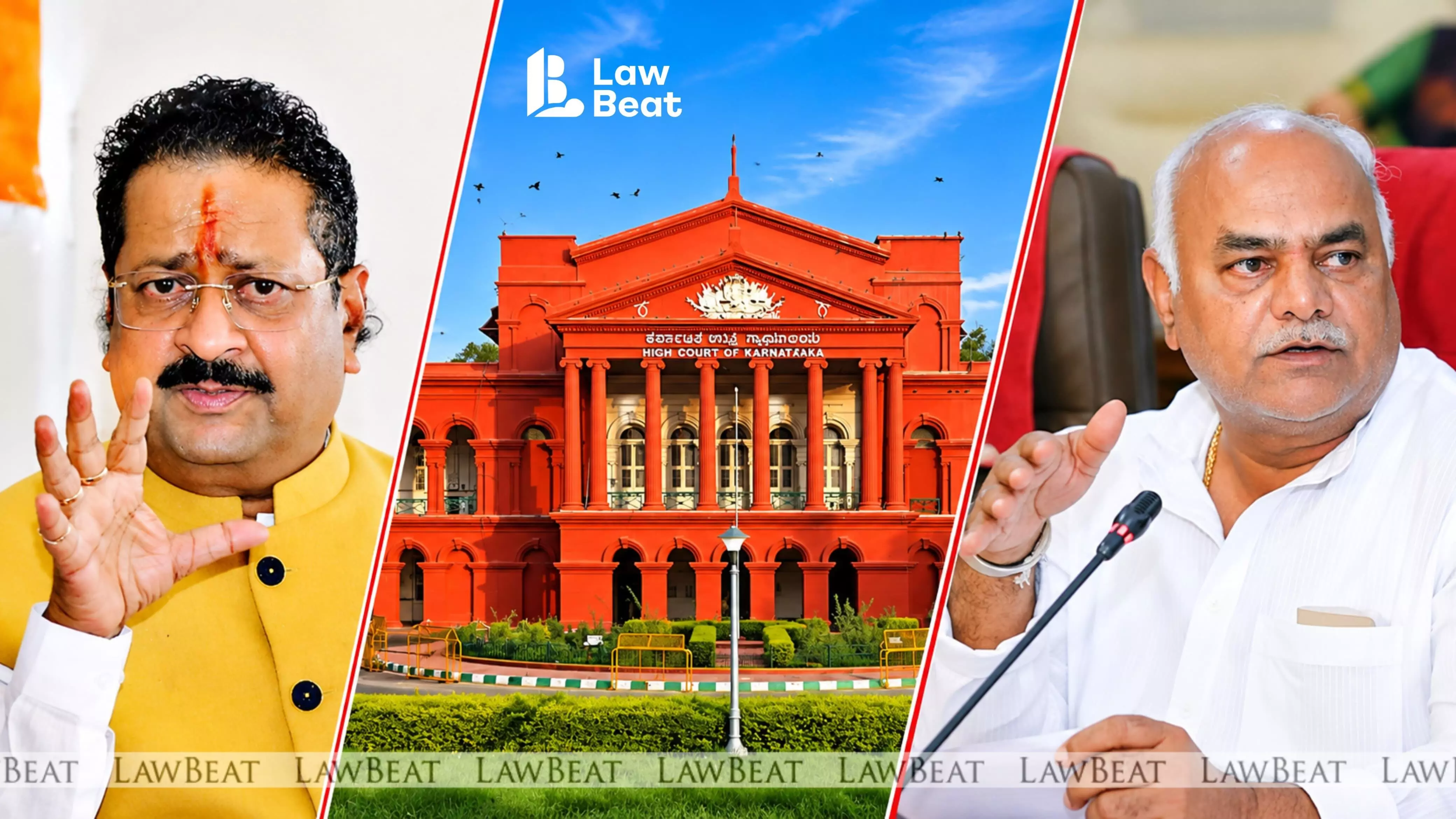
Karnataka HC: Section 356 BNS Defamation Witness Not Needed for Cognizance
Summary
- The Karnataka High Court ruled that a Magistrate can take cognizance of criminal defamation without a witness explicitly stating the complainant's reputation fell in their own estimation.
- Justice Anant Ramanath Hegde held that inherently defamatory imputations or witness testimony confirming lowered reputation "in the estimation of others" suffice.
- The ruling came in a case where Vijayapura City MLA Basanagouda Ramanagouda Patil Yatnal challenged a defamation complaint filed by Shivananda S. Patil.
- The court clarified the interpretation of Explanation 4 to Section 356(1) of the Bharatiya Nyaya Sanhita regarding witness testimony at the cognizance stage.
- This decision impacts the evidentiary requirements for initiating criminal defamation proceedings under the new BNS.
Judicial Scrutiny of Defamation Cognizance
The Karnataka High Court recently affirmed that a Magistrate can take cognizance of criminal defamation charges without requiring a witness to explicitly state that the complainant's reputation suffered in their personal view.
The Karnataka High Court recently affirmed that a Magistrate can take cognizance of criminal defamation charges without requiring a witness to explicitly state that the complainant's reputation suffered in their personal view. This significant ruling emerged from a challenge brought by Vijayapura City MLA Basanagouda Ramanagouda Patil Yatnal against a criminal defamation case initiated by Shivananda S. Patil. Justice Anant Ramanath Hegde, presiding over the matter, clarified that if an imputation is inherently capable of damaging an individual's moral or intellectual standing, the court may proceed based on the complainant's statements and testimony from other witnesses confirming a decline in reputation "in the estimation of others".
The original complaint against Yatnal was lodged on July 18, 2025, concerning remarks he allegedly made on April 30, 2025, during a broadcast on the "Gadinada Kranti" channel, which was subsequently distributed via YouTube. The Additional Chief Judicial Magistrate in Bengaluru took cognizance of the offense on January 24, 2026, and issued summons. This decision was based on a review of a pen drive transcript, video clippings, and the recorded statements of two witnesses. The Magistrate's order specifically noted, "Acting under Section 223 of the BNSS 2023, Cognizance of the offence punishable under Section 356(2) of the Bharatiya Nyaya Sanhita (BNS) 2023, which replaced Section 500 of the Indian Penal Code, 1860, is taken as against the accused." Yatnal's subsequent revision petition was dismissed by the Additional Sessions Judge, Bengaluru, on August 18, 2026, leading to the current High Court challenge.
Interpreting Defamation Under BNS
At the core of the Karnataka High Court's deliberation was the interpretation of Explanation 4 to Section 356(1) of the Bharatiya Nyaya Sanhita (BNS), 2023, which governs criminal defamation. The court specifically posed the question of whether this explanation mandates a witness to testify that the complainant's reputation diminished in that witness's personal assessment, or if it suffices for a witness other than the complainant, or other material, to indicate a lowered reputation "in the estimation of others." This distinction was central to the arguments presented by both legal teams.
Advocate Dalwai Venkatesh, representing Yatnal, contended that the requirements of Explanation 4 to Section 499 of the Indian Penal Code (IPC) and Section 356 BNS had not been satisfied. He highlighted that while the complainant's two witnesses confirmed a lowered reputation, they also stated that the allegations themselves were false. Venkatesh argued that for cognizance to be taken, the individual whose estimation of the complainant's reputation was lowered must personally make a statement to that effect before the court. Conversely, Senior Advocate Ravi B. Naik, appearing for Shivananda Patil, asserted that Yatnal had not disputed making the statements, which were "per se defamatory" and had been widely disseminated on social media. Naik pointed out that two of the three witnesses cited by the complainant had been examined and affirmed that Patil's reputation had declined in the estimation of others. He maintained that given the inherently defamatory nature of the statements, the Magistrate was not obligated to insist on a third party testifying to a personal reduction in the complainant's reputation at the cognizance stage.
Impact on Criminal Defamation Proceedings
The Karnataka High Court's ruling provides crucial clarity on the evidentiary threshold for taking cognizance in criminal defamation cases under the new Bharatiya Nyaya Sanhita. By dismissing Yatnal's petition, the court affirmed that the legal standard for establishing a prima facie case of defamation does not impose a rigid requirement for witnesses to articulate a personal belief that the complainant's reputation has been damaged in their own eyes. Instead, the court emphasized that the inherent defamatory nature of the imputation itself, or testimony from witnesses indicating a decline in reputation "in the estimation of others," is sufficient.
This interpretation streamlines the initial stages of criminal defamation proceedings, preventing unnecessary procedural hurdles that could arise from an overly strict reading of witness testimony requirements. The court's plain reading of Explanation 4 suggests that the phrase "in the estimation of others" is not narrowly confined to the personal opinion of the examining witnesses but encompasses a broader societal perception. This decision by the Karnataka High Court, specifically addressing Section 356 BNS defamation witness Yatnal, sets a precedent for how such cases will be handled, particularly regarding the crucial stage of cognizance and the nature of evidence required to proceed.
Practical Implications
Lawyers handling criminal defamation cases under the Bharatiya Nyaya Sanhita (BNS) in India must note that the Karnataka High Court has clarified that a Magistrate can take cognizance without a witness explicitly stating their *own* estimation of the complainant's lowered reputation. It suffices if the imputation is inherently defamatory or other witnesses confirm lowered reputation 'in the estimation of others', impacting evidence strategy and arguments at the initial stages of such proceedings.
Source
How does this affect you?
Get an AI analysis of this article grounded in your jurisdictions, practice areas, and any policy documents you've uploaded to Wansom.
Finish Reading the Full Story and the Expert Analysis.
Get the latest legal & regulatory intelligence in India
Wansom is AI and can make mistakes.