
Second Circuit: Karl Jordan Jr. Bail Appeal Challenged by Prosecutors
Summary
- The Second Circuit is reviewing a federal judge's decision to grant bail to Karl Jordan Jr. after his murder conviction in the Jam Master Jay case was overturned.
- U.S. District Judge LaShann DeArcy Hall granted Jordan $1 million bail, citing his nearly six-year detention as having 'blunted' the danger associated with his drug charges.
- Prosecutors argued Judge Hall disregarded Jordan's alleged murder commission and arbitrarily assessed his past violent acts.
- Appellate judges questioned the 'blunted danger' rationale and its implications for federal criminal bail standards.
- A Second Circuit judge advised attorneys to expedite the appeal of Jordan's acquittal decision, emphasizing the importance of timely review when liberty is at stake.
Second Circuit Scrutinizes Karl Jordan Jr. Bail Appeal
Judge Nardini underscored the importance of expediting criminal appeals, particularly in cases where a defendant's liberty is at stake.
A federal appeals panel on Tuesday closely examined a lower court's decision to grant bail to Karl Jordan Jr., who had his murder conviction in the 2002 killing of hip-hop icon Jam Master Jay overturned. The Second Circuit judges deliberated on whether U.S. District Judge LaShann DeArcy Hall erred in her April 6 bench ruling, which approved a $1 million bail package for Jordan, secured by 17 friends and family members. This hearing focused exclusively on the bail determination, as Jordan, now 42, remains in custody at the Metropolitan Detention Center following a stay granted by Judge Hall herself, pending the government's appeal of both the bail decision and the overturned conviction.
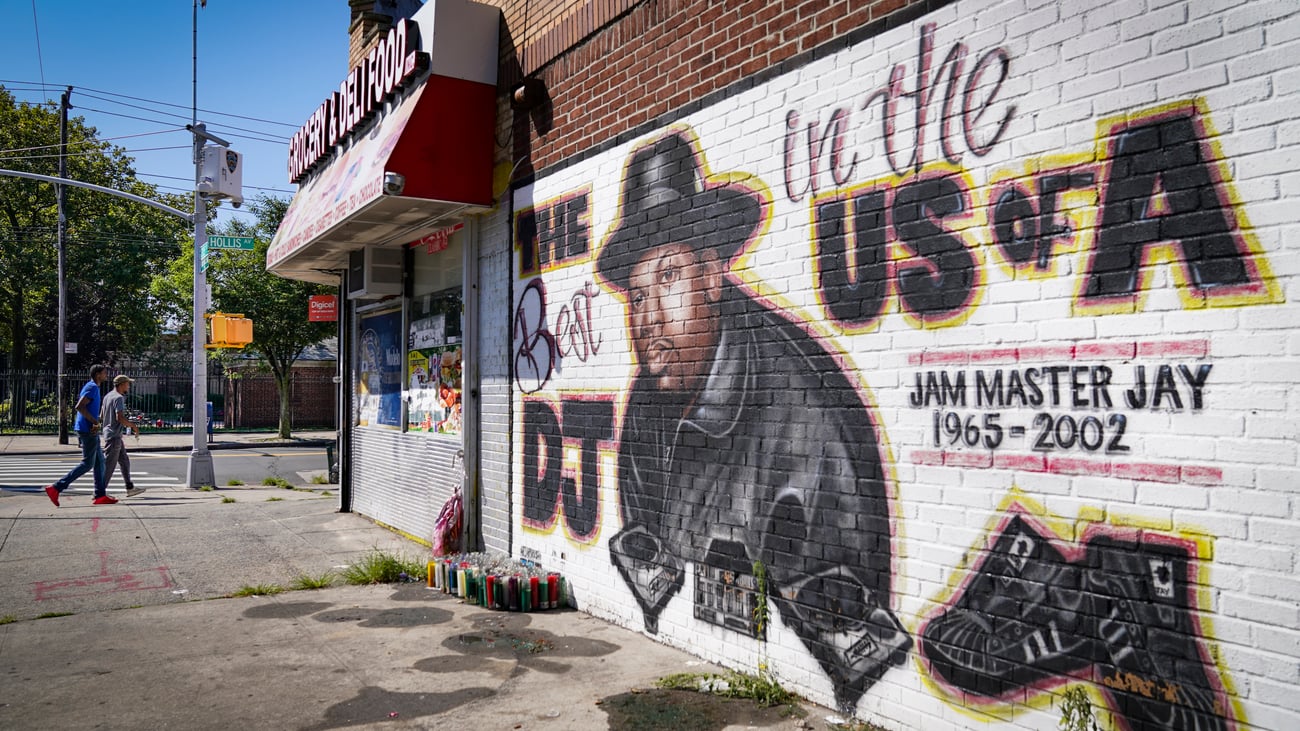
Jordan, the godson of Run-DMC DJ Jason “Jay” Mizell, was accused by prosecutors of shooting and killing Mizell in his Hollis, Queens, recording studio on October 30, 2002, allegedly after a failed drug deal. Decades later, Jordan and co-defendant Ronald Washington were charged with the murder. In 2024, a jury found both men guilty of murder while engaged in narcotics trafficking and firearm-related murder. However, Judge Hall, who presided over the five-week trial, subsequently voided Jordan’s murder conviction late last year, finding the government's evidence linking the killing to narcotics trafficking too tenuous. Jordan is currently awaiting trial on cocaine charges that were severed from the original indictment's murder counts.
Arguments Against Bail and the 'Blunted Danger' Rationale
During the Second Circuit hearing, Assistant U.S. Attorney Miranda Gonzalez argued that Judge Hall had “disregarded Jordan’s commission of the murder” when clearing him for release. Gonzalez contended that the district judge arbitrarily concluded that other violent acts Jordan was accused of, including two nonlethal shootings in 2003, were too far in the past to pose a substantial danger to the community in the present day. The prosecution's appeal highlighted concerns that the lower court's analysis of Jordan's potential dangerousness was flawed, particularly given the gravity of the initial charges and conviction.
Central to the defense's argument, presented by attorney Michael Hueston, was Judge Hall's rationale that Jordan's nearly five-and-a-half years of pre-trial detention had “blunted” the danger associated with the alleged ongoing drug trafficking scheme or conspiracy. Judge Hall had explicitly stated, “In light of the fact that Mr. Jordan has been in custody for the last five and a half years, the court can reasonably conclude that the danger associated with the then-ongoing or alleged ongoing drug trafficking scheme or conspiracy has been blunted.” This assertion became a key point of contention and discussion among the appellate judges, touching upon critical aspects of federal criminal bail standards.
Judicial Scrutiny on Federal Criminal Bail Standards
The appellate judges probed the implications of Judge Hall's 'blunted danger' reasoning. Senior U.S. Circuit Judge Reena Raggi, a George W. Bush appointee, questioned defense attorney Hueston on where to draw the line regarding the impact of long detention periods on future dangerousness. Judge Raggi specifically asked whether the court should consider how many individuals, after release from incarceration, return to drug trafficking due to limited options. Hueston acknowledged the possibility of re-offending but emphasized that the focus should be on the individual defendant's current circumstances rather than a broad generalization.
Senior U.S. Circuit Judge Denny Chin, an Obama appointee, further clarified the defense's position, noting that the period of detention was presented as “one factor, along with others,” in assessing Jordan's current risk. The judges reserved their ruling on the Karl Jordan Jr. Second Circuit bail appeal, indicating a thorough review of the arguments and the lower court's application of federal criminal bail standards. This US v. Jordan detention appeal underscores the complexities of balancing public safety concerns with a defendant's right to liberty, especially after a significant legal development like an overturned conviction.
Expediting Appeals in Cases of Liberty
Beyond the immediate bail appeal, U.S. Circuit Judge William Nardini, a Donald Trump appointee, offered a significant procedural suggestion to the attorneys present. He advised both parties to consider moving to expedite oral argument over Judge Hall’s decision to acquit Jordan of the murder charge, which has not yet been scheduled on the court’s calendar. Judge Nardini underscored the importance of expediting criminal appeals, particularly in cases where a defendant's liberty is at stake.
“You don’t want it just sitting in the pile,” Judge Nardini remarked, urging experienced practitioners to proactively seek accelerated consideration for such critical appeals. This guidance highlights a practical avenue for attorneys navigating complex federal criminal appeals, especially when a Jam Master Jay murder conviction overturned leads to a defendant's continued detention despite a favorable lower court ruling. The advice serves as a reminder that procedural mechanisms exist to ensure timely justice, even in high-profile cases like the US v. Jordan detention appeal.
Practical Implications
This article offers critical insights for criminal defense attorneys and federal prosecutors regarding the Second Circuit's scrutiny of bail decisions, especially when a murder conviction has been overturned. It highlights the arguments around a defendant's long pre-trial detention 'blunting' danger and the procedural advice from the bench on expediting appeals in cases where liberty is at stake, providing a roadmap for similar complex federal criminal appeals.
Source
How does this affect you?
Get an AI analysis of this article grounded in your jurisdictions, practice areas, and any policy documents you've uploaded to Wansom.
Finish Reading the Full Story and the Expert Analysis.
Wansom is AI and can make mistakes.