
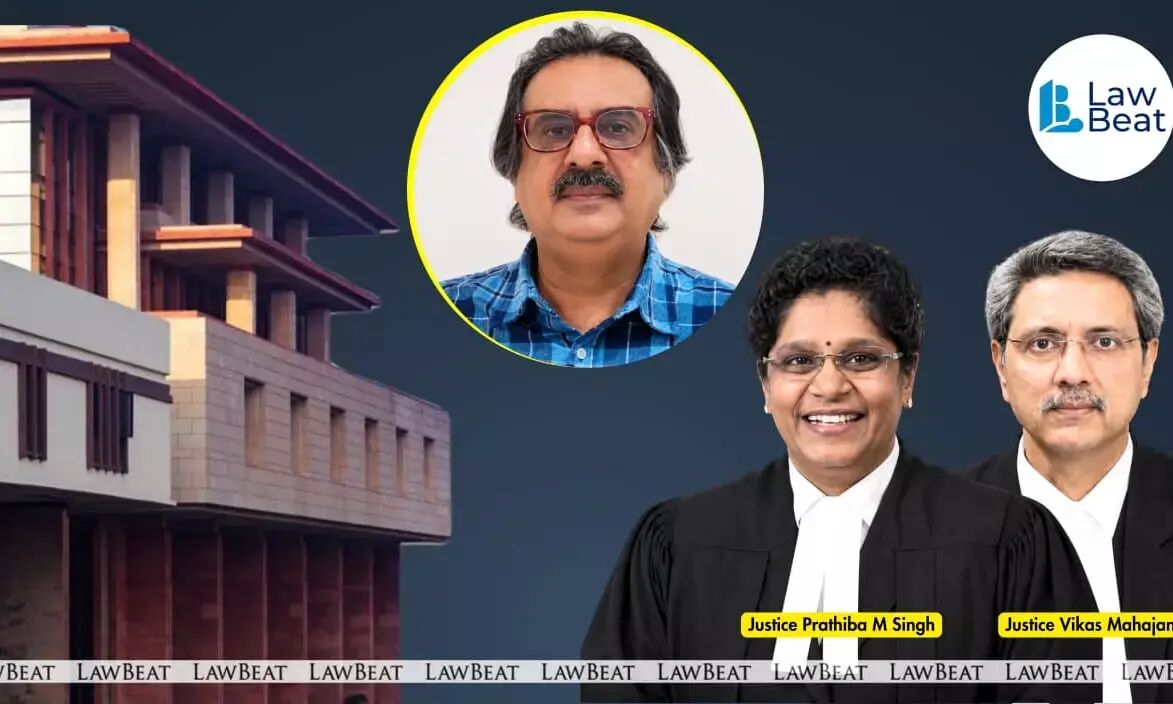
Delhi HC: Kapil Kakar Gets Final Week in Judge Corruption Contempt Case
Summary
- The Delhi High Court granted psychologist Dr. Kapil Kakar one final week to respond to a contempt notice regarding videos alleging corruption against a sitting judge.
- Kakar's new counsel sought a longer adjournment, but the court denied it, emphasizing the urgency of the matter.
- The contempt proceedings originated from social media videos uploaded by Kakar following the Saket building collapse, which the court found prima facie contemptuous.
- The court previously ordered social media platforms like Meta, Google, X, and LinkedIn to remove or block the offending videos.
- The case is scheduled for its next hearing on September 29, 2026, under the Contempt of Courts (Delhi High Court) Rules, 2025.
Court Grants Final Opportunity in Contempt Case
The Delhi High Court's resolute stance against unsubstantiated claims of corruption against its judges underscores the severe consequences for those who cross this line.
The Delhi High Court recently granted psychologist Dr. Kapil Kakar a final week to submit his response to a show-cause notice in ongoing contempt proceedings. These proceedings stem from videos uploaded by Kakar that contain serious allegations of corruption, collusion, and criminality against a sitting High Court judge. The Division Bench, comprising Justice Prathiba M. Singh and Justice Vikas Mahajan, heard the matter and emphasized the urgency of the situation, declining a request for a longer adjournment.
During the recent hearing, Advocate Tanveer Nizam, who has been newly engaged by Dr. Kakar and appeared virtually from Mumbai, requested two to three weeks to prepare the case. Nizam stated his need to file his vakalatnama, thoroughly review the documents, and compile relevant case law before presenting arguments. He also informed the court that Advocate Abhishek Mishra had briefed him and connected him with Kakar, and that he intended to represent the respondent-contemnor. However, the Bench was not inclined to grant such an extended period, noting that Kakar had already received the show-cause notice and that the case involved both the contempt proceedings and a discharge application.
The court reviewed the office report confirming the service of the show-cause notice, which Kakar acknowledged receiving via email. Despite this, no reply had been filed. Consequently, the Bench issued a directive for Kakar to file his response within one week, marking this as his last chance. Additionally, the court mandated that the vakalatnama for Kakar's legal counsel must also be filed within the same one-week timeframe. Senior Advocate N. Hariharan represented the Delhi High Court Bar Association (DHCBA) in the proceedings. The case is now scheduled for its next hearing on September 29, 2026.
Genesis of the Allegations
The contempt proceedings against Dr. Kapil Kakar originated after the Delhi High Court Bar Association brought his social media videos to the court's attention. These videos, which surfaced following the Saket building collapse, contained highly inflammatory accusations against a sitting Delhi High Court judge. The court had initially determined that the content of these videos was prima facie contemptuous, leading to the issuance of a show-cause notice to Kakar.
The High Court had previously observed that Kakar's videos transcended mere criticism of judicial orders, instead making direct allegations of corruption, favouritism, quid pro quo, and criminality against the judge. The language used in these videos was particularly severe, including terms such as “real criminal,” “murderer,” and “habitual offender.” These strong accusations formed the core of the court's concern regarding potential judicial defamation in India.
Legal Framework and Court's Stance
The Delhi High Court has consistently maintained a clear distinction between legitimate criticism of judicial orders and institutions, and unsubstantiated allegations that attribute corruption, collusion, or improper motives to judges. The court has firmly stated that while fair criticism is permissible, baseless accusations, especially those made without a lawful foundation, cannot be equated with acceptable public discourse. This principle underpins the ongoing Delhi High Court contempt proceedings against Kapil Kakar.
Further demonstrating its firm stance, the Division Bench, including Justice Prathiba M. Singh and Justice Vikas Mahajan, had previously directed the issuance of a formal show-cause notice to Kakar under the Contempt of Courts (Delhi High Court) Rules, 2025. This notice demanded an explanation as to why contempt action should not be initiated against him. The court also refused to withdraw its earlier orders that mandated the blocking of Kakar’s social media accounts, citing his expressed intention to continue uploading similar videos through new accounts. Earlier directives, specifically from June 8, had compelled platforms such as Meta, Google, X, and LinkedIn to remove, disable access to, and block URLs containing the offending videos and any substantially similar versions, highlighting the court's proactive measures against the spread of Kapil Kakar videos judge allegations.
Implications for Judicial Integrity
This case, involving Kapil Kakar and the Delhi High Court judge corruption contempt allegations, serves as a critical reminder for legal practitioners advising clients on the strict boundaries of free speech concerning judicial integrity in India. The Delhi High Court's resolute stance against unsubstantiated claims of corruption against its judges underscores the severe consequences for those who cross this line. The proceedings highlight that such actions can lead to significant legal repercussions, including formal contempt proceedings and the removal of content from social media platforms.
The court's actions in this matter reinforce the judiciary's commitment to protecting its reputation and ensuring the proper administration of justice. The ongoing legal battle, particularly concerning the Saket building collapse judge allegations, sends a clear message that while public scrutiny of judicial decisions is a cornerstone of democracy, personal attacks and unfounded accusations against judges will be met with stringent legal action. This case is a significant example of the judiciary's efforts to maintain public trust and uphold the dignity of the courts against unwarranted attacks.
Practical Implications
This case serves as a critical reminder for lawyers advising clients on the strict boundaries of free speech concerning judicial integrity in India. It underscores the Delhi High Court's firm stance against unsubstantiated allegations of corruption against judges, highlighting the severe consequences, including contempt proceedings and social media content removal, for those who cross this line.
Source
How does this affect you?
Get an AI analysis of this article grounded in your jurisdictions, practice areas, and any policy documents you've uploaded to Wansom.
Finish Reading the Full Story and the Expert Analysis.
Wansom is AI and can make mistakes.