
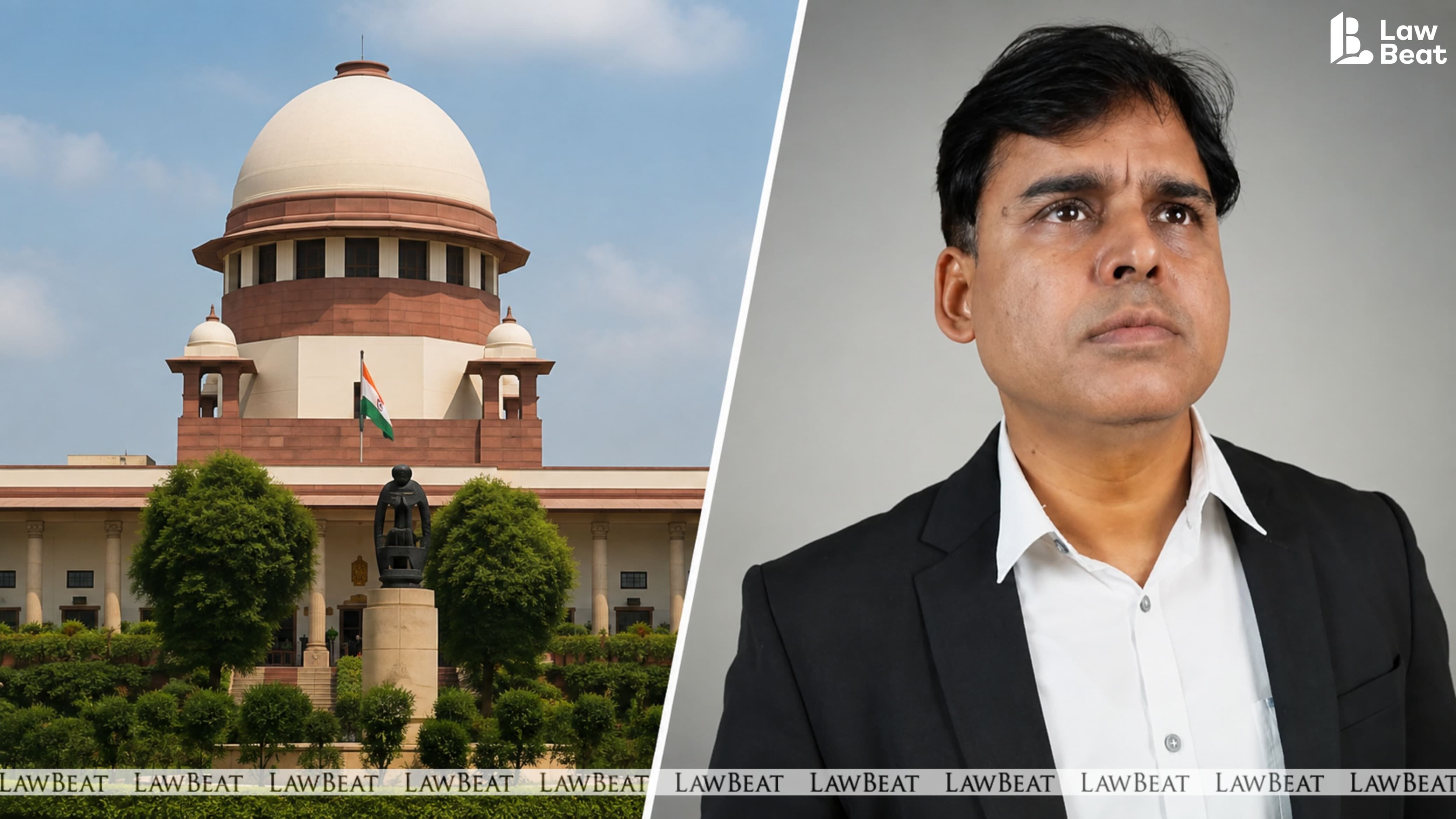
Supreme Court: Ghaziabad Police Must Clarify X Data for Abhishek Upadhyaya
Summary
- The Supreme Court has ordered Ghaziabad Police to clarify their request for journalist Abhishek Upadhyaya's X account data, citing concerns over broad digital footprint requisitions.
- Upadhyaya claims the road rage FIR against him is fabricated and retaliatory, stemming from his investigative reporting on Ram Mandir donation irregularities.
- He fears the police's data request, made under BNSS Section 94, could expose his confidential journalistic sources and lead to their harassment.
- The police sought data from June 1, 2026, a period significantly preceding the alleged August 18, 2026, road rage incident but overlapping with Upadhyaya's Ram Mandir reporting.
Supreme Court Intervenes in Digital Data Request
The Supreme Court has demanded clarification from Ghaziabad Police regarding their request for journalist Abhishek Upadhyaya's X account data, expressing significant concerns over the scope of digital information sought.
The Supreme Court has demanded clarification from Ghaziabad Police regarding their request for journalist Abhishek Upadhyaya's X account data, expressing significant concerns over the scope of digital information sought. During recent proceedings, the court specifically asked the Ghaziabad Police to file an affidavit detailing precisely what kind of information has been requested from X concerning Upadhyaya and how it is necessary for the ongoing investigation into a road rage case. This directive underscores a growing judicial scrutiny over police demands for digital footprints.
Justice Bagchi, presiding over the matter, voiced apprehension about the broad nature of such "digital footprint requisitions," noting that they could encompass a vast amount of personal information about an individual. The court's order mandates that while the Ghaziabad Police Commissioner must clarify the information required from X for the FIR investigation, no such data should be brought into the public domain. In a gesture of cooperation, Upadhyaya has volunteered to assist the police authorities with the completion of their investigation into the road rage incident.
Journalist Challenges Alleged Retaliation
Journalist Abhishek Upadhyaya initiated proceedings in the Supreme Court to challenge an FIR filed against him by the Ghaziabad Police, seeking protection from arrest. He contends that the road rage case, which forms the basis of the FIR, is fabricated and serves as retaliation for his investigative reporting. Upadhyaya's application to the court asserts that the police action is a direct consequence of his earlier reporting on alleged irregularities and theft related to donations associated with the Ram Mandir.
A central concern for Upadhyaya is the potential for the Ghaziabad Police to access his X account information, including his digital footprint. He argues that such access could enable the police to identify, trace, and map individuals who communicated with him confidentially, provided information or evidence for his journalistic work, and subsequently harass or harm them through state mechanisms. Consequently, he has moved the Supreme Court to restrain the Ghaziabad Police from seeking, obtaining, processing, or disclosing any digital or account information from his X account, @upadhyayabhii.
Discrepancies in Data Request Timeline
The Ghaziabad Police's request for Upadhyaya's digital data stems from a notice issued under Section 94 of the Bharatiya Nagarik Suraksha Sanhita (BNSS) on August 22, 2026, by the Crime Branch Unit of the Police Commissionerate. This notice, which sought the production of information related to the journalist's X account, prompted an email notification to Upadhyaya from X's legal department in San Francisco, California. The journalist's application highlights a significant discrepancy in the timeline of the data request.
The FIR in question concerns an an alleged road rage incident dated August 18, 2026. However, the investigating agency sought Upadhyaya's IP and account-related information commencing from June 1, 2026. This requested period substantially precedes the alleged occurrence of the road rage incident. Upadhyaya's application further emphasizes that the timing of this demand is particularly significant because on June 7, 2026, he had reported on irregularities concerning Ram Temple donations. The period for which his digital footprint is sought substantially overlaps with his research, investigation, and communication with sources for that report, raising concerns about the true motive behind the broad data requisition.
Implications for Journalistic Source Protection
This case brings to the forefront critical questions regarding journalistic source protection in India and the potential for digital footprint requisitions to undermine press freedom. Upadhyaya's counsel, Advocate Anoop Prakash Awasthi, previously highlighted to a CJI Surya Kant-led bench that the police's request for data from June 1, 2026, directly overlaps with the period he "broke the Ram Mandir donations theft story." This, Awasthi argued, could reveal all his sources, leading to their harassment.
The state's counsel, during the recent hearing, made a remark suggesting that "in the name of journalism... it cuts both ways... everyone is blemished and he is holier than thou," indicating a contentious stance on the journalist's claims. However, the Supreme Court's proactive questioning and demand for a detailed affidavit signal a potential shift towards increased judicial oversight on the justification and scope of police requests for digital data, especially when they involve journalists and their confidential sources. This development is crucial for understanding the evolving legal landscape concerning digital privacy and media freedom in India.
Practical Implications
This case signals increased judicial scrutiny over the scope and justification of police requests for digital data, particularly concerning journalists' accounts and the protection of their sources. Lawyers should monitor the Supreme Court's stance on digital footprint requisitions and advise clients on challenging overly broad or retaliatory data demands, especially under provisions like BNSS Section 94.
Source
How does this affect you?
Get an AI analysis of this article grounded in your jurisdictions, practice areas, and any policy documents you've uploaded to Wansom.
Finish Reading the Full Story and the Expert Analysis.
Wansom is AI and can make mistakes.