
MP High Court Quashes Sagar Bar Recount Over Natural Justice
Summary
- The Madhya Pradesh High Court quashed a recount order for the Sagar District Advocates Association presidential election.
- The recount order, issued by the State Bar Council of Madhya Pradesh's Special Committee, was set aside for violating natural justice, as the winning candidate, Ankleshwar Dubey, was not heard.
- Ankleshwar Dubey had won the August 22, 2026 election with 573 votes, but a recount was ordered due to discrepancies in ballot paper counts and subsequent mob interference.
- The High Court remanded the matter to the Special Committee on September 3, 2026, directing a fresh hearing for all parties and mandating that the election result remain undeclared until a final resolution.
The Disputed Sagar Bar Election
This Madhya Pradesh High Court bar election ruling serves as a significant reinforcement of the critical importance of natural justice principles, particularly the fundamental right to be heard, in all administrative and quasi-judicial proceedings.
The Madhya Pradesh High Court recently intervened in a contentious election dispute concerning the Sagar District Advocates Association, specifically addressing a recount order issued by the State Bar Council of Madhya Pradesh. The controversy began following the counting of votes on August 22, 2026, for the presidential post, where advocate Ankleshwar Dubey was declared the winner, having secured 573 votes. However, this outcome was swiftly challenged.
Just three days later, on August 25, 2026, the Special Committee (Appeals) of the State Bar Council of Madhya Pradesh issued an order directing a recount. This directive stemmed from an appeal lodged against the initial election result, which highlighted irregularities. Specifically, while 1350 votes were recorded as cast in the election, 1355 ballot papers were discovered during the counting process, raising suspicions of potential misconduct. The Returning Officer initially decided to proceed with a recount due to these discrepancies.
However, the situation escalated when a mob reportedly entered the Returning Officer's office, coercing the withdrawal of the recount order. This incident subsequently formed the basis of an appeal filed by respondent No. 3 before the Special Committee, ultimately leading to the impugned order for a fresh recount. The ensuing legal challenge, Ankleshwar Dubey v. State Bar Council of Madhya Pradesh and Others, brought the matter before the High Court.
High Court's Intervention and Legal Basis
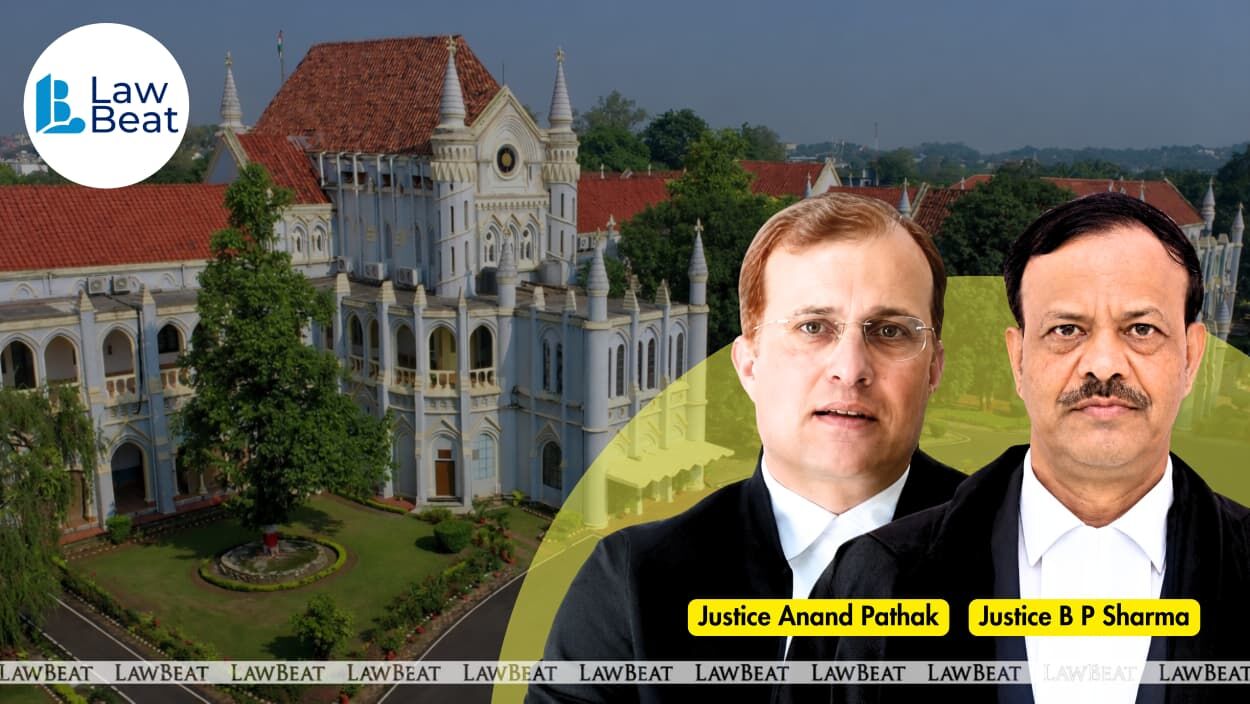
The Madhya Pradesh High Court, through a Division Bench comprising Justice Anand Pathak and Justice B. P. Sharma, subsequently quashed the Sagar Bar recount order. The court found that the Special Committee's directive for a recount suffered from a fundamental flaw: a violation of natural justice, specifically the right to be heard. The winning candidate, Ankleshwar Dubey, had not been afforded any opportunity to present his case before the recount order was issued.
During the High Court proceedings, Senior Advocate Vivek Tankha, appearing for the petitioner Ankleshwar Dubey via video conferencing alongside Senior Advocate Rameshwar Singh Thakur and advocate Rohit Sohgaura, argued that the State Bar Council lacked jurisdiction over the procedural aspects of elections conducted by a District Bar Association. Conversely, Senior Advocate Prakash Upadhyay, assisted by Hitendra Kumar Golhani, representing respondents No. 1 and 2, and advocate Ashish Kumar Kurmi, representing respondent No. 3, defended the Special Committee's order by citing model bylaws promulgated by the State Bar Council.
Upholding Procedural Fairness
Despite the arguments regarding jurisdictional authority and bylaws, the High Court's primary concern centered on the absence of due process. The bench explicitly noted that the petitioner had not been given a chance to be heard before the recount order was passed. Recognizing this critical procedural lapse, the court suggested a rehearing of the matter, allowing all concerned parties to articulate their grievances before the Special Committee. All parties involved in the case concurred with this proposed course of action.
Consequently, the High Court formally set aside the Special Committee's order on September 3, 2026, stating it "suffers from vice of natural justice." The court then remanded the dispute back to the Special Committee for fresh consideration. It granted liberty to the petitioner, Ankleshwar Dubey, and respondents No. 3 and 4 to appear before the Special Committee, which was explicitly directed to hear all parties, consider their pleadings and arguments in accordance with law, and then issue a reasoned order, duly informing all involved.
Broader Implications for Administrative Justice
This Madhya Pradesh High Court bar election ruling serves as a significant reinforcement of the critical importance of natural justice principles, particularly the fundamental right to be heard, in all administrative and quasi-judicial proceedings. By quashing the Sagar Bar recount order due to procedural unfairness, the court underscored that even in internal organizational disputes, such as those within bar associations, adherence to due process is paramount. The decision highlights that any order affecting a party's rights or interests must be preceded by an opportunity for that party to present their side.
The High Court also issued clear directives to manage the ongoing Sagar District Advocates Association election dispute. It mandated that the election result would remain undeclared until the matter is finally resolved by the Special Committee. Furthermore, the court instructed that all ballot papers and other election materials be secured with the Returning Officer. The Special Committee was granted the authority to examine any evidence presented or to request any material relevant to the disputed election, with a directive to decide the case expeditiously, preferably within 15 days of the High Court's order. This comprehensive approach ensures that the eventual resolution will be based on a thorough and fair hearing of all perspectives.
Practical Implications
This ruling reinforces the critical importance of natural justice principles, particularly the right to be heard, in all administrative and quasi-judicial proceedings. Lawyers should note this precedent when challenging or defending orders where procedural fairness has been compromised, even in internal organizational disputes like bar association elections.
Source
How does this affect you?
Get an AI analysis of this article grounded in your jurisdictions, practice areas, and any policy documents you've uploaded to Wansom.
Finish Reading the Full Story and the Expert Analysis.
Wansom is AI and can make mistakes.