
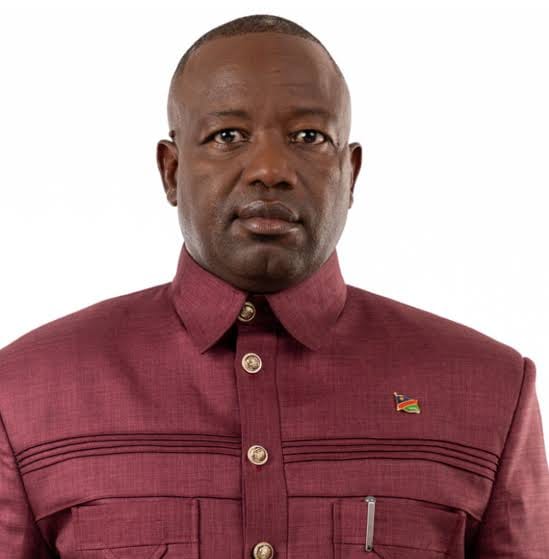
Kandorozu: Namibia Employment Equity Gender Balance Must Include Men
Summary
- National Unity Democratic Organisation parliamentarian Vetaruhe Kandorozu warned against overlooking men in employment equity efforts.
- Kandorozu argued that gender balance initiatives must benefit both men and women.
- His comments were made during a National Assembly debate concerning the appointment of new Employment Equity Commission commissioners.
- The National Assembly approved the nominated commissioners, whose terms are set to conclude on February 29, 2028.
- The debate highlights the ongoing discussion about the interpretation and application of gender balance in Namibia's employment equity framework.
Parliamentary Debate on Employment Equity
He firmly asserted that true gender balance must be designed to benefit both men and women equally, rather than exclusively favoring one gender over the other.
A significant discussion recently unfolded in the National Assembly concerning the interpretation and application of employment equity principles in Namibia. During a parliamentary debate focused on the appointment of new commissioners to the Employment Equity Commission, Vetaruhe Kandorozu, a parliamentarian representing the National Unity Democratic Organisation, voiced a critical perspective on the prevailing approach to gender balance in employment.
Kandorozu specifically cautioned against practices that might inadvertently marginalize men in the pursuit of employment equity goals. His intervention highlighted a concern that current efforts to achieve gender balance could lead to men being overlooked for positions, advocating instead for a more inclusive understanding of equity. He firmly asserted that true gender balance must be designed to benefit both men and women equally, rather than exclusively favoring one gender over the other.
The context for these remarks was the assembly's consideration and subsequent approval of the nominated individuals who will serve as commissioners for the Employment Equity Commission. These newly appointed commissioners are set to hold their terms until February 29, 2028, indicating a defined period during which their decisions and interpretations will shape the landscape of employment equity in Namibia.
Legal and Regulatory Context
The Employment Equity Commission Namibia plays a pivotal role in overseeing and enforcing fair employment practices across the nation. Its mandate includes ensuring that workplaces reflect the diversity of the Namibian population, particularly in terms of gender representation. The appointment of new commissioners is therefore a crucial event, as these individuals will be instrumental in guiding the commission's policies and interpretations of the existing legal framework.
The parliamentary employment equity debate Namibia, sparked by Kandorozu's comments, underscores the ongoing challenge of defining and implementing 'gender balance' effectively. While the overarching goal of employment equity legislation is to redress historical imbalances and promote equality, the specific mechanisms and criteria for achieving this can be subject to varying interpretations. Kandorozu's argument suggests a need for the Commission and employers to consider the potential for unintended consequences, such as perceived reverse discrimination, when striving for gender parity.
This discourse is particularly relevant for the future direction of employment equity in Namibia, as the newly constituted Commission will be tasked with navigating these complex issues. Their decisions will not only impact individual employment opportunities but also shape the broader corporate and public sector landscape, influencing how organizations approach their diversity and inclusion strategies over the next four years.
Implications for Namibia Gender Balance Employment
The remarks by Vetaruhe Kandorozu bring to the forefront a nuanced aspect of the Namibia gender balance employment discussion: the importance of ensuring that equity initiatives are perceived as fair and beneficial to all demographic groups. His call for a gender balance that benefits both men and women challenges a potentially narrow view of employment equity that might focus predominantly on uplifting one gender without adequate consideration for the other.
This perspective is vital for fostering a comprehensive approach to employment equity, one that avoids creating new forms of imbalance while correcting existing ones. For organizations operating within Namibia, this parliamentary sentiment signals a need to critically evaluate their own employment equity plans. It suggests that a robust plan should not merely aim for statistical parity but also demonstrate a commitment to equitable opportunities for all, irrespective of gender, ensuring that no group feels systematically disadvantaged.
Ultimately, the ongoing dialogue surrounding Kandorozu Namibia employment equity gender balance highlights the evolving nature of equality initiatives. It serves as a reminder that while progress towards gender parity is essential, the methods employed must be carefully considered to ensure broad societal acceptance and genuine fairness across the workforce.
Why It Matters
The parliamentary discussion, particularly the stance taken by Vetaruhe Kandorozu, carries significant weight for legal professionals and compliance officers within Namibia. The emphasis on a gender balance that benefits both men and women signals a potential shift in the interpretation and enforcement priorities of the Employment Equity Commission. This means that organizations must pay close attention to the evolving policy directions and official guidance that will emerge from the newly appointed commissioners.
Failure to monitor and adapt to these evolving interpretations could expose companies to compliance risks. If the understanding of 'gender balance' becomes more explicitly inclusive of men, then hiring practices that are perceived to overly favor women without justifiable cause could face challenges related to perceived gender bias. This necessitates a proactive approach to reviewing and, if necessary, adjusting employment equity policies and recruitment strategies to align with the broader parliamentary and regulatory sentiment.
Therefore, the ongoing discourse is not merely a political debate but a crucial indicator for future legal and compliance requirements. Organizations must ensure their employment equity frameworks are robust, transparent, and demonstrably fair to all genders, reflecting a balanced approach that aligns with the spirit of equity as articulated in the National Assembly.
Practical Implications
Lawyers and compliance officers in Namibia should monitor the ongoing parliamentary discourse on employment equity, particularly regarding the interpretation and application of 'gender balance' to ensure compliance with evolving policy directions and avoid potential challenges related to perceived gender bias in hiring practices.
Source
How does this affect you?
Get an AI analysis of this article grounded in your jurisdictions, practice areas, and any policy documents you've uploaded to Wansom.
Finish Reading the Full Story and the Expert Analysis.
Get the latest legal & regulatory intelligence in Namibia
Wansom is AI and can make mistakes.