
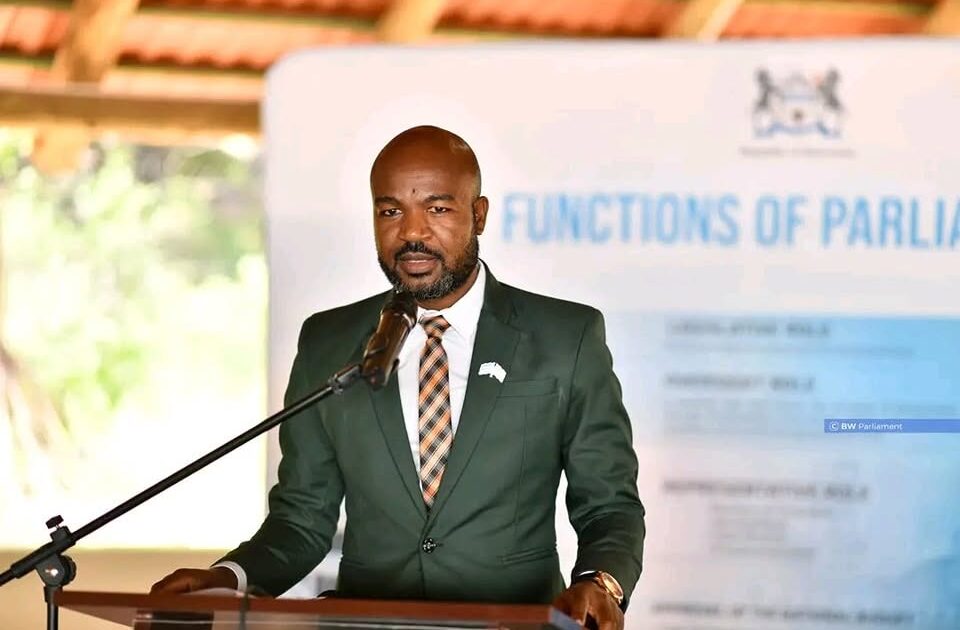
Reuben Kaizer: Challenges Botswana Security Camp Restrictions
Summary
- Selebi-Phikwe West MP Reuben Kaizer claims restrictions at security camps prevent him from reaching his constituents.
- Kaizer asserts that these access denials revive a dispute concerning political representation and protected installations.
- He accuses the Umbrella for Democratic Change (UDC) government of continuing restrictive practices previously employed by the Botswana Democratic Party (BDP).
- The MP's grievance stems from being denied access to areas within these security camps.
The Core Grievance
The challenge raised by Kaizer underscores the practical difficulties faced by parliamentarians when certain areas within their constituencies are subject to stringent access controls.
Reuben Kaizer, the Member of Parliament for Selebi-Phikwe West, has publicly voiced his concerns regarding the limitations imposed by security camps, asserting that these restrictions impede his fundamental ability to connect with his constituents. This statement by Kaizer, an elected representative, highlights a critical barrier to effective parliamentary duties within his electoral district, directly impacting the principle of comprehensive constituent representation.
The issue centers on the operational protocols of these installations, which, according to Kaizer, create an environment where elected officials are prevented from engaging with a segment of their electorate. This situation has brought renewed attention to the ongoing tension between national security imperatives and the democratic right of citizens to be represented by their chosen officials. The challenge raised by Kaizer underscores the practical difficulties faced by parliamentarians when certain areas within their constituencies are subject to stringent access controls.
A Recurring Political Dispute
This current grievance articulated by the Selebi-Phikwe West MP is not an isolated incident but rather reignites a long-standing contention concerning both political representation and the regulations governing protected installations in Botswana. Kaizer has specifically directed his criticism towards the Umbrella for Democratic Change (UDC) government, accusing it of perpetuating a pattern of restrictive practices. He contends that the current administration is mirroring the very actions previously undertaken by its predecessor, the Botswana Democratic Party (BDP).
The MP's accusation stems from a specific instance where he was denied entry, presumably to areas within security camps, thereby preventing him from fulfilling his duties to his constituents. This denial of Reuben Kaizer MP access to his constituents within these zones forms the basis of his claim that the UDC government is maintaining, rather than reforming, policies that limit public and representative access. The dispute thus carries significant political weight, suggesting a continuity of policy across different administrations regarding the management of these sensitive sites.
Implications for Democratic Representation
The restrictions at Botswana security camps, as highlighted by MP Kaizer, present a significant challenge to the principles of democratic representation. When an elected official is barred from entering parts of their own constituency, it raises questions about the completeness of their mandate and the ability of all citizens to have their voices heard through their representative. The denial of Selebi-Phikwe West constituent access to their MP, and vice-versa, can create a democratic deficit, potentially leaving residents within these protected areas feeling disenfranchised or unrepresented.
This situation forces a critical examination of how the Botswana protected installations law is interpreted and applied, particularly when it intersects with the duties of elected members of parliament. The core of Kaizer's challenge lies in the assertion that security protocols should not entirely override the fundamental right of an MP to engage with every segment of their electorate. The ongoing nature of this dispute, which Kaizer notes has historical parallels with the UDC government restrictive practices, suggests a systemic issue that impacts the very fabric of political accountability and access.
Balancing Security and Rights
The controversy surrounding MP Kaizer's access to security camps underscores a delicate balance that governments must strike between national security concerns and the rights of citizens and their elected representatives. While the need to safeguard sensitive installations is universally acknowledged, the extent to which these measures can restrict the movement and duties of a Member of Parliament within their own constituency remains a point of contention. This specific challenge by Kaizer regarding Botswana security camp restrictions brings this tension to the forefront.
The accusation that the UDC government is engaging in practices reminiscent of the BDP's past administration suggests a broader, perhaps entrenched, approach to managing access to these sites. This continuity, despite a change in ruling parties, indicates that the underlying legal and administrative frameworks governing protected installations may be interpreted in a way that consistently prioritizes security over unfettered political access. The outcome of this revived dispute could therefore have significant implications for how future access requests are handled and how the balance between state security and democratic representation is ultimately defined in Botswana.
Practical Implications
Lawyers should monitor this challenge for potential precedents regarding the scope of restrictions on public access to security installations in Botswana and the balance between national security and the rights of elected representatives to access constituents. This could inform future administrative law challenges or constitutional litigation concerning freedom of movement and political representation.
Source
How does this affect you?
Get an AI analysis of this article grounded in your jurisdictions, practice areas, and any policy documents you've uploaded to Wansom.
Finish Reading the Full Story and the Expert Analysis.
Wansom is AI and can make mistakes.