
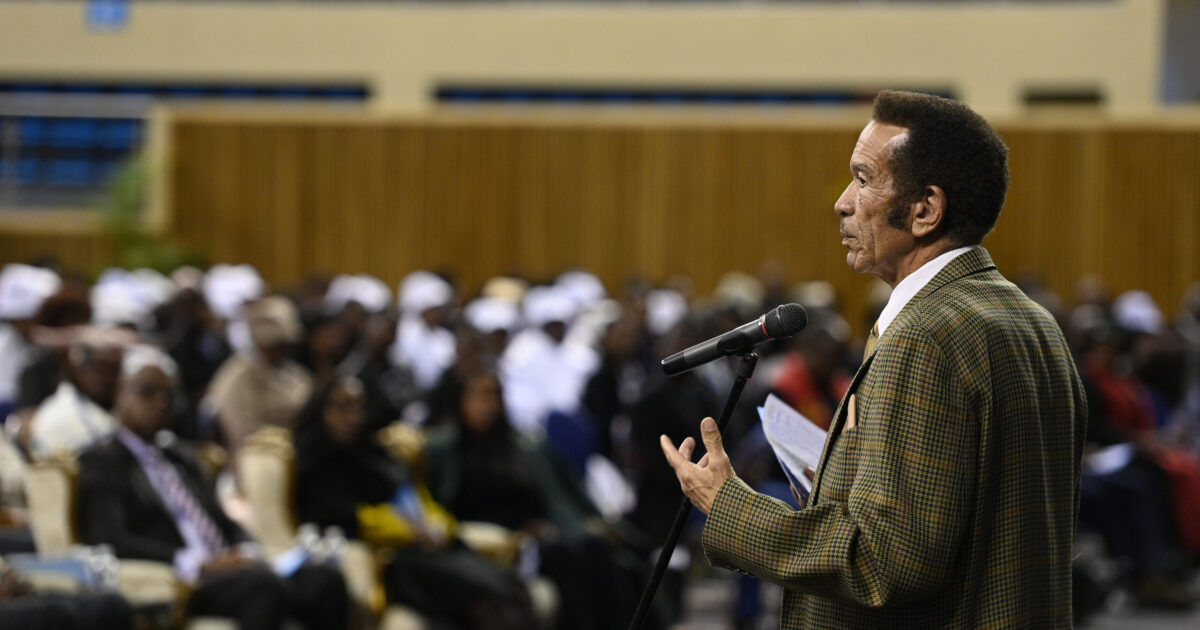
Kgosi Khama IV: Challenges Ipelegeng Name Change to Ikageng
Summary
- Kgosi Khama IV has challenged the UDC government's renaming of the Ipelegeng public works program to Ikageng.
- Khama questions the consultation process, specifically whether traditional leaders were involved in the decision.
- He also raised concerns about the government's treatment of the program's original name.
- The government stated the name change was due to the old name, Ipelegeng, carrying a stigma.
- This challenge highlights the importance of procedural fairness and stakeholder consultation in government administrative decisions.
The Challenge to a Renaming
Should Khama's concerns about the consultation process gain traction, it could establish a crucial precedent for how government bodies are expected to engage with traditional leaders and the wider public when modifying established programs.
Kgosi Khama IV has formally contested the Umbrella for Democratic Change (UDC) government's recent decision to rename a significant public works initiative. The program, previously known as Ipelegeng, has been rebranded as Ikageng, a move that has drawn scrutiny from the traditional leader. Khama's challenge specifically targets both the procedural aspects of the renaming and the underlying rationale for altering the program's original designation.
The core of Kgosi Khama IV's objection centers on the perceived lack of proper engagement with key stakeholders. He has explicitly raised questions regarding the extent to which traditional leaders were consulted prior to the government's implementation of the name change. This concern underscores a broader issue of how administrative decisions affecting public programs are made and communicated within Botswana's governance structure.
In response to the controversy, the UDC government has articulated its justification for the rebranding. Officials have stated that the previous name, Ipelegeng, was associated with a certain stigma, implying that the change to Ikageng was intended to refresh the program's image and public perception. This explanation, however, has not fully addressed the procedural concerns raised by Kgosi Khama IV regarding the consultation process.
Consultation and Traditional Authority
The dispute over the Ikageng renaming highlights a critical aspect of governance in Botswana: the role and involvement of traditional leaders in public policy and program administration. Kgosi Khama IV's specific inquiry into whether traditional leaders were consulted before the Ipelegeng program became Ikageng points to an expectation that such figures should be integral to decisions impacting community-level initiatives.
This challenge underscores the importance of procedural fairness and inclusive decision-making, particularly when government programs undergo significant alterations like a name change. The question of consultation extends beyond mere notification; it implies a process of engagement and consideration of input from established community structures, such as those represented by traditional leaders.
The government's assertion that the Ipelegeng name carried stigma, while offering a reason for the change, does not inherently address the procedural question of *how* that decision was reached or *who* was involved in validating the need for such a change. The focus remains on whether the UDC government followed appropriate protocols for engaging all relevant parties, especially those with deep community ties.
Precedent for Public Participation
The ongoing challenge initiated by Kgosi Khama IV regarding the Ikageng renaming holds significant implications for future administrative decisions and public participation in Botswana. Should Khama's concerns about the consultation process gain traction, it could establish a crucial precedent for how government bodies are expected to engage with traditional leaders and the wider public when modifying established programs.
This case could serve as a benchmark for evaluating the procedural fairness of government actions, particularly in instances where changes to public works programs like the Botswana Ipelegeng program challenge are implemented. It emphasizes that while the government may have valid reasons for rebranding, the method of execution, including comprehensive consultation, is equally vital for maintaining public trust and legitimacy.
Lawyers and legal observers will be closely monitoring the resolution of this matter, as it could clarify the legal basis and procedural requirements for government program name changes. The outcome may influence future expectations for UDC government name change consultation, ensuring that traditional leaders and other community representatives are adequately involved in decisions that directly affect their constituencies, thereby strengthening democratic accountability and public engagement in administrative decisions across Botswana.
Practical Implications
Lawyers should monitor the legal basis and procedural fairness of government program name changes, particularly regarding consultation requirements with traditional leaders, as this challenge could set a precedent for public participation in administrative decisions in Botswana.
Source
How does this affect you?
Get an AI analysis of this article grounded in your jurisdictions, practice areas, and any policy documents you've uploaded to Wansom.
Finish Reading the Full Story and the Expert Analysis.
Wansom is AI and can make mistakes.