
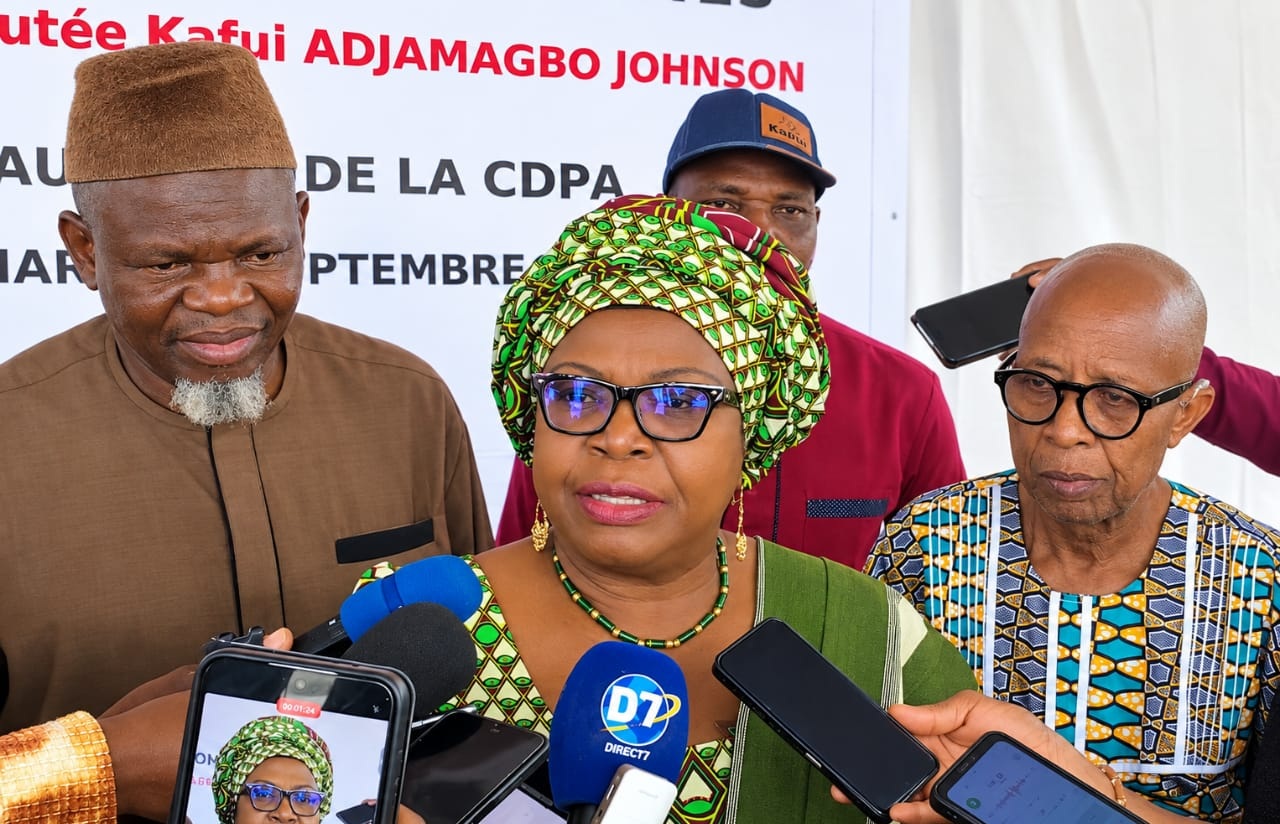
Kafui Adjamagbo-Johnson: Togo Parliament Non-Resignation Explained
Summary
- Togolese deputy Kafui Adjamagbo-Johnson explained her decision not to resign from parliament despite public calls, citing the need for effective political action.
- The calls for her resignation follow an ECOWAS Court of Justice ruling that declared Togo's 2024 constitutional reform unconstitutional.
- Adjamagbo-Johnson emphasizes her parliamentary mandate as a tool for advocacy, given the opposition's limited five seats in the 113-member legislature.
- She has engaged in extensive international outreach, contacting various global bodies and supporting a resolution on Togo in the French National Assembly.
- The deputy has actively participated in legislative debates and boycotts, but reports a consistent lack of response from the government to her numerous inquiries.
A Deputy's Stance on Resignation
She articulated that while a resignation can be a powerful gesture, such an act performed at an inopportune moment might ultimately prove to be without impact.
Kafui Adjamagbo-Johnson, a prominent deputy representing the Dynamique pour la majorité du peuple (DMP), recently addressed the public in Lomé on Tuesday, September 29, regarding her parliamentary activities and the persistent calls for her resignation. These demands have intensified following a significant ruling by the ECOWAS Court of Justice concerning Togo's 2024 constitutional reform. The question of whether she should step down from her legislative post has been a recurring theme since the regional court's decision.
During her accountability press conference, Ms. Adjamagbo-Johnson acknowledged the public's desire for her to resign, stating that she respects this sentiment and has never dismissed the possibility. However, she emphasized that any political decision must be evaluated not solely on its symbolic weight but also on its practical effectiveness. She articulated that while a resignation can be a powerful gesture, such an act performed at an inopportune moment might ultimately prove to be without impact. She assured her constituents that she would take this step "when the time is right," provided there is a collective agreement among the opposition that such a move is necessary.
The ECOWAS Ruling and Political Landscape
The impetus behind the calls for Ms. Adjamagbo-Johnson's resignation stems directly from the ECOWAS Court of Justice's declaration that the constitutional changes enacted in Togo in 2024 were unconstitutional. This ruling has been interpreted by the deputy as reflecting a widespread rejection of the new constitution by the Togolese populace. Within this challenging political environment, the opposition holds a significantly diminished presence in the 113-seat parliament, securing only five seats in the legislative elections held on April 29, 2024. These seats are distributed among several parties: two for ADDI, one for ANC, one for DMP, and one for FDR.
Ms. Adjamagbo-Johnson views her parliamentary mandate as a crucial instrument for engagement, providing her with the capacity to question government actions, access state institutions, and foster dialogue with Togo's international partners. Despite the opposition's limited numbers, she has actively leveraged her position to challenge the government and advocate for change, particularly in light of the ECOWAS Court's judgment on the 2024 constitutional reform.
Strategic Parliamentary Engagement
Beyond her direct legislative duties, Ms. Adjamagbo-Johnson has embarked on extensive international outreach to highlight the situation in Togo. Her efforts include engaging with the Economic Community of West African States (ECOWAS), the African Union, and the United Nations. She has also reached out to various diplomatic representations, human rights organizations, financial institutions, and religious authorities, seeking their attention and support.
Her international advocacy extends to foreign parliaments, where she has actively supported Resolution No. 3111 on Togo, a measure introduced in the French National Assembly by an ecologist deputy. Furthermore, in July, she presented relevant documents to parliamentarians at the Parliamentary Assembly of La Francophonie during a meeting in Yaoundé. These concerted international engagements, according to the deputy, have yielded initial feedback suggesting a broad base of support for her cause.
Legislative Scrutiny and Government Silence
Ms. Adjamagbo-Johnson has detailed her legislative work since early 2026, highlighting both her principled stands and her frustrations. On April 7, she boycotted the opening of the first ordinary session, which coincided with a conference of Francophone assembly presidents, to protest what she described as the excesses of the Fifth Republic. Instead, she chose to attend a press conference organized by groups associated with the "Manifeste Génération Togo." In her committee work, she championed the concerns of various associations regarding a proposed law on freedom of association, though this bill ultimately failed to reach a plenary session for debate.
Her advocacy also extended to public discourse, notably on a bill concerning the innovation ecosystem, where her media engagement reportedly contributed to the government's decision to withdraw the initial text. She raised critical questions on the agricultural orientation law, addressing issues such as land tenure, market access, and sales prohibitions that leave farmers with unsold produce. The deputy also voted against the extension of the state of emergency, citing a lack of clear assessment, and opposed a law on protected areas due to insufficient guarantees for the compensation and resettlement of affected communities. A significant point of contention for Ms. Adjamagbo-Johnson is the government's consistent silence; she reports that almost none of her oral, current, or written questions on topics ranging from political detainees to fuel price hikes and a World Bank report on corruption have received a response. She interprets this unresponsiveness as a clear indication of a lack of political will from a government she deems "illegitimate and now illegal," operating within an Assembly she believes has abdicated its responsibilities.
Practical Implications
This article highlights the ongoing legal and political contestation surrounding Togo's 2024 constitutional reform, following an ECOWAS Court ruling. Lawyers advising clients in Togo should monitor the enforcement of regional court decisions and the stability of the legal framework, as political legitimacy challenges can impact regulatory predictability and investment risk.
Source
How does this affect you?
Get an AI analysis of this article grounded in your jurisdictions, practice areas, and any policy documents you've uploaded to Wansom.
Finish Reading the Full Story and the Expert Analysis.
Get the latest legal & regulatory intelligence in Togo
Wansom is AI and can make mistakes.