
Kafia Kingi: Customary Law Agreement Forged for Grave Offenses
Summary
- Forty-one tribes and displaced persons' representatives convened a three-day conference in Kafia Kingi, South Darfur, Sudan.
- The conference aimed to establish customary law for intentional killings, accidental killings, and adultery.
- Kafia Kingi is a disputed, resource-rich area bordering Sudan, South Sudan, and the Central African Republic.
- Police and Rapid Support Forces commanders pledged to enforce the resulting customary laws and warned against tribalism.
- Specific tribes like Abu Daraq, Aringa, Borno, Habbaniya, Falata, Taaisha, Bargo, and Tama participated in the discussions.
Tribal Leaders Convene for Customary Law Agreement in Kafia Kingi
The primary objective of this assembly was to formalize traditional legal frameworks, specifically focusing on the establishment of customary law to address grave offenses such as intentional killings, accidental fatalities, and adultery.
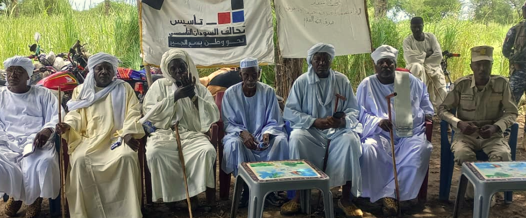
A significant gathering of 41 tribal communities recently commenced a three-day peaceful coexistence conference in the Kafia Kingi area, located approximately 390 kilometers south of Nyala, the capital of Sudan's South Darfur State. The primary objective of this assembly was to formalize traditional legal frameworks, specifically focusing on the establishment of customary law to address grave offenses such as intentional killings, accidental fatalities, and adultery. Representatives from a wide array of tribes, including the Abu Daraq, Aringa, Borno, Habbaniya, Falata, Taaisha, Bargo, and Tama, were present, alongside delegates representing displaced populations.
This crucial conference unfolded in Kafia Kingi, a region recognized for its disputed status and rich natural resources. Geographically, it occupies a sensitive position, straddling the international borders of Sudan, South Sudan, and the Central African Republic.
Enforcement and Security Commitments
Officials underscored the commitment to implement the outcomes of the conference. Al-Ghali Bashar Bashir, who serves as the Police Director for Kafia Kingi, confirmed that the deliberations would thoroughly cover the specified offenses: intentional killing, accidental killing, and adultery. He further articulated that the participants were expected to reach a definitive agreement on customary laws designed to adjudicate cases involving any of these serious transgressions. Bashir emphasized that security authorities stand ready to uphold and enforce the new customary law provisions once they are established.
Adding a critical security dimension, Fadl al-Nabi Yousuf Al-Shugheil, the Rapid Support Forces (RSF) commander stationed in Kafia Kingi, addressed the assembled tribal leaders. He issued a stern warning against the resurgence of racism and tribalism, drawing parallels to detrimental practices observed under previous governmental administrations. Al-Shugheil urged the communities to reject such divisions, emphasizing their shared identity. He also made a notable appeal to the tribal leaders, inviting them to offer counsel and correct him should he make errors, acknowledging his own humanity and the potential for his forces to commit violations or abuse their authority against civilians.
Significance for Regional Stability and Tribal Justice
The initiative to establish a comprehensive Kafia Kingi customary law agreement carries profound significance for regional stability, particularly given the area's volatile geopolitical context. By creating a standardized framework for tribal justice, the conference aims to mitigate inter-communal conflict and provide clear mechanisms for dispute resolution, especially concerning severe crimes like intentional killing, accidental killing, and adultery. This collaborative effort between traditional leaders and state security forces represents a vital step towards fostering peaceful coexistence among the 41 participating tribes.
The development of a unified customary law in this disputed, resource-rich territory is crucial for addressing long-standing grievances and preventing future escalations. The commitment from both tribal sheikhs and security officials to implement and enforce these agreed-upon principles highlights a concerted push towards localized governance and justice. This approach to South Darfur customary law, particularly in a region bordering Sudan, South Sudan, and the Central African Republic, offers a model for managing complex inter-tribal relations and enhancing overall security through community-led legal frameworks.
Source
How does this affect you?
Get an AI analysis of this article grounded in your jurisdictions, practice areas, and any policy documents you've uploaded to Wansom.
Finish Reading the Full Story and the Expert Analysis.
Get the latest legal & regulatory intelligence in South Sudan
Wansom is AI and can make mistakes.