
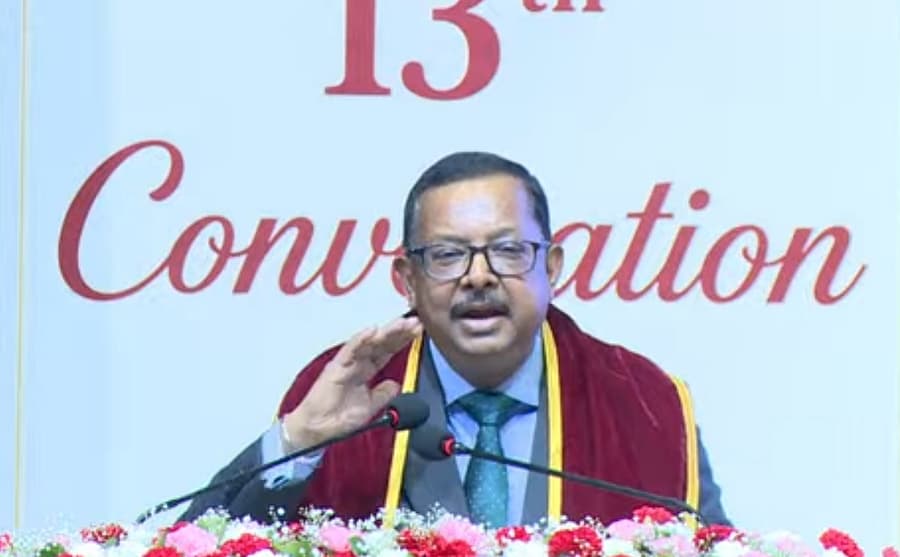
Justice Ujjal Bhuyan: Students' Dissent Is Constitutional, Punitive Action Unlawful
Summary
- Supreme Court Justice Ujjal Bhuyan stated that students cannot be threatened for expressing different views or asking questions.
- He delivered this message during the 13th postgraduate convocation at National Law University Delhi.
- Justice Bhuyan emphasized that the right to question is essential for citizenship, liberty, and constitutional responsibility.
- He characterized threats of punitive action against dissenting students as unconstitutional and a misuse of power.
- The judge highlighted that democracy thrives on tolerance of disagreement and does not demand uniformity of thought.
Judicial Stance on Student Dissent
Any threat of punitive action against students for voicing alternative perspectives or raising queries constitutes an unconstitutional act and a misuse of authority.
A Supreme Court judge recently underscored the fundamental right of students to express differing viewpoints and pose questions without fear of reprisal. Justice Ujjal Bhuyan, addressing the 13th convocation for postgraduate programs at National Law University Delhi, articulated that such expressions are not acts of defiance but rather crucial manifestations of citizenship, liberty, and constitutional duty. His remarks highlighted the importance of fostering an environment where independent thought and critical inquiry are encouraged, particularly within academic institutions.
During his address, Justice Bhuyan explicitly stated that any threat of punitive action against students for voicing alternative perspectives or raising queries constitutes an unconstitutional act and a misuse of authority. He emphasized that the framework of a constitutional democracy thrives on the accommodation of diverse opinions, rather than demanding uniformity of thought. This assertion reinforces the principle that educational settings should be crucibles for intellectual exploration, where the free exchange of ideas is paramount.
Constitutional Imperatives for Free Expression
Justice Bhuyan's pronouncements delve into the core tenets of India's constitutional design, which does not mandate a singular way of thinking. Instead, the Constitution is structured to ensure that individuals holding varied beliefs, convictions, and opinions can coexist with equal dignity and actively participate in the democratic process. This foundational principle extends to the academic sphere, where the right to question is an essential component of a robust learning environment and responsible citizenship.
The Supreme Court judge further elaborated that a democratic society cannot be constructed on the premise that all its members will share identical views. Rather, its strength lies in acknowledging and integrating these differences. He stressed that tolerance for disagreement is indispensable for the health and functioning of a democracy, making any attempt to stifle student free speech or dissent a direct affront to these constitutional values. The implication is clear: policies or actions that suppress student voices are not merely ill-advised but fundamentally incompatible with democratic governance.
Why This Judicial Perspective Matters
The statements from Justice Ujjal Bhuyan regarding student rights and the imperative of dissent carry significant weight, particularly for educational institutions and legal professionals. His clear articulation that threatening students for questioning is both unconstitutional and a misuse of power provides a strong judicial precedent. This perspective can be instrumental for lawyers advising educational bodies on policy formulation or for those representing students facing disciplinary actions for expressing their views.
This judicial reinforcement of the right to question as an essential aspect of citizenship and constitutional responsibility underscores the broader implications for democratic engagement. It serves as a powerful reminder that universities, as centers of learning and critical thought, must uphold and protect the ability of students to challenge, inquire, and dissent. The judge's remarks highlight that fostering an environment where Justice Ujjal Bhuyan students dissent without fear is not just good educational practice, but a constitutional mandate.
Practical Implications
Lawyers advising educational institutions or representing students should note this judicial perspective reinforcing constitutional protections for student dissent. This statement from a Supreme Court judge can be leveraged to challenge disciplinary actions or policies that threaten students for expressing differing views, emphasizing the unconstitutionality of such threats.
Source
Source: Original reporting via {source}
How does this affect you?
Get an AI analysis of this article grounded in your jurisdictions, practice areas, and any policy documents you've uploaded to Wansom.
Finish Reading the Full Story and the Expert Analysis.
Wansom is AI and can make mistakes.