
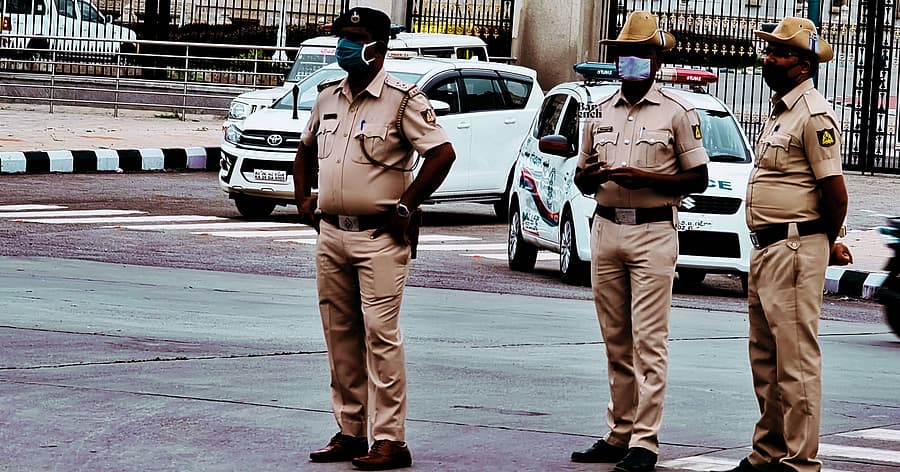
Karnataka HC Social Media Arrest Guidelines Mandated for Police
Summary
- The Karnataka High Court has directed the State DGP to issue new guidelines for police handling of social media post complaints.
- This order, in Mohan Gowda v. State of Karnataka, mandates adherence to principles established in Nalla Balu v State of Telangana, upheld by the Supreme Court.
- The Karnataka DGP social media guidelines, which have since been issued, will require preliminary inquiries, verification of locus standi, and a higher threshold for police action.
- They will also clarify that defamation is a non-cognizable offence and protect political speech.
- Violations of these police arrest guidelines India will lead to departmental inquiries and potential cost imposition by constitutional courts.
Judicial Mandate for Social Media Arrest Guidelines
The Karnataka HC social media arrest guidelines, which have since been issued, are poised to introduce a new era of accountability for law enforcement in the state, particularly concerning online content.
The Karnataka High Court recently issued a significant directive, compelling the State Director General of Police (DGP) to formulate and disseminate comprehensive guidelines concerning cases initiated over social media posts. This order, stemming from the case of Mohan Gowda v. State of Karnataka, underscores the judiciary's intent to standardize and regulate police action in the digital realm. Justice M Nagaprasanna, presiding over the matter, highlighted the necessity for clear protocols to prevent arbitrary arrests and ensure due process when individuals face complaints related to their online expressions.
This judicial intervention aims to establish a more robust framework for how law enforcement agencies in Karnataka approach allegations arising from social media content. The court's instruction reflects a growing concern over the potential misuse of legal provisions against online speech and the need for police to exercise greater discretion and adhere to established legal principles. The Karnataka HC social media arrest guidelines, which have since been issued, are expected to significantly impact police procedures across the state.
Drawing on Established Legal Precedent
In formulating these new directives, Justice Nagaprasanna specifically referenced the precedent set by Nalla Balu v State of Telangana, a case whose guidelines on handling social media complaints were subsequently upheld by the Supreme Court. The Telangana High Court's framework, now serving as a model for Karnataka, mandates several critical steps before police action can be taken. These include an initial verification of the complainant's locus standi, ensuring they have a legitimate standing to file the complaint.
Furthermore, the Nalla Balu judgment emphasized the requirement for a preliminary inquiry to assess the veracity and seriousness of the allegations. It also established a higher threshold for initiating action in cases involving media posts or speech-related offenses, particularly advocating for the protection of political speech and online expressions. Crucially, it clarified that defamation is generally a non-cognizable offence, meaning police cannot arrest without a warrant or court order, and urged consideration of frivolous or politically motivated complaints. These principles are now to be integrated into the police arrest guidelines India for Karnataka.
Ensuring Police Accountability and Compliance
The High Court's directive extends beyond mere recommendation, explicitly instructing the Director General of Police (DGP) and Inspector General of Police (IGP) to issue these guidelines as a formal circular to all police stations throughout Karnataka. This circular is intended to serve as a binding mandate, ensuring that police personnel uniformly follow the principles outlined in the Nalla Balu judgment. The court underscored that any officer found in violation of the Karnataka DGP social media guidelines, which have since been issued, would not escape accountability.
The circular must explicitly state that non-compliance will lead to a departmental inquiry, signaling a serious commitment to enforcement. Moreover, the court warned that constitutional courts could impose costs on officers who disregard these directives, adding a financial deterrent to unlawful actions. This emphasis on strict adherence and consequences aims to curb practices that have drawn judicial scrutiny, such as those observed at the Whitefield police station, which the Court specifically took exception to, implying a pattern of disregard for proper arrest procedures.
Broader Implications for Law Enforcement and Free Speech
The Karnataka HC social media arrest guidelines, which have since been issued, are poised to introduce a new era of accountability for law enforcement in the state, particularly concerning online content. By establishing a higher threshold for police intervention and reiterating that defamation is a non-cognizable offence, the guidelines aim to safeguard citizens' rights to free expression and prevent arbitrary arrests. This move provides a clearer legal framework for police, reducing ambiguity and the potential for overreach in handling social media-related complaints.
For individuals and legal professionals, these guidelines will offer stronger grounds to challenge unlawful police actions and advise clients on their rights when facing allegations stemming from online posts. The emphasis on preliminary inquiries and verification of locus standi will likely reduce the number of frivolous or politically motivated cases that proceed to arrest, thereby fostering a more judicious approach to law enforcement in the digital sphere.
Practical Implications
Lawyers and compliance officers in Karnataka should anticipate new official guidelines from the DGP on handling social media post complaints and arrests, which will likely establish a higher threshold for police action and emphasize adherence to existing arrest procedures, providing grounds to challenge unlawful police actions and advise clients on their rights.
Source
How does this affect you?
Get an AI analysis of this article grounded in your jurisdictions, practice areas, and any policy documents you've uploaded to Wansom.
Finish Reading the Full Story and the Expert Analysis.
Wansom is AI and can make mistakes.