
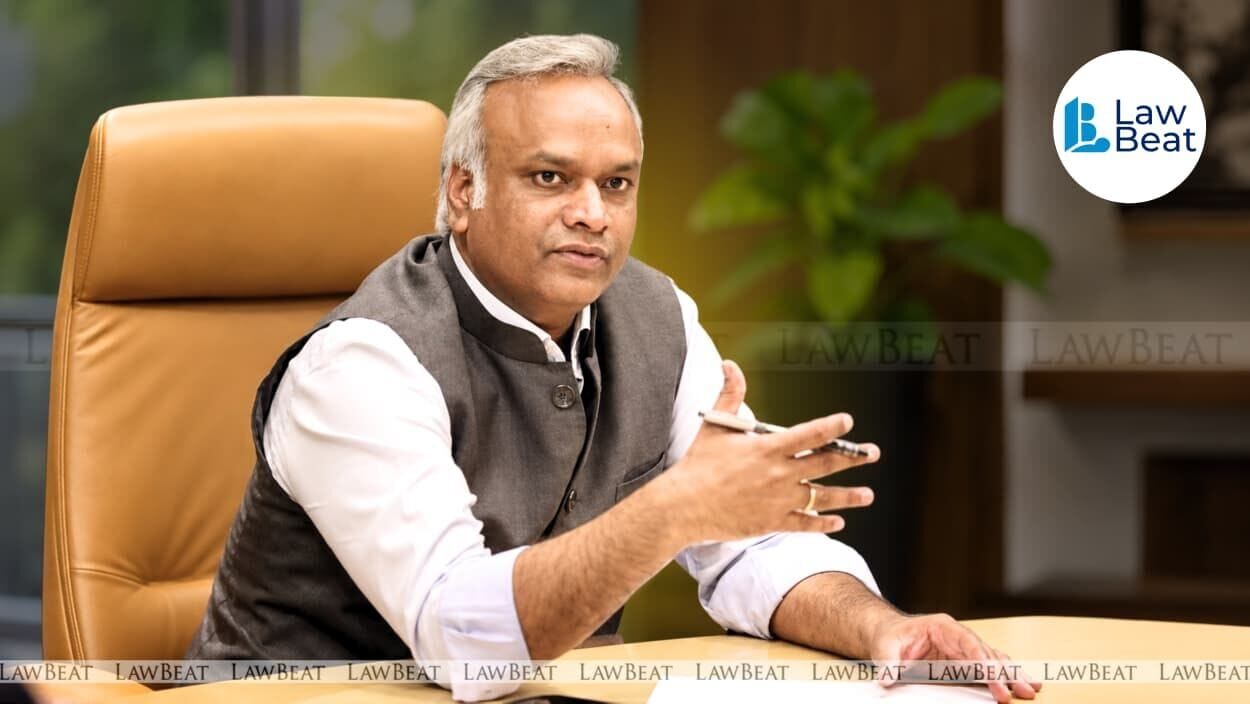
Priyank Kharge RSS Defamation Bail: Karnataka Court Grants Relief
Summary
- Karnataka Home Minister Priyank Kharge and former Karnataka Pradesh Youth Congress president Mohammed Haris Nalapad were granted bail in a criminal defamation case filed by an RSS worker.
- The 42nd Additional Chief Metropolitan Magistrate in Bengaluru approved bail applications under BNSS Section 478, noting the offense under BNS Section 356 is bailable.
- Both accused denied allegations concerning remarks against the RSS and sought a trial, with the next hearing for complainant evidence set for September 19, 2026.
- Kharge faces accusations related to a letter and social media posts from October 2025, while Nalapad is accused over a separate derogatory statement made to the media.
- The case serves as an early practical example of the application of India's new Bharatiya Nyaya Sanhita and Bharatiya Nagarik Suraksha Sanhita in a high-profile matter.
Court Grants Bail in High-Profile Defamation Case
This case marks an early and significant application of India's recently enacted criminal codes, the Bharatiya Nyaya Sanhita (BNS) and the Bharatiya Nagarik Suraksha Sanhita (BNSS), particularly in a high-profile criminal defamation matter.
Karnataka Home Minister Priyank Kharge and former Karnataka Pradesh Youth Congress president Mohammed Haris Nalapad were granted bail by the 42nd Additional Chief Metropolitan Magistrate in Bengaluru after denying criminal defamation allegations. The two appeared before the court on a Saturday, where they formally rejected the accusations leveled against them by Rashtriya Swayamsevak Sangh (RSS) worker A. Tejas and requested a full trial.
Their applications for bail were submitted under Section 478 of the Bharatiya Nagarik Suraksha Sanhita (BNSS). The court approved their release, noting that the alleged offense, brought under Section 356 of the Bharatiya Nyaya Sanhita (BNS), is classified as bailable. Each accused was required to furnish a personal bond of ₹1 lakh and provide cash security of ₹10,000.
Following the bail proceedings, the court formally read and explained the substance of the accusations to both Kharge and Nalapad. Both individuals reiterated their denial of the allegations and sought a trial to contest the charges. The case has now been scheduled for September 19, 2026, for the complainant to present evidence.
Specific Allegations Against Public Figures
The criminal complaint, initiated by Bengaluru resident A. Tejas, centers on statements attributed to Minister Priyank Kharge concerning the RSS. These include a letter Kharge allegedly sent to the Karnataka Government on October 4, 2025, and subsequent social media posts published on October 13 and 14 of the same year. According to the accusation, Kharge claimed the RSS was utilizing government and aided schools, as well as public grounds, to raise slogans and influence young people with ideas contrary to India's unity and constitutional principles. Further allegations against Kharge include claims that RSS members engaged in aggressive demonstrations while carrying sticks.
Specific social media posts cited in the accusation include an October 13 statement urging people to "never befriend" RSS members, labeling them as "real perpetrators of atrocities." An October 14 post attributed to Kharge allegedly stated, "When RSS did not spare Mahatma Gandhi or Babasaheb Ambedkar, why would it spare me?" The complainant contends that these statements damaged the RSS's public reputation and caused direct harm to A. Tejas and numerous RSS supporters, leading to the charges under Section 356 BNS.
Mohammed Haris Nalapad, identified as Accused No. 3, faces a separate accusation stemming from a statement he allegedly made to the media while responding to remarks attributed to Kharge. The court's record notes Nalapad's alleged comment: "The RSS organisation has no strength anymore, in their shorts." The complainant asserts that this remark was derogatory, brought the RSS into disrepute, and was widely disseminated by news channels and across social media platforms. Nalapad's alleged actions also fall under Section 356 BNS.
Early Application of New Criminal Codes
This case marks an early and significant application of India's recently enacted criminal codes, the Bharatiya Nyaya Sanhita (BNS) and the Bharatiya Nagarik Suraksha Sanhita (BNSS), particularly in a high-profile criminal defamation matter. The court's decision to grant bail was directly influenced by the bailable nature of the offense under Section 356 of the BNS, which addresses criminal defamation. The bail applications themselves were processed under Section 478 of the BNSS, illustrating the practical implementation of these new procedural provisions.
The proceedings followed an earlier stage where the Bengaluru court had taken cognizance of the complaint against both Kharge and Nalapad and subsequently issued summons. The current court appearance involved the formal reading of the accusations, which both accused denied, opting for a trial. This progression highlights the initial steps of judicial engagement with the new legal framework in politically sensitive cases involving prominent public figures.
Significance of the Ongoing Trial
The defamation case against Karnataka Home Minister Priyank Kharge and former Karnataka Pradesh Youth Congress president Mohammed Haris Nalapad carries considerable weight, not only due to the involvement of high-profile political figures but also as an early test of the new Bharatiya Nyaya Sanhita and Bharatiya Nagarik Suraksha Sanhita. The upcoming phase, focusing on the complainant's evidence scheduled for September 19, 2026, will be crucial in determining the trajectory of this legal battle.
This case offers an important precedent for how criminal defamation charges, particularly those involving public discourse and political commentary, will be adjudicated under the new legal regime. The court's handling of bail and the subsequent trial proceedings will be closely observed for insights into the interpretation and application of these updated statutes in India's legal landscape.
Practical Implications
This case provides an early practical example of the application of the new Bharatiya Nyaya Sanhita (BNS) and Bharatiya Nagarik Suraksha Sanhita (BNSS) in a high-profile criminal defamation matter. Lawyers should observe the proceedings to understand how bailability under BNS Section 356 and bail applications under BNSS Section 478 are being interpreted and applied, particularly in politically sensitive cases involving public figures.
Source
How does this affect you?
Get an AI analysis of this article grounded in your jurisdictions, practice areas, and any policy documents you've uploaded to Wansom.
Finish Reading the Full Story and the Expert Analysis.
Wansom is AI and can make mistakes.