
Justice Manmeet Arora: AI Must Not Halt Young Lawyers' Hiring
Summary
- Delhi High Court Justice Manmeet Pritam Singh Arora urged law firms not to cease hiring fresh graduates due to AI cost savings.
- She warned that neglecting to train young lawyers would jeopardize the future of the legal profession.
- Concerns have arisen that some Indian law firms have stopped recruiting A0 associates, impacting employment for new lawyers.
- JSA Managing Partner Amar Gupta stated his firm is committed to reserving non-AI work for new associates' foundational training.
- The discussion highlights the critical need to balance AI integration with the essential development of junior legal talent in India.
Judicial Warning on AI and Legal Talent
The legal profession, she asserted, cannot afford to neglect the fundamental training of its future practitioners.
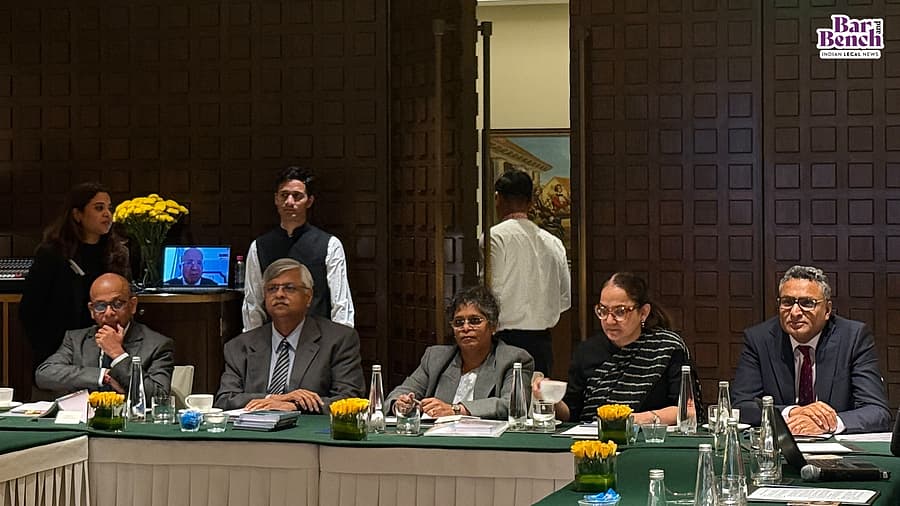
Delhi High Court Justice Manmeet Pritam Singh Arora recently issued a significant caution to law firms regarding their recruitment practices for new legal professionals. Speaking at the inaugural gathering of the Indian Commercial Litigators' Forum (CLF), an event hosted by JSA Advocates and Solicitors in New Delhi on November 20, Justice Arora emphasized the critical need for continuous investment in the next generation of legal talent. Her remarks underscored a growing concern that the increasing adoption of artificial intelligence (AI) by firms to reduce operational costs should not lead to a cessation of hiring fresh law graduates. The legal profession, she asserted, cannot afford to neglect the fundamental training of its future practitioners. This perspective highlights a crucial debate for Justice Manmeet Arora AI young lawyers and the broader legal ecosystem in India.
The Evolving Landscape for Junior Lawyers
Justice Arora's apprehension stemmed from reports indicating that some law firms in India have already ceased the recruitment of A0 associates, a practice that could severely impact the career trajectory of aspiring legal professionals. She posed a rhetorical question, highlighting the unsustainability of a system where firms only seek candidates with three years of experience, without providing the initial training themselves. The potential for AI to displace entry-level roles has fueled anxieties among young lawyers regarding employment opportunities. Justice Arora stressed that while cost savings are a legitimate business consideration, sacrificing the development of new talent would ultimately undermine the profession's long-term viability. Her message was clear: neglecting to onboard A0 associates today means a deficit of experienced professionals tomorrow, posing a significant challenge to the AI impact legal profession India.
Industry Response and Strategic Integration
In response to Justice Arora's observations, Amar Gupta, the Managing Partner at JSA, affirmed his firm's commitment to nurturing new talent, even as JSA Advocates AI hiring strategies evolve. Gupta acknowledged the importance of preserving training opportunities for recent graduates. He outlined JSA's deliberate approach to integrating AI models while simultaneously ensuring foundational skill development. The firm plans to designate specific tasks and assignments that are to be completed without any AI assistance or tools. This strategy is intended to provide essential, first-level training for new associates joining the firm, ensuring they acquire fundamental legal competencies. This clear roadmap demonstrates a conscious effort to balance technological advancement with the imperative of training A0 associates AI, a critical step for the Indian legal sector.
Securing the Future of Legal Expertise
The dialogue initiated by Delhi High Court Justice Arora AI underscores a pivotal challenge for the Indian legal profession: how to strategically integrate advanced technologies like AI without compromising the essential development of junior legal professionals. This requires law firms and legal departments to design specific roles and tasks for new associates that actively foster foundational skills, thereby ensuring a sustainable talent pipeline for the future. The insights shared at the Indian Commercial Litigators' Forum highlight that while AI offers efficiencies, the human element of legal expertise, cultivated through rigorous training, remains irreplaceable. Firms must view the recruitment and training of fresh graduates not merely as a cost, but as a vital investment in their own future capacity and the overall strength of the legal profession in India.
Practical Implications
Law firms and legal departments must strategically consider how to integrate AI technologies without compromising the essential training and development of junior legal professionals. This involves designing specific roles or tasks for new associates that foster foundational skills, ensuring a sustainable talent pipeline for the future of the legal profession in India.
Source
How does this affect you?
Get an AI analysis of this article grounded in your jurisdictions, practice areas, and any policy documents you've uploaded to Wansom.
Finish Reading the Full Story and the Expert Analysis.
Get the latest legal & regulatory intelligence in India
Wansom is AI and can make mistakes.