
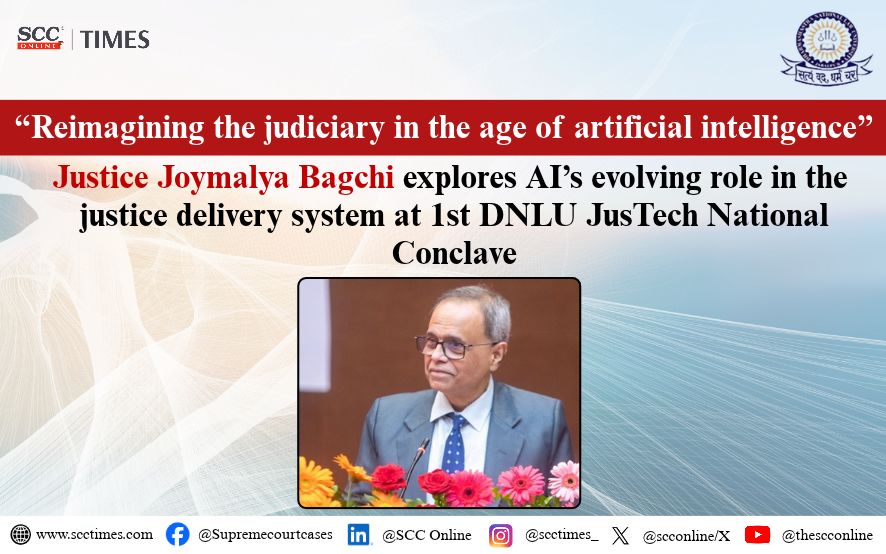
Justice Bagchi: Explores AI's Role in Indian Judiciary at JusTech Conclave
Justice Joymalya Bagchi explored the evolving role of artificial intelligence in the justice delivery system at the 1st DNLU JusTech National Conclave in India, highlighting its potential to address judicial pendency, streamline case management, and assist in routine adjudication.
This discussion is highly significant for legal practitioners and the broader public in India, as it signals a proactive engagement by a senior member of the judiciary with emerging technologies. The recognition of AI's potential to tackle systemic issues like case backlogs and inefficiencies in court processes suggests a future where legal practice may be significantly augmented or transformed by technological tools. For businesses, particularly those in legal tech, this indicates a growing market and acceptance within the judicial system for innovative solutions.
The legal context for this exploration is the Indian judicial system, which, like many others globally, faces challenges of case overload and the need for more efficient administration of justice. While no specific statutes or regulations regarding AI in courts were mentioned, the discussion aligns with broader governmental initiatives towards digitalization and e-governance, such as the e-Courts project. The involvement of a National Law University (DNLU) in hosting such a conclave underscores the academic and institutional interest in shaping the ethical and practical integration of AI into legal frameworks.
The key parties involved in this development are Justice Joymalya Bagchi, representing a segment of the Indian judiciary, and Dharmashastra National Law University (DNLU), which hosted the event. The broader legal community, including legal tech developers and policymakers, are also implicitly involved as stakeholders in this ongoing conversation about the future of justice delivery.
Practitioners should closely monitor policy developments and pilot projects related to AI integration within the Indian judiciary. Understanding how AI tools might be used for case management, legal research, or even preliminary adjudication will be crucial for adapting legal strategies, leveraging new technologies in their practice, and advising clients on the implications of an increasingly AI-assisted legal landscape. Staying informed about ethical guidelines and regulatory frameworks for AI in law will also be paramount.
How does this affect you?
Get an AI analysis of this article grounded in your jurisdictions, practice areas, and any policy documents you've uploaded to Wansom.
Finish Reading the Full Story and the Expert Analysis.
Get the latest legal & regulatory intelligence in India
Wansom is AI and can make mistakes.