
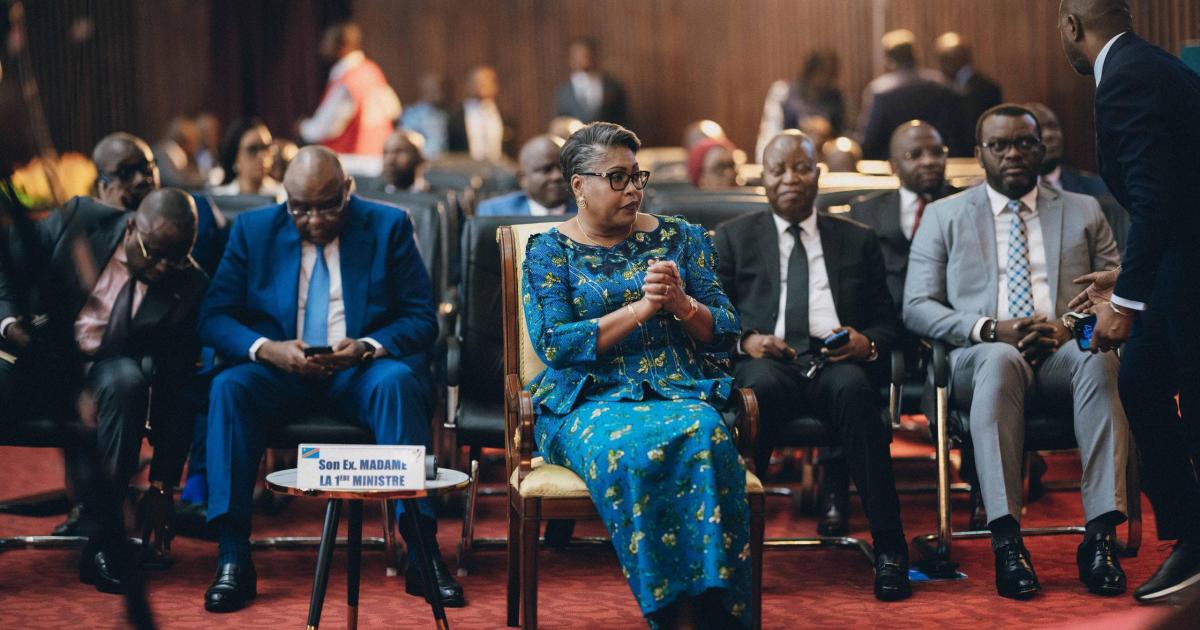
Judith Suminwa: Presents Draft Budget 2027 RDC to National Assembly
Summary
- Prime Minister Judith Suminwa Tuluka submitted the draft finance bill for the 2027 fiscal year to the National Assembly on October 29, 2026.
- The `projet loi finances 2027 RDC` outlines the government's proposed expenditures and revenue strategies for the upcoming year.
- During the submission, Prime Minister Suminwa Tuluka emphasized that every mobilized Congolese franc should lead to tangible progress for citizens.
- The National Assembly will now undertake a rigorous review and debate process before approving the `loi de finances 2027`.
- The final `budget 2027 RDC` will dictate tax obligations, government spending, and regulatory changes, significantly impacting the nation's economy and citizens.
Legislative Milestone
Prime Minister Judith Suminwa Tuluka recently presented the draft finance bill for the 2027 fiscal year to the National Assembly.
Prime Minister Judith Suminwa Tuluka recently presented the draft finance bill for the 2027 fiscal year to the National Assembly. This crucial legislative action, which took place on Thursday, October 29, 2026, marks a significant step in the budgetary process for the République Démocratique Congo, initiating parliamentary review of the government's financial blueprint for the upcoming year.
The submission of the `projet loi finances 2027 RDC` underscores the government's commitment to outlining its economic priorities and revenue projections. The document details anticipated expenditures and revenue collection strategies, forming the bedrock of the nation's financial management for the period. This formal presentation to the legislative body is a standard procedure, setting the stage for extensive deliberation and potential amendments by elected representatives.
During the submission, Prime Minister Suminwa Tuluka articulated a clear vision for the nation's financial future. She emphasized the importance of ensuring that "every Congolese franc mobilized translates into tangible progress in the lives of our citizens, and every decision made today becomes a promise fulfilled for the Congo of tomorrow." This statement highlights the government's aspiration to link fiscal policy directly to improved living standards and future national development.
The Budgetary Process
The presentation of the `loi de finances 2027` to the National Assembly initiates a rigorous legislative journey. Following its submission by Judith Suminwa Tuluka, the draft bill will undergo detailed scrutiny by various parliamentary commissions. These bodies are tasked with examining the proposed allocations, revenue forecasts, and policy implications contained within the extensive document.
Members of the National Assembly will engage in debates, propose amendments, and potentially hold public hearings to gather input on the proposed `budget 2027 RDC`. This consultative phase is vital for ensuring that the final budget reflects the diverse needs and priorities of the Congolese populace. The legislative process is designed to provide checks and balances on government spending and revenue generation, ensuring transparency and accountability in public finance.
Ultimately, the `Assemblée nationale budget 2027` will culminate in a vote, where the finalized finance bill will either be adopted or rejected. Once approved, the `loi de finances 2027` becomes the legal framework governing the government's financial operations for the entire fiscal year, dictating how public funds are raised and spent across all sectors of the economy.
Why It Matters
The `projet loi finances 2027 RDC` is more than just a financial document; it is a critical policy instrument that will shape the economic landscape and social welfare of the République Démocratique Congo. Its provisions will directly impact taxation, public services, infrastructure development, and overall economic stability. For businesses and individuals alike, the final approved budget will determine tax obligations, investment incentives, and the availability of public resources.
The Prime Minister's call to transform every mobilized franc into real progress underscores the profound implications of this budget. It sets the tone for how the government intends to address pressing national challenges, from healthcare and education to security and economic diversification. The successful implementation of the `budget 2027 RDC` is crucial for fostering sustainable growth and improving the quality of life for all citizens.
As the legislative process unfolds, the decisions made by the National Assembly regarding the `loi de finances 2027` will have lasting effects. The approved budget will serve as a roadmap for government action, influencing everything from job creation to social safety nets. Therefore, close monitoring of its progression is essential for understanding the future direction of the nation's economic and social policies.
Practical Implications
Lawyers and compliance officers in the DRC should closely monitor the legislative process of the 2027 finance bill as it progresses through the National Assembly. Its final provisions will dictate tax obligations, government spending priorities, and potential regulatory changes impacting businesses and individuals for the upcoming fiscal year.
Source
Source: Original reporting via PMaki
How does this affect you?
Get an AI analysis of this article grounded in your jurisdictions, practice areas, and any policy documents you've uploaded to Wansom.
Finish Reading the Full Story and the Expert Analysis.
Wansom is AI and can make mistakes.