
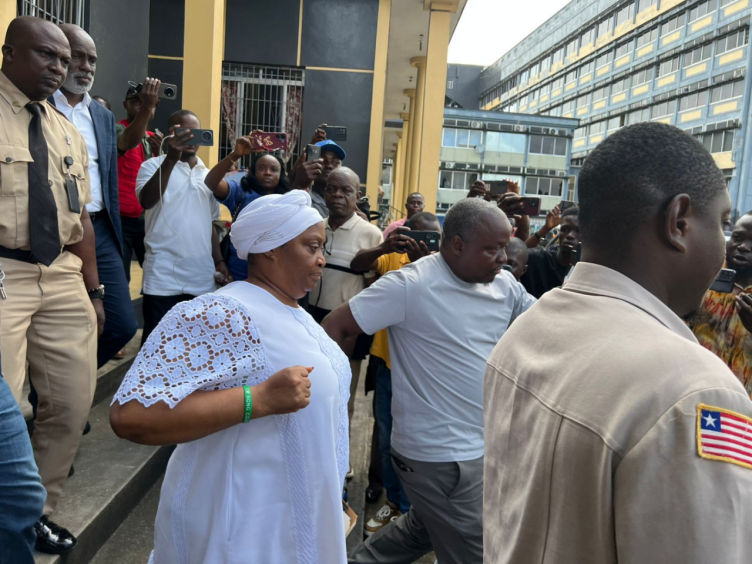
Jewel Howard Taylor: Seeks Separate Trial, Judge Feika Recusal in Cocaine Case
Summary
- Former Vice President Jewel Howard Taylor has filed two motions in the US$317 million cocaine case: one for a separate trial and another for Judge Ousman F. Feika's recusal.
- These motions were submitted to Criminal Court 'C' on November 25, at the start of pretrial proceedings.
- Taylor was arrested on August 19, charged with drug trafficking and money laundering, and later granted medical release under home detention.
- The case originates from a July 21, 2026, seizure of 3,971 kilograms of cocaine, valued at US$317 million, in Margibi County.
- The court's decisions on these motions will set significant procedural precedents for Liberian criminal justice.
Key Procedural Challenges Filed
The court's decisions regarding the Jewel Howard Taylor separate trial and the Judge Ousman Feika recusal Liberia motions will establish important procedural precedents for the Liberian legal system.
Former Vice President Jewel Howard Taylor has initiated two significant legal proceedings within the high-profile US$317 million cocaine trafficking case. These filings, submitted to Criminal Court 'C' on Wednesday, November 25, mark the commencement of pretrial activities and introduce fresh considerations for the court. One petition, referred to as a Jewel Howard Taylor severance motion, requests that her trial be conducted separately from the 19 other individuals indicted in connection with the alleged international drug operation.
Concurrently, a distinct filing seeks the recusal of Judge Ousman F. Feika from presiding over the Liberia US$317M cocaine case. This request, if granted, would necessitate Judge Feika's withdrawal from the proceedings. It is important to note that neither of these legal maneuvers aims to dismiss the charges against Taylor, nor do they assert any misconduct on the part of the prosecution or the presiding judge. Instead, they focus on procedural aspects of how the Liberia Criminal Court C proceedings will unfold.
Background of the Drug Trafficking Allegations
The legal scrutiny surrounding former Vice President Taylor began with her arrest on August 19 at Roberts International Airport, as she prepared to travel to Accra, Ghana, for a women's forum. Following extensive questioning at the Liberia National Police headquarters, she was formally charged with multiple offenses, including drug trafficking, criminal conspiracy, criminal facilitation, criminal solicitation, and money laundering. Subsequently, she was held at the Monrovia Central Prison.
Citing health concerns, Judge Feika granted her compassionate medical release on September 4, placing her under strict home detention. Her legal team later sought to remove these restrictions through a bail application, which Judge Feika denied on September 24, maintaining the existing limitations. The court later ordered the permanent confiscation of electronic devices from her designated residence, following allegations that she had breached the terms of her medical release.
The US$317 Million Cocaine Discovery
The entire prosecution stems from a substantial drug seizure that occurred on July 21, 2026. Authorities discovered approximately 3,971 kilograms of suspected cocaine at a compound situated along Cement Road in the VOA Community, Duazon, Margibi County. The estimated street value of this shipment was approximately US$317 million, making it one of the largest cocaine seizures recorded in Liberia's history.
At the scene of the discovery, two foreign nationals, identified as Srdan Seles and Johann David Garces Grajales, were apprehended. This significant find prompted a broader investigation that extended into various sectors, including security, aviation, and business, indicating the wide-reaching implications of the alleged drug trafficking network.
Judicial Precedent and Future Implications
The court's decisions regarding the Jewel Howard Taylor separate trial and the Judge Ousman Feika recusal Liberia motions will establish important procedural precedents for the Liberian legal system. A ruling in favor of severance would mean Taylor's case proceeds independently, while a decision on recusal would determine who presides over the ongoing Liberia drug trafficking charges. These rulings are crucial as they will shape how complex, multi-defendant criminal cases are managed and how challenges to judicial impartiality are addressed within the country.
Before the substantive trial can move forward, the court is obligated to thoroughly consider the merits of both applications. The outcomes of these pretrial motions will significantly influence the trajectory and timeline of this closely watched prosecution, impacting not only the individuals involved but also the broader framework of Liberia Criminal Court C proceedings.
Practical Implications
Lawyers and compliance officers in Liberia should closely observe the court's rulings on these motions for severance and judicial recusal, as they will establish significant procedural precedents regarding the handling of complex multi-defendant criminal cases and challenges to judicial impartiality within the Liberian legal system.
Source
How does this affect you?
Get an AI analysis of this article grounded in your jurisdictions, practice areas, and any policy documents you've uploaded to Wansom.
Finish Reading the Full Story and the Expert Analysis.
Get the latest legal & regulatory intelligence in Liberia
Wansom is AI and can make mistakes.