
Liberia Special War Crimes Court Bill Concerns: Human Rights Groups Urge Senate
Summary
- Human rights groups have urged the Liberian Senate to revise its proposed war crimes court bill, citing concerns over judicial independence.
- A key provision in "An Act to Establish a Special War Crimes Court for Liberia" would grant the Liberian Supreme Court final appellate authority over the new tribunal.
- The coalition warned that this SWACCOL appellate authority could undermine the court's credibility, especially given existing challenges within Liberia's justice system.
- Other recommendations include adjusting the court's temporal jurisdiction, excluding child offenders, and refining definitions for gender and victims.
- Despite concerns, the groups strongly support establishing the court by November 2027 to ensure accountability for civil war atrocities.
Legislative Debate Over War Crimes Court
The human rights groups Liberia are advocating for a robust and impartial judicial mechanism to address past atrocities, emphasizing that the current proposal for SWACCOL appellate authority could hinder this objective.
A coalition of human rights organizations has formally urged the Liberian Senate to reconsider a critical provision within the proposed "An Act to Establish a Special War Crimes Court for Liberia," arguing that it could compromise the institution's integrity. The groups specifically highlighted concerns over a clause granting the Liberian Supreme Court final appellate authority concerning the planned Special War Crimes Court for Liberia (SWACCOL). This recommendation was presented during a public hearing held by the Senate Judiciary Committee on Wednesday, November 25, 2026, focusing on the Senate's harmonized version of the bill.
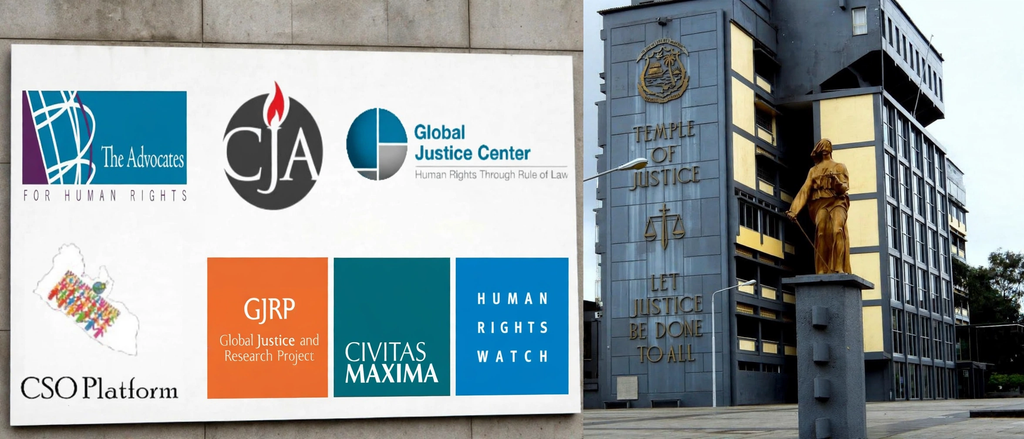
The joint statement, submitted by prominent entities including The Advocates for Human Rights, the Center for Justice and Accountability (CJA), the Civil Society Human Rights Advocacy Platform, Civitas Maxima, the Global Justice and Research Project, the Global Justice Center, and Human Rights Watch, underscored the potential for this appellate structure to undermine the independence and credibility of the future court. The human rights groups Liberia are advocating for a robust and impartial judicial mechanism to address past atrocities, emphasizing that the current proposal for SWACCOL appellate authority could hinder this objective.
Concerns Over Judicial Independence and Bill Provisions
The coalition's primary apprehension stems from the Senate bill's deviation from earlier proposals, which did not assign ultimate appellate review to the Liberian Supreme Court. While acknowledging the Supreme Court's constitutional mandate, the organizations cautioned that such an arrangement might impair the war crimes court's independence, impartiality, and overall effectiveness, or at least create the perception of such impairment. This concern is amplified by persistent and well-documented issues within Liberia's domestic justice system, particularly regarding its capacity and perceived independence.
Beyond the critical issue of SWACCOL appellate authority, the human rights groups also raised several other specific points regarding the bill's provisions. They suggested adjusting the court's timeframe, recommending a start date closer to the 1989 outbreak of the civil war rather than 1979, to ensure more feasible management. Furthermore, they advocated for excluding individuals under 18 at the time of alleged offenses from prosecution, aligning with international standards, as the current bill appears to permit the prosecution of 15-to-18-year-olds. Other recommendations included re-evaluating the necessity of including genocide as a prosecutable crime, given the Truth and Reconciliation Commission's findings, and removing the bill's restrictive definition of gender, preferring an interpretation consistent with international law. They also sought clearer definitions for "victim" and "harm" within the victim participation and reparations framework, proposing that reparations could be managed by a separate body akin to the ICC's Trust Fund for Victims. Lastly, the groups recommended that the Independent Investigative Unit for Liberia (IIU-L) operate under its own distinct legal framework, separate from the court's statute.
The Imperative for Accountability and International Justice
Despite these significant concerns regarding the Liberia Special War Crimes Court bill, the human rights organizations expressed strong support for the overarching goal of establishing the court. They implored all legislative committees to proceed without delay, aiming for the court's establishment by November 2027, in line with the Executive branch's stated timeline. The coalition emphasized that Liberia currently possesses a genuine opportunity to achieve accountability for the severe crimes committed during its civil wars.
The groups highlighted Liberia's upcoming role as the rotating president of the UN Security Council in December, suggesting that advancing the bill now would serve as a powerful demonstration of the nation's commitment to justice and accountability on the international stage. They pointed to successful war crimes trials of Liberian nationals in France and Switzerland as evidence that such prosecutions are achievable, reinforcing the expectation among survivors that justice should also be delivered domestically. To bolster the court's integrity and expertise, the coalition urged lawmakers to ensure a majority of international judges serve alongside Liberian judges and to consult with experts who were instrumental in establishing other hybrid courts, such as the Special Criminal Court in the Central African Republic, the now-concluded Extraordinary African Chambers in Senegal, and the Special Tribunal for The Gambia, thereby strengthening international criminal justice Liberia.
Practical Implications
Lawyers practicing international criminal law, human rights law, or constitutional law in Liberia should closely track the legislative developments of the proposed Special War Crimes Court for Liberia (SWACCOL) bill. The ongoing debate, particularly concerning the Liberian Supreme Court's appellate authority and other provisions, will shape the court's structure, independence, and jurisdiction, directly impacting future legal strategies for potential prosecutions or defense in war crimes cases.
Source
How does this affect you?
Get an AI analysis of this article grounded in your jurisdictions, practice areas, and any policy documents you've uploaded to Wansom.
Finish Reading the Full Story and the Expert Analysis.
Get the latest legal & regulatory intelligence in Liberia
Wansom is AI and can make mistakes.