
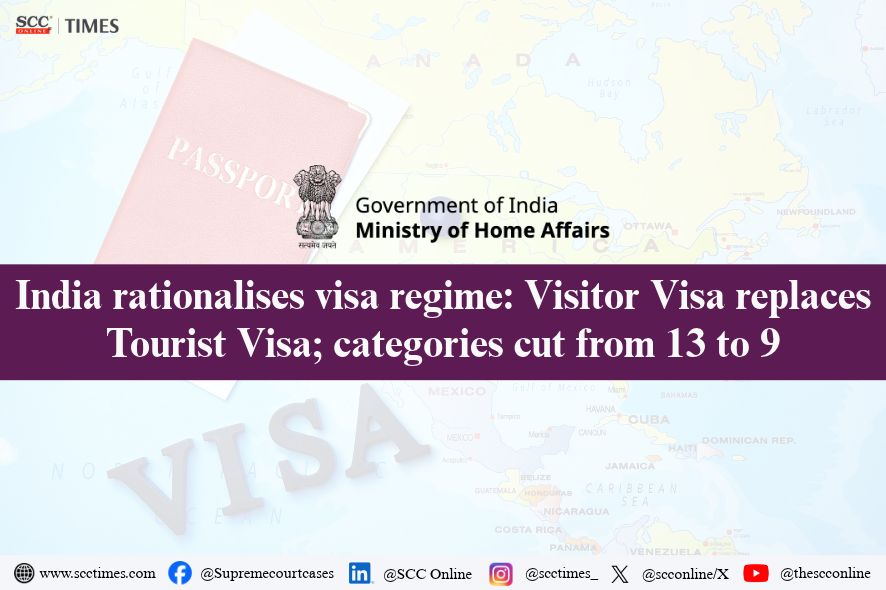
India: Visitor Visa Replaces Tourist Visa in New Regime
Summary
- India has rationalized its visa regime, reducing main categories from 13 to 9 and sub-categories from 49 to 23.
- The new Visitor Visa officially replaces the previous Tourist Visa.
- Application form fields have been significantly reduced by 65% to 70%.
- Clearer, purpose-based pathways are now established for visitors, students, patients, researchers, and business professionals.
What Happened
A pivotal change within this new structure is the official replacement of the traditional Tourist Visa with a new category, now known as the Visitor Visa, signaling a broader and more inclusive approach to short-term stays in the country.
The Indian government has recently enacted a significant overhaul of its visa framework, introducing a rationalized regime designed to streamline the entry process for various international travelers. This comprehensive initiative has led to a substantial reduction in the number of visa categories, aiming to simplify the system for applicants worldwide. A pivotal change within this new structure is the official replacement of the traditional Tourist Visa with a new category, now known as the Visitor Visa, signaling a broader and more inclusive approach to short-term stays in the country.
This strategic move is part of a wider government initiative to make India's immigration procedures more accessible, transparent, and user-friendly for foreign nationals. The official announcement detailed a concerted effort to reduce bureaucratic hurdles and establish clearer, purpose-driven pathways for individuals seeking to enter the country for various reasons. This simplification is expected to benefit a diverse range of international visitors, from those planning leisure trips to professionals, academics, and individuals seeking medical care.
Details of the Overhaul
Under the newly rationalized India visa regime, the total number of primary visa categories has undergone a significant consolidation, decreasing from thirteen distinct types to just nine. This substantial reduction extends to the sub-categories as well, which have been scaled back from forty-nine to twenty-three, marking a considerable simplification of the previously complex and often confusing system. These changes are specifically designed to provide a more straightforward and intuitive structure for all visa applicants, reducing ambiguity and potential errors during the application process.
Further enhancing the India visa application simplification, the government has also drastically reduced the amount of information required on application forms. The number of fields applicants need to complete has been cut by an impressive 65% to 70%. This measure directly addresses common frustrations associated with lengthy and intricate application processes, making it quicker and significantly easier for individuals to submit their requests for entry into India, thereby improving efficiency for both applicants and processing authorities.
Impact on Travelers and Professionals
The revised framework introduces distinct, purpose-based pathways that are meticulously tailored to specific types of international visitors, ensuring clarity and precision in the application process. This targeted approach ensures that individuals applying for an India visa can easily identify and select the correct category corresponding to their precise travel intentions, whether for leisure, study, health, research, or business. These clearer pathways are specifically designed to cater to a broad spectrum of purposes, including general visitation, academic pursuits for students, medical treatment for patients, specialized research activities, and various professional engagements for business professionals.
For instance, the introduction of clearer guidelines for business professionals signifies important India business visa changes, aiming to facilitate smoother and more predictable entry for those engaged in commercial activities and investments within the country. Similarly, the refined categories for patients reflect updated India medical visa rules, ensuring that individuals seeking healthcare services can navigate the process with greater ease and certainty. This comprehensive restructuring underscores the government's commitment to enhancing the overall experience for all foreign nationals entering India, aligning the visa system with modern international travel demands.
Practical Implications
Lawyers advising foreign nationals on travel to India must update their guidance on visa categories and application procedures, particularly regarding the new Visitor Visa, to ensure compliance and efficient processing for clients. This impacts immigration advisory and corporate travel policies for businesses operating in or with India.
Source
Source: Original reporting via SCC Times
How does this affect you?
Get an AI analysis of this article grounded in your jurisdictions, practice areas, and any policy documents you've uploaded to Wansom.
Finish Reading the Full Story and the Expert Analysis.
Get the latest legal & regulatory intelligence in India
Wansom is AI and can make mistakes.