
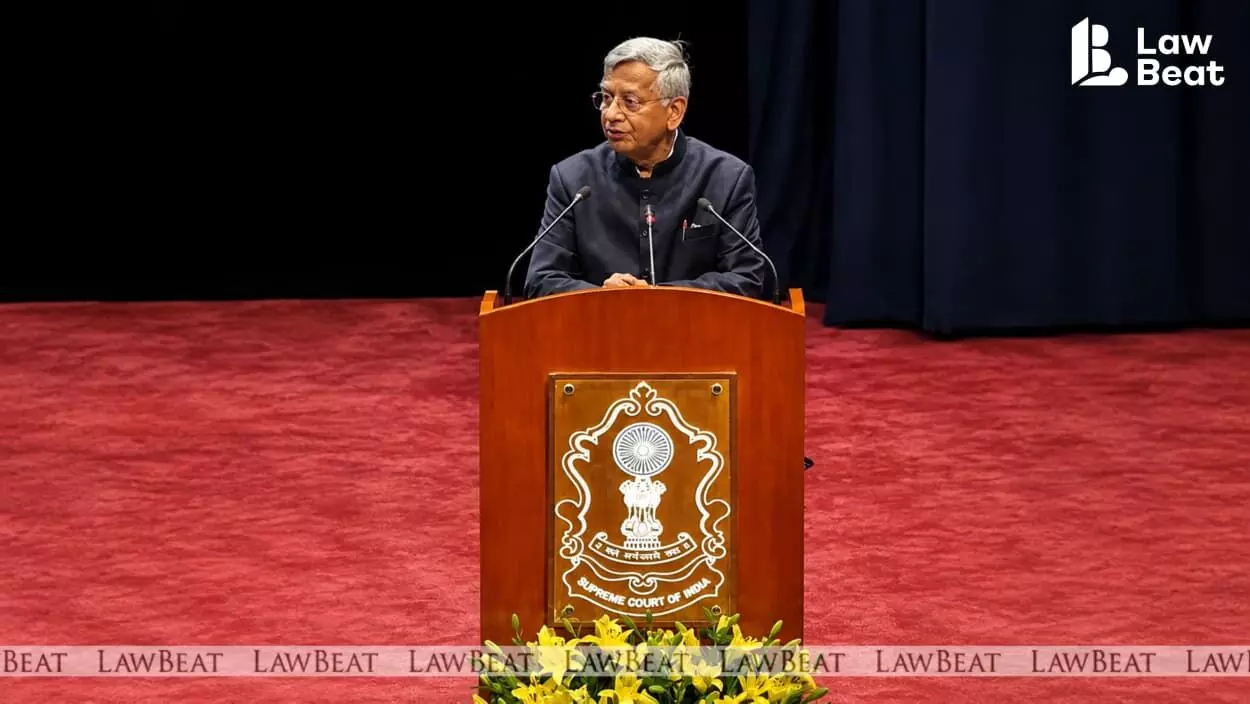
AG Venkataramani: Freedom of Expression Must Not Denigrate Courts
Summary
- Attorney General R. Venkataramani stated that judges' freedom to think is under stress due to "unreflective statements" made under the guise of free speech.
- He warned that "mindless freedom of expression" can lead to the denigration of courts and compromise "Constitutional endurance."
- The Attorney General urged the government to make significant financial investments to address litigation pendency and ensure "ease of justice" for all.
- CJI Surya Kant likened the Supreme Court's judgments to a "pashmina shawl," acknowledging past perceptions of the court as serving the privileged, an era he declared over.
- These remarks were made during the Supreme Court's Constitution Day celebrations, emphasizing the need to address current and future challenges to justice.
What Happened
Such "mindless freedom of expression," he argued, risks "denigrating the working of the courts" and could ultimately compromise "Constitutional endurance."
During the recent Constitution Day celebrations at the Supreme Court, Attorney General R. Venkataramani delivered a significant address, highlighting concerns over the impact of public commentary on the judiciary. His remarks specifically targeted what he termed "unreflective statements" regarding the functioning of courts, asserting that such discourse places undue "stress" on the "freedom of the minds of judges to think." The Attorney General India comments underscored a perceived tension between robust public expression and the imperative for judicial independence.
Venkataramani articulated that the ability of judges to administer justice without fear or favor is intrinsically linked to their intellectual autonomy, a freedom he believes is currently under duress. He cautioned that when public discourse, particularly through open technology, descends into "abusive and basic levels of discussion," it ceases to be genuine freedom of expression. Such "mindless freedom of expression," he argued, risks "denigrating the working of the courts" and could ultimately compromise "Constitutional endurance."
Judicial Independence and Public Discourse
The Attorney General's address at the Supreme Court Constitution Day event served as a stark warning against the potential for public criticism to undermine the judiciary. He contended that the pervasive nature of unconsidered statements about judicial processes, often made under the guise of free speech, directly contributes to the "stress on judges India." This perspective suggests a delicate balance between the constitutional right to freedom of expression and the need to protect the integrity and impartiality of the judicial system from unwarranted attacks.
Venkataramani's strong stance against the "mindless freedom of expression" that leads to "judicial denigration India" reflects a growing concern within legal circles about the boundaries of public criticism directed at courts. He emphasized that true freedom of expression should not be equated with the ability to disparage judicial institutions, as such actions can erode public trust and hinder the judiciary's capacity to perform its duties effectively. The AG Venkataramani freedom of expression courts comments imply a call for greater responsibility in public discourse concerning judicial matters.
Addressing Systemic Challenges in Justice Delivery
Beyond the immediate concerns about public criticism, Attorney General R. Venkataramani also addressed broader systemic issues plaguing the Indian justice system during his Constitution Day speech. He specifically called for urgent action to tackle the "ills of litigation and pendency," warning that a lack of investment in the judicial infrastructure could lead to increased public cynicism and societal disruption. The Attorney General urged the government to consider "manifold financial investments" that go significantly beyond current allocations.
Venkataramani advocated for a more lenient approach to investment in conventional areas, emphasizing the critical need to provide "ease of justice" to all citizens, from remote villages to densely populated metropolitan areas. He stressed the equal importance of both rural and urban populations in this endeavor, highlighting that the "frailties of administration of justice call for speedy action," likening the required pace to that of "bullet trains." While acknowledging that "delay is the result of many factors," he maintained that it is a solvable problem, asserting that "ease of justice is the core of access to justice." Without it, he cautioned, judicial institutions risk becoming "economically and socially exhausted." He also suggested that the government should proactively address these issues rather than solely relying on the Supreme Court to resolve them.
Reflecting on Constitutional Values and Access
The Constitution Day celebrations also featured reflections from Chief Justice of India Surya Kant, who offered a poignant metaphor regarding the Supreme Court's role. CJI Surya Kant likened the Court's jurisprudence to a "pashmina shawl," describing it as "delicate enough to pass through a finger ring and warm enough to shelter the Republic." However, he added a crucial caveat, noting that "even the most precious of shawls, for all its fineness, can protect only those who could afford to wrap it around their shoulders."
This analogy served to acknowledge a historical perception of the Supreme Court as a "court of the privileged," a characterization he declared to be "now over." Attorney General Venkataramani, in a related vein, observed that a genuine celebration of the Constitution involves not merely recounting past achievements, however significant, but rather confronting "significant questions of what we need to do today and tomorrow." The event also included a welcome address by Justice Vikram Nath and remarks from Union Law Minister Ram Mehgwal, underscoring the collective commitment to these constitutional ideals.
Practical Implications
The Attorney General's remarks highlight a growing concern within the Indian judiciary regarding the impact of public criticism and 'mindless freedom of expression' on judicial independence and functioning. Lawyers should be acutely aware of the potential for public statements to be perceived as denigrating the courts, which could have implications for contempt proceedings or professional conduct, and should advise clients accordingly regarding public commentary on judicial matters.
Source
Source: Original reporting via Live Law
How does this affect you?
Get an AI analysis of this article grounded in your jurisdictions, practice areas, and any policy documents you've uploaded to Wansom.
Finish Reading the Full Story and the Expert Analysis.
Get the latest legal & regulatory intelligence in India
Wansom is AI and can make mistakes.