
Justice SK Kaul: Judges Resigned After CJI Intervention
Summary
- Former Supreme Court Justice Sanjay Kishan Kaul revealed that two judges resigned during his tenure after intervention by the Chief Justice of India.
- These judges resigned due to the moral authority of the then CJIs, thereby avoiding formal disciplinary proceedings.
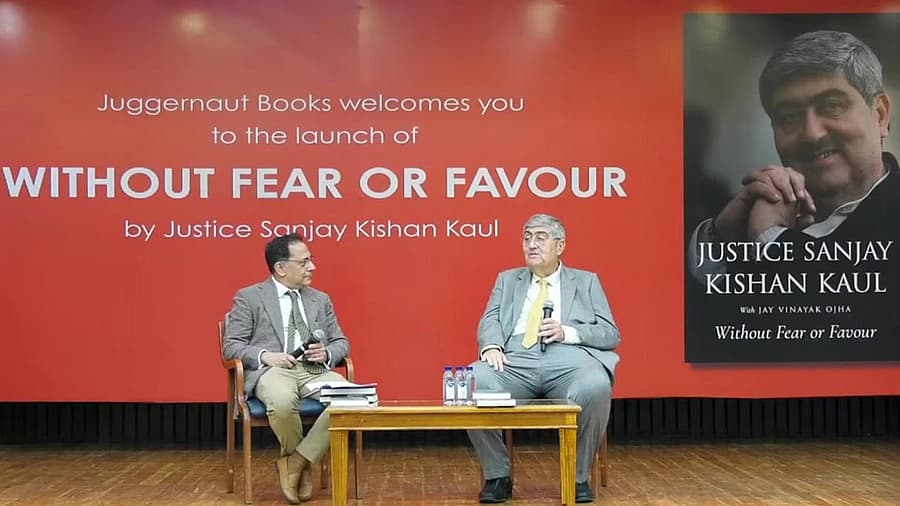
- Justice Kaul shared these insights at the launch of his book, "Without Fear or Favour," at the India International Centre in New Delhi.
- He also discussed how political dispensations can influence judicial appointments within the Indian legal system.
Judicial Accountability Through Moral Authority
The former Justice emphasized that the compelling moral authority wielded by the then Chief Justices of India was the decisive factor prompting these individuals to resign.
Former Supreme Court Justice Sanjay Kishan Kaul recently disclosed two significant instances from his tenure where judges stepped down from their positions following direct intervention by the Chief Justice of India. These revelations highlight an informal yet potent mechanism within the Indian judiciary for addressing conduct issues. Justice Kaul explicitly recalled two such cases where the Chief Justice's intervention led to the judges' resignations, bypassing formal disciplinary proceedings.
The former Justice emphasized that the compelling moral authority wielded by the then Chief Justices of India was the decisive factor prompting these individuals to resign. This approach allowed for a swift resolution without the need for a protracted formal process, underscoring the unique influence of the Chief Justice's office in maintaining judicial integrity. The fact that Justice SK Kaul judges resigned CJI intervention occurred in these specific cases illustrates a powerful, unwritten protocol.
The Chief Justice's Unwritten Power
The Chief Justice of India's moral authority thus emerges as a critical, albeit informal, instrument for upholding ethical standards and accountability within the judiciary. Rather than initiating a formal inquiry or impeachment process, which can be lengthy and publicly damaging, the Chief Justice's direct request for resignation proved sufficient. This informal mechanism demonstrates a reliance on the inherent respect and deference accorded to the highest judicial office.
This method, as described by Justice Kaul, points to a system where the Chief Justice of India moral authority can effectively address sensitive matters, ensuring that judges facing serious questions about their conduct opt for resignation. Such instances, while rare, underscore the significant influence of the CJI in safeguarding the judiciary's reputation and ensuring public trust, often operating outside the strict confines of codified procedures for Indian judicial resignations.
Beyond the Bench: Politics and Appointments
Justice Kaul's remarks were made during a broader discussion that also touched upon the intricate relationship between politics and judicial appointments in India. He observed that political considerations and personal preferences sometimes play a role in who is selected for judicial roles. Specifically, Justice Kaul cited examples where individuals who were overlooked for appointment under one political administration subsequently secured positions after a change in government.
These observations shed light on the complexities surrounding judicial appointments politics India, suggesting that the path to judicial office is not always solely merit-based. This aspect of the discussion, occurring at the launch of his book, "Without Fear or Favour," provides a wider context to the challenges faced by the judiciary, extending beyond individual conduct to the very process of selecting its members.
A Glimpse into "Without Fear or Favour"
The former Supreme Court Justice shared these insights during a fireside chat with Senior Advocate Saurabh Kirpal. The event marked the official launch of Justice Kaul's book, titled "Without Fear or Favour," held at the India International Centre (IIC) in New Delhi. The unveiling ceremony itself was graced by the presence of sitting Supreme Court Justice Vikram Nath and Justice V Ramasubramanian, who is currently the Chairperson of the National Human Rights Commission of India, adding further weight to the occasion. The book's title, "Without Fear or Favour," aptly reflects the themes of judicial independence and integrity that permeated Justice Kaul's discussion, including his candid recollections of the CJI's interventions.
Practical Implications
This revelation by Justice Kaul highlights the informal mechanisms of judicial accountability and the significant moral authority wielded by the Chief Justice of India in ensuring judicial integrity. Lawyers should be aware of these unwritten protocols as they inform the broader context of judicial independence and ethical standards within the Indian legal system, potentially influencing perceptions of judicial fairness and stability.
Source
How does this affect you?
Get an AI analysis of this article grounded in your jurisdictions, practice areas, and any policy documents you've uploaded to Wansom.
Finish Reading the Full Story and the Expert Analysis.
Get the latest legal & regulatory intelligence in India
Wansom is AI and can make mistakes.