
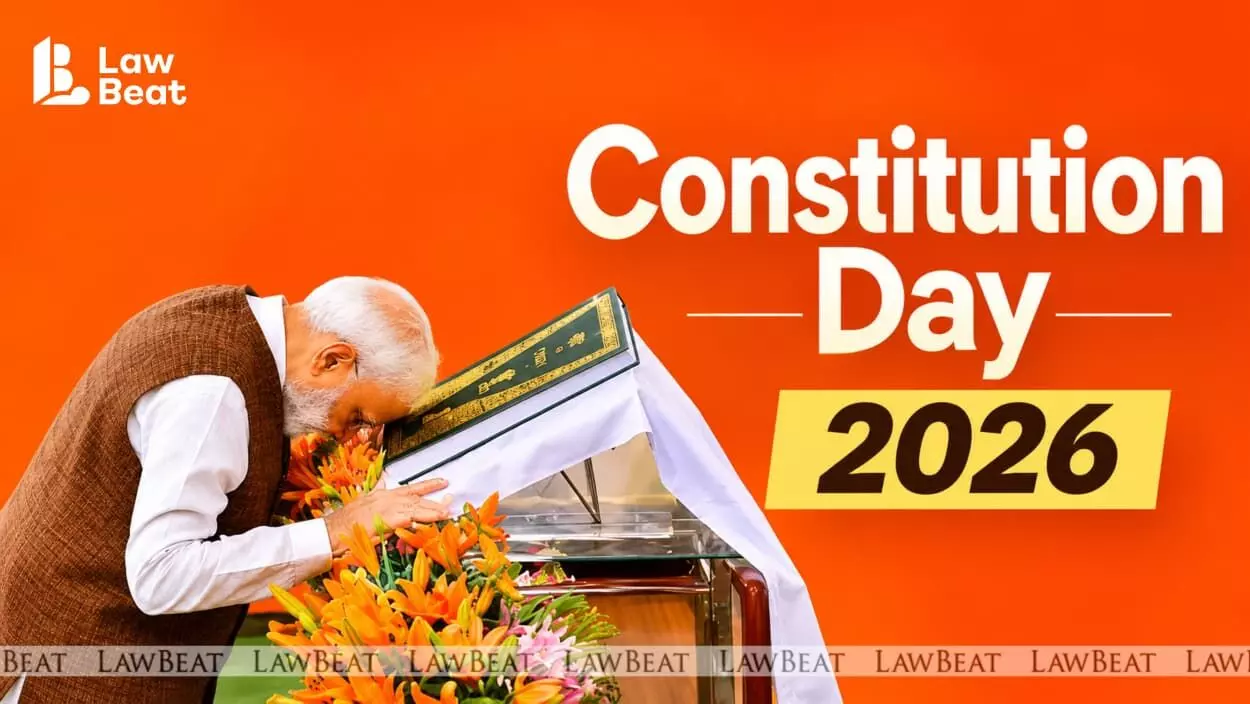
PM Modi Constitution Day 2026 Speech: Constitution A Great Equalizer
Summary
- PM Modi, on Constitution Day 2026, lauded the Indian Constitution as a great equalizer, enabling citizens from all backgrounds to achieve positions of responsibility.
- He cited the 101st, 102nd, and 103rd Constitutional Amendments as examples of the Constitution's promise delivering social and economic justice.
- Modi criticized past Congress governments for "uncomfortable chapters," including the First Constitutional Amendment of 1951 and the Emergency-era 42nd Amendment.
- The Prime Minister also highlighted the alleged misuse of Article 356 by Congress, claiming it was invoked nearly a hundred times, with over 50 instances during Indira Gandhi's tenure.
- He emphasized the Constitution's framers' wisdom in drawing from India's traditions to create a modern, resonant document for a diverse nation.
What Happened
During his Constitution Day 2026 speech, PM Modi also addressed what he termed 'uncomfortable chapters' in India's constitutional history, alleging instances where those tasked with upholding the Constitution instead sought to weaken it.
PM Modi, speaking on Constitution Day 2026, emphasized the Indian Constitution's profound role as a great equalizer, enabling countless citizens to achieve positions of responsibility irrespective of their social or economic background. Reflecting on his own journey from humble origins to the Prime Ministership, he underscored the document's inherent power to foster aspiration and opportunity across the nation. Modi highlighted that the Constitution's greatest strength lies in its guarantee that even individuals born without inherent advantages can ultimately be entrusted with leadership in the world's largest democracy.
He further elaborated on the foresight of the Constitution's framers, acknowledging their extensive reliance on India's rich traditions and civilisational wisdom while crafting a modern foundational text. For a country as diverse as India, encompassing numerous faiths, languages, customs, and schools of thought, the Prime Minister asserted that the Constitution's resonance must extend far beyond the confines of parliamentary chambers and judicial courts, deeply embedding itself in the national consciousness.
Constitutional Progress and Social Justice
In his address, Prime Minister Modi connected the Constitution's promise of social and economic justice to tangible improvements in the daily lives of ordinary citizens. He pointed to government initiatives such as the Pradhan Mantri Awas Yojana, which facilitates access to permanent housing, and the Pradhan Mantri Ujjwala Yojana, providing clean cooking fuel to women from disadvantaged households. The Ayushman Bharat scheme, offering health coverage to vulnerable families, was also cited as an example of constitutional principles manifesting in practical benefits.
Modi further illustrated this by referencing the Pradhan Mantri MUDRA Yojana and PM-SVANidhi, stating that when nearly 50 crore Indians overcome generations of deprivation, allowing parents to envision a brighter future for their children, it exemplifies the Constitution's promise in everyday reality. He also highlighted significant constitutional amendments enacted by his administration, including the 101st Constitutional Amendment, which introduced the Goods and Services Tax, the 102nd Amendment, granting constitutional status to the National Commission for Backward Classes, and the 103rd Amendment, establishing a 10 percent reservation for Economically Weaker Sections. Additionally, Modi noted the availability of the updated Constitution in all 22 languages listed in the Eighth Schedule and the shift from colonial-era penal codes towards a more citizen-centric justice system.
Historical Criticisms and Constitutional Integrity
During his Constitution Day 2026 speech, PM Modi also addressed what he termed 'uncomfortable chapters' in India's constitutional history, alleging instances where those tasked with upholding the Constitution instead sought to weaken it. He specifically directed criticism towards the Congress party's long tenure in power, citing several historical actions. Among these was the First Constitutional Amendment of 1951, which expanded restrictions on freedom of speech, an early example of perceived overreach.
Modi further highlighted the 42nd Amendment of 1976, enacted during the Emergency, which he contended significantly curtailed judicial review. He also condemned the repeated use of Article 356, which empowers the President to impose President's Rule in states where constitutional governance is deemed impossible. The Prime Minister claimed that Congress governments had invoked this provision almost a hundred times, with former Prime Minister Indira Gandhi alone being responsible for more than 50 such instances during her time in office, underscoring a pattern of what he described as misuse of this critical constitutional power.
Why It Matters
PM Modi's Constitution Day 2026 speech offers a significant insight into the current government's framing of India's constitutional journey, blending celebration of its foundational strengths with pointed criticism of past political actions. By juxtaposing the Constitution's role as an equalizer and the positive impact of recent amendments with historical "uncomfortable chapters," the Prime Minister articulated a narrative that champions his administration's efforts while critiquing the constitutional legacy of previous Congress-led governments. This perspective is crucial for understanding the prevailing political discourse surrounding constitutional law, particularly regarding the interpretation and application of provisions like Article 356 and the implications of amendments such as the 42nd Amendment.
The speech, therefore, serves as a political statement on constitutional integrity and evolution, emphasizing the government's commitment to a "citizen-centric" approach while simultaneously drawing attention to perceived historical deviations from constitutional principles. It underscores how constitutional history is actively interpreted and leveraged in contemporary political rhetoric, influencing public perception of governance and the rule of law.
Practical Implications
This article provides insight into the current government's political narrative regarding India's constitutional history, specifically highlighting criticisms of past Congress-era constitutional actions. While not introducing new legal obligations or precedents, it offers a political perspective on the interpretation and application of key constitutional provisions (e.g., Article 356, 42nd Amendment) and recent amendments, which can inform legal professionals about the prevailing political discourse surrounding constitutional law.
Source
How does this affect you?
Get an AI analysis of this article grounded in your jurisdictions, practice areas, and any policy documents you've uploaded to Wansom.
Finish Reading the Full Story and the Expert Analysis.
Get the latest legal & regulatory intelligence in India
Wansom is AI and can make mistakes.