
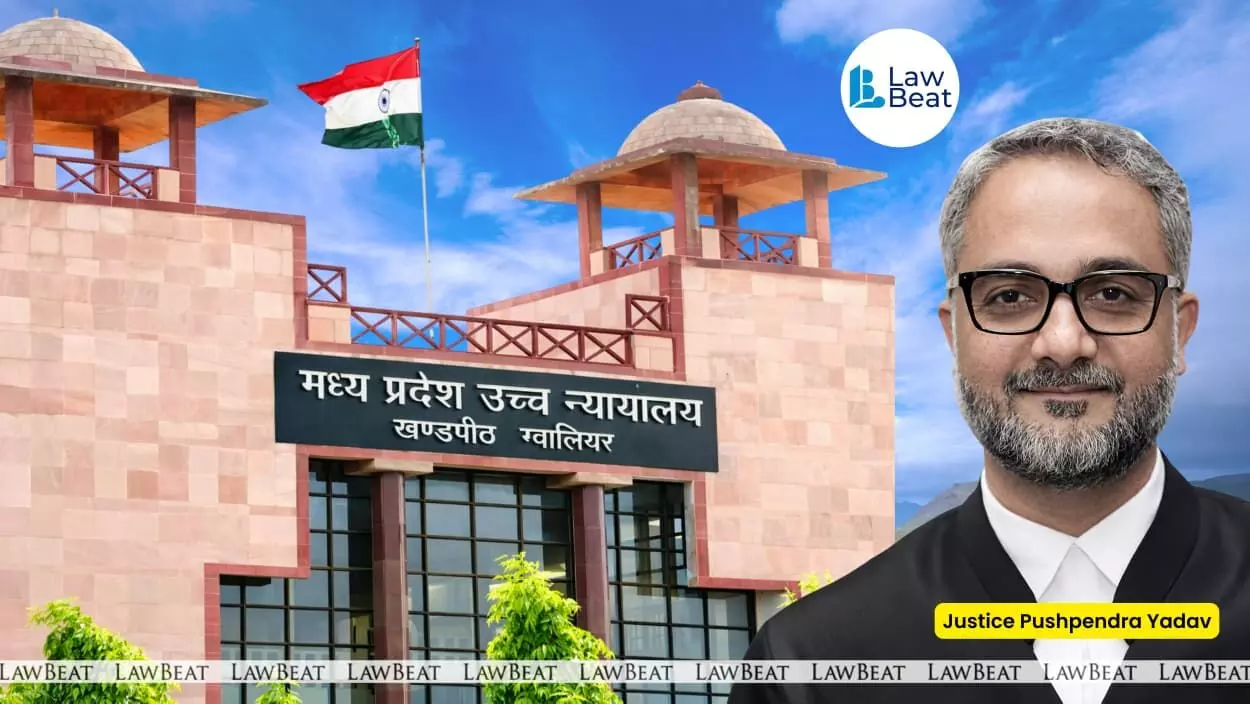
MP High Court: S. 125 CrPC Maintenance Survives Divorce, 498-A Acquittal
Summary
- The Madhya Pradesh High Court ruled that a divorce decree does not end a woman's right to maintenance under Section 144 of the Bharatiya Nagarik Suraksha Sanhita (BNSS), 2023 (formerly Section 125 CrPC).
- An acquittal in a Section 85 of the Bharatiya Nyaya Sanhita (BNS), 2023 (formerly Section 498-A IPC) case also does not automatically defeat a maintenance claim.
- The court dismissed a husband's petition challenging maintenance awarded to his former wife and minor daughter.
- The High Court emphasized that Section 144 BNSS is a measure of social justice and must be liberally construed.
- The case was referred back to the Family Court to consider a potential increase in the husband's income under Section 146 of the Bharatiya Nagarik Suraksha Sanhita (BNSS), 2023 (formerly Section 127 CrPC).
What Happened
This ruling, emphasizing that neither a divorce decree nor an acquittal in a Section 85 BNS case automatically defeats a maintenance claim, provides significant clarity for matrimonial disputes across India.
The Madhya Pradesh High Court, Gwalior Bench, recently addressed a significant matrimonial dispute, reaffirming the enduring nature of maintenance obligations despite divorce or acquittal in related criminal cases. The case involved Dr. Sandeep Nahata and his former wife, Deepa alias Jaya Nahata, along with their minor daughter, Ananya. The couple married in February 2010, but their relationship quickly deteriorated, with the wife alleging that she was subjected to domestic violence and expelled from her marital home in February 2011, while approximately four months pregnant, due to demands for an additional dowry of Rs 5 lakh.
Following these events, the Family Court at Gwalior, in an order dated December 4, 2023, directed Dr. Nahata to provide monthly maintenance of Rs 6,000 to his former wife and Rs 5,000 to their daughter. Dr. Nahata subsequently challenged this order through a revision petition, CRR No. 38 of 2024, before the High Court. Concurrently, Deepa Nahata and her daughter filed their own revision, CRR No. 399 of 2024, seeking a substantial increase in the maintenance amount to Rs 30,000 per month, arguing that the awarded sum of Rs 11,000 was grossly insufficient, particularly given the daughter's educational expenses alone, which reportedly amounted to around Rs 10,000 monthly.
Legal Context and Arguments
During the High Court proceedings, Dr. Nahata's counsel, Advocate Divakar Vyas, presented several arguments to contest the maintenance order. He asserted that Deepa Nahata, being an educated dentist, possessed the capacity to support herself and her daughter financially. Furthermore, the husband emphasized his acquittal in a criminal case filed under Section 85 of the Bharatiya Nyaya Sanhita (BNS), 2023 (formerly Section 498-A of the Indian Penal Code) and highlighted a divorce decree, issued on December 13, 2022, on grounds of cruelty. He also pointed out that a Division Bench had previously upheld the divorce and granted Rs 15 lakh as permanent alimony.
Conversely, Advocates Sarvesh Kumar Sharma and Priyanshu Yadav, representing the wife and daughter, countered these claims. They maintained that Deepa Nahata had no verifiable income, challenging the husband's assertion of her earnings. They also informed the court that the permanent alimony order was under challenge before the Supreme Court, where a special leave petition remained pending. The core of their argument centered on the inadequacy of the maintenance awarded by the Family Court, stressing the daughter's significant educational costs.
High Court's Analysis and Ruling
Justice Pushpendra Yadav, presiding over the case on October 26, 2026, meticulously examined the arguments. The court began by reiterating that Section 144 of the Bharatiya Nagarik Suraksha Sanhita (BNSS), 2023 (formerly Section 125 CrPC), a provision aimed at social justice, must be interpreted broadly to favor claimants. Addressing the husband's claim about the wife's income, the High Court found no substantiating evidence, noting that Dr. Nahata "completely failed to establish the alleged source or extent of her income." The court further referenced the Supreme Court's precedent in Sunita Kachwaha, which clarifies that a claimant's qualifications or even some earnings do not automatically negate their right to maintenance.
Crucially, the High Court rejected the husband's contention that the divorce decree or his acquittal in the Section 85 BNS case extinguished the wife's maintenance claim. The court clarified that a divorce decree "does not extinguish the wife's right to maintenance," citing Explanation (b) to Section 144(1) BNSS, which explicitly recognizes a divorced woman who has not remarried as a "wife" for maintenance purposes. No evidence of remarriage was presented. Regarding the Section 85 BNS acquittal, the court stated it "does not debar the wife to claim maintenance," distinguishing the higher standard of proof required in criminal proceedings (beyond reasonable doubt) from the summary nature of Section 144 BNSS proceedings. While acknowledging the husband's responsibility to support his aged parents, the court affirmed that this "does not absolve him of his primary statutory duty to maintain his wife and minor daughter."
Why It Matters
The Madhya Pradesh High Court's decision to dismiss Dr. Nahata's revision petition, CRR No. 38 of 2024, while disposing of the wife's revision with liberty to approach the Family Court for enhancement, reinforces critical principles regarding maintenance under Section 144 BNSS. This ruling, emphasizing that neither a divorce decree nor an acquittal in a Section 85 BNS case automatically defeats a maintenance claim, provides significant clarity for matrimonial disputes across India. The court also acknowledged the wife's argument regarding the husband's potential pay revision under the Seventh Pay Commission, which could reportedly increase his income from approximately Rs 56,000 to over Rs 1 lakh per month.
While the High Court's revisional jurisdiction was limited to the existing record, it explicitly stated that such a pay hike, "if duly established," would constitute a "substantial change in the circumstances of the parties" warranting examination under Section 146 of the Bharatiya Nagarik Suraksha Sanhita (BNSS), 2023 (formerly Section 127 CrPC). Consequently, the High Court directed the Family Court to consider the husband's potential pay increase, allowing for a revision of the maintenance amount based on changed circumstances, thereby ensuring that maintenance awards remain dynamic and reflective of the parties' financial realities.
Practical Implications
This ruling reinforces that a divorce decree or an acquittal in a Section 498-A IPC case does not automatically extinguish a wife's right to maintenance under Section 125 CrPC. Lawyers advising clients in matrimonial disputes must understand that these are not absolute defenses against maintenance claims and should focus on presenting strong evidence regarding financial capacity and changed circumstances under Section 127 CrPC.
Source
How does this affect you?
Get an AI analysis of this article grounded in your jurisdictions, practice areas, and any policy documents you've uploaded to Wansom.
Finish Reading the Full Story and the Expert Analysis.
Get the latest legal & regulatory intelligence in India
Wansom is AI and can make mistakes.