
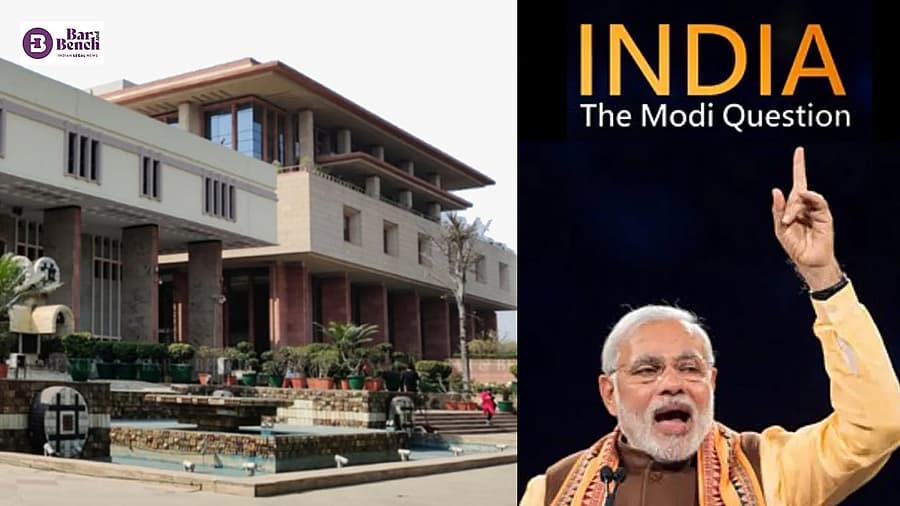
Gujarat NGO: Withdraws ₹10,000 Cr BBC Modi Defamation Case
Summary
- Gujarat-based NGO Justice on Trial withdrew its ₹10,000 crore defamation lawsuit against the BBC in the Delhi High Court.
- The case concerned the BBC's "India: The Modi Question" documentary, which the NGO claimed defamed India, its judiciary, and Prime Minister Narendra Modi.
- The withdrawal followed repeated judicial inquiries into the case's maintainability and concerns over frequent adjournments since its 2023 filing.
- The Delhi High Court had previously fined the NGO ₹20,000 on April 15, 2026, for seeking an adjournment.
- Justice on Trial intends to refile a fresh suit based on the identical cause of action.
Defamation Case Against BBC Withdrawn
Despite the current withdrawal, the legal challenge against the BBC's documentary is far from over, as the NGO has explicitly stated its intention to refile a fresh suit based on the same allegations.
A Gujarat-based non-profit organization, Justice on Trial, has formally withdrawn its substantial ₹10,000 crore defamation lawsuit against the British Broadcasting Corporation (BBC). The legal action, initiated in the Delhi High Court, targeted the BBC's two-part documentary, "India: The Modi Question," which the NGO contended cast a severe aspersion on India's national reputation, its judicial system, and the Prime Minister, Narendra Modi. This move marks a significant development in the ongoing legal scrutiny surrounding the documentary.
The withdrawal was confirmed on September 3, when Advocate Siddharth Sharma, representing Justice on Trial, informed Justice Tushar Rao Gedela of the NGO's decision. The counsel explicitly stated that while the current case was being withdrawn, a new suit would be filed addressing the identical cause of action. Following this submission, the High Court granted the request, formally dismissing the case as withdrawn, thereby concluding this specific iteration of the Gujarat NGO withdraws BBC Modi defamation case saga.
Judicial Scrutiny and Procedural Hurdles
The decision by Justice on Trial to withdraw its high-stakes defamation claim did not occur in isolation but followed persistent questioning from the Delhi High Court regarding the suit's maintainability. Throughout the proceedings, Justice Tushar Rao Gedela had repeatedly raised concerns about the legal viability of the case. Furthermore, the court had highlighted a pattern of delays, noting that despite the lawsuit being filed in 2023, numerous adjournments had been sought by the plaintiff. This procedural scrutiny culminated in a ₹20,000 fine being imposed on the NGO on April 15, 2026, specifically for requesting an adjournment.
A key procedural element in this PM Modi documentary lawsuit Delhi High Court was the plaintiff's Indigent Person Application (IPA). This application, filed by Justice on Trial, sought permission to pursue the case without upfront payment of court fees, a provision available under Order 33 of the Code of Civil Procedure (CPC). Order 33 allows individuals or entities deemed "indigent" – meaning unable to afford court fees – to file suits or appeals. The Delhi High Court's fee structure is directly linked to the monetary value of the claim, which in this instance was a substantial ₹10,000 crore. The court had previously issued notice on this IPA, requesting a response from the BBC, underscoring the procedural complexities involved in such a large-scale defamation case maintainability India.
Future of the Legal Challenge
Despite the current withdrawal, the legal challenge against the BBC's documentary is far from over, as the NGO has explicitly stated its intention to refile a fresh suit based on the same allegations. This indicates that the India The Modi Question legal challenge will likely continue, albeit in a new legal filing. The court's previous scrutiny over maintainability and procedural adherence, particularly concerning the Order 33 CPC indigent person application and repeated adjournments, sets a precedent for how future iterations of this or similar high-profile cases might be handled.
The Delhi High Court's firm stance on procedural matters, including the imposition of fines for delays, signals a judicial environment that prioritizes efficient litigation and robust justification for claims, especially those involving significant monetary demands. While the immediate case is dismissed, the underlying dispute regarding the BBC's documentary and its alleged impact on India's reputation remains active, poised for a potential re-entry into the judicial system. This ongoing situation underscores the complexities of defamation law in India, particularly when involving international media and high-profile political figures.
Practical Implications
This development signals that the legal challenge against the BBC's 'India: The Modi Question' documentary is not concluded, as the NGO intends to refile. Lawyers should note the Delhi High Court's scrutiny on case maintainability and procedural delays, particularly concerning Indigent Person Applications under Order 33 CPC, which could inform strategy for similar high-profile defamation suits.
Source
How does this affect you?
Get an AI analysis of this article grounded in your jurisdictions, practice areas, and any policy documents you've uploaded to Wansom.
Finish Reading the Full Story and the Expert Analysis.
Wansom is AI and can make mistakes.