
India: Raveendran Opposes Nariman's Broad Arbitration Appeal Proposal
Summary
- Former Supreme Court Justice RV Raveendran strongly disagreed with Justice Rohinton Fali Nariman's suggestion for a full-fledged first appeal against domestic arbitral awards.
- Justice Nariman's proposal sought appeals on both facts and law, a remedy Justice Raveendran believes would defeat the core purpose of arbitration.
- Justice Raveendran argued that introducing such appeals would eliminate the distinction between arbitration and traditional litigation, undermining finality.
- He acknowledged that Justice Nariman's suggestion likely stemmed from frustration with current challenges to arbitral awards.
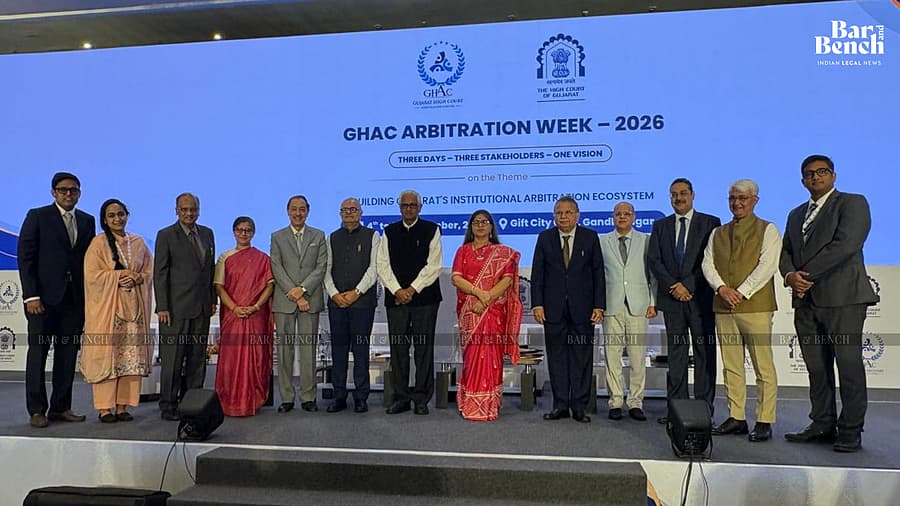
- These comments were made during the GHAC Arbitration Week 2026, a conference focused on strengthening India's institutional arbitration ecosystem.
Judicial Disagreement on Arbitration Appeals
If you have a first appeal, then why have an arbitration? The entire purpose of arbitration is to have finality.
Former Supreme Court Justice RV Raveendran recently voiced strong opposition to a proposal put forth by fellow former Supreme Court Justice Rohinton Fali Nariman concerning the scope of appeals against arbitral awards in India. Justice Nariman had suggested allowing a comprehensive first appeal against domestic arbitral awards, covering both factual and legal grounds.
Justice Raveendran expressed profound disagreement with this idea, stating that such a remedy would fundamentally undermine the core objective of arbitration. He candidly admitted to being "shocked" by the suggestion, although he acknowledged that it likely stemmed from a broader frustration with the current challenges faced in enforcing arbitral awards.
The comments were made during a panel discussion titled "A Judge’s wish list of what the law ought to be," held on the concluding day of the GHAC Arbitration Week 2026 in Gandhinagar. This event provided a platform for prominent legal figures to discuss critical issues shaping India's arbitration landscape, including the contentious issue of Raveendran Nariman arbitration appeal India.
The Debate Over Arbitral Finality
Justice Raveendran emphasized that the very essence of arbitration lies in achieving finality, a principle he believes would be fundamentally negated by introducing a full-fledged first appeal. He articulated his view by posing a rhetorical question: "If you have a first appeal, then why have an arbitration? The entire purpose of arbitration is to have finality." This statement powerfully encapsulates Justice RV Raveendran arbitration view that the process is designed to offer a swifter, more conclusive resolution than traditional litigation, thereby reducing the burden on conventional courts.
He further elaborated that granting courts wider appellate powers, particularly the ability to extensively re-evaluate or modify arbitral awards on both factual and legal grounds, would effectively erase the distinction between arbitration and conventional court proceedings. This perspective underscores the ongoing debate regarding India domestic arbitral awards finality and the unique characteristics that arbitration is intended to preserve as an alternative dispute resolution mechanism. The concern is that increased judicial intervention could transform arbitration into merely another stage of litigation, diminishing its efficiency and cost-effectiveness.
While expressing his shock at the proposition, Justice Raveendran did concede that Justice Rohinton Fali Nariman arbitral appeals proposal might have been born "out of desperation," reflecting the challenges and delays sometimes encountered in the current system of challenging awards. This acknowledgment suggests that the purpose of arbitration debate is not merely academic but arises from practical concerns within the legal framework, highlighting a tension between the desire for finality and the need for adequate recourse against flawed awards.
Context of the Discussion
This significant discussion took place as part of the GHAC Arbitration Week 2026, a three-day conference held from September 4 to 6 at the GIFT City Club. The event was a collaborative effort, organized by the Gujarat High Court in conjunction with the Gujarat High Court Arbitration Centre.
The overarching theme of the conference was "Building Gujarat’s Institutional Arbitration Ecosystem," indicating a strategic focus on strengthening arbitration mechanisms within the region. The panel where Justice Raveendran spoke also included Gujarat High Court Chief Justice Sunita Agarwal and Justice Rav, among others, bringing together diverse judicial perspectives on the future of arbitration in India.
This high-profile debate among former Supreme Court justices at a major arbitration event underscores the critical importance of defining the appropriate balance between judicial oversight and the finality of arbitral decisions, a balance crucial for fostering a robust and efficient arbitration environment.
Practical Implications
This discussion highlights the ongoing judicial debate in India regarding the scope of appeals against arbitral awards, reinforcing the current emphasis on finality in arbitration. Lawyers should monitor these discussions as any future changes to appeal avenues could fundamentally alter arbitration strategy and the enforceability of awards.
Source
How does this affect you?
Get an AI analysis of this article grounded in your jurisdictions, practice areas, and any policy documents you've uploaded to Wansom.
Finish Reading the Full Story and the Expert Analysis.
Wansom is AI and can make mistakes.