
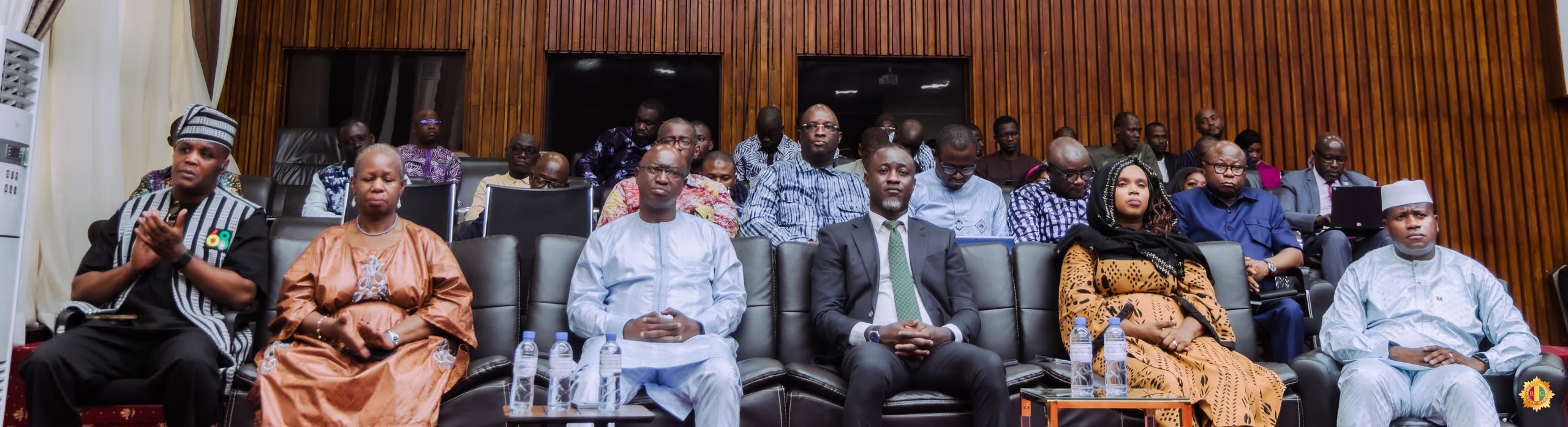
Guinée Parlement: Issues Budget 2026 Recommendations for Improved Execution
Summary
- On November 7, the Guinean National Assembly reviewed the expenditure component of the 2026 draft revised finance bill.
- Following this review, the parliament issued strategic recommendations to improve budget execution.
- The recommendations aim to ensure a tangible positive impact on the daily lives of the Guinean population.
- A key motivation for these recommendations was an alarming observation of weak budget performance.
Parliamentary Action on 2026 Budget
The parliamentarians' aim is to ensure that the nation's financial resources are deployed more effectively, leading to concrete and measurable improvements in the daily lives of the Guinean populace.
On Saturday, November 7, the Guinean National Assembly undertook a detailed review of the expenditure segment within the proposed revised finance bill for 2026. This legislative body, central to the nation's financial governance, meticulously scrutinized the planned spending outlined in the Projet de loi de finances rectificative (PLFR) 2026. The objective of this intensive examination was to identify areas requiring intervention and to chart a course for improved fiscal management.
Following this comprehensive assessment, the Assemblée nationale proceeded to issue a series of strategic recommendations. These directives are specifically designed to address and rectify the current state of budget execution in Guinée. The parliamentarians' aim is to ensure that the nation's financial resources are deployed more effectively, leading to concrete and measurable improvements in the daily lives of the Guinean populace. This initiative underscores a commitment to enhancing the practical benefits derived from public spending.
A significant impetus behind these parliamentary recommendations stems from an alarming finding regarding the current budgetary performance. The National Assembly identified a notable weakness in the existing execution of the budget, suggesting that previous spending mechanisms have not yielded the desired outcomes or impact. This critical observation forms the bedrock of the strategic adjustments now being proposed, highlighting an urgent need for reform in how public funds are managed and disbursed to achieve their intended societal goals. The Guinée parlement budget 2026 recommandations are a direct response to this identified deficiency.
Legal and Fiscal Framework
The legislative process in Guinée mandates parliamentary oversight of the national budget, including any subsequent revisions. The Projet de loi de finances rectificative (PLFR) 2026 represents a crucial mechanism for adjusting the initial financial blueprint for the year, allowing the government to respond to evolving economic conditions or unforeseen fiscal requirements. The National Assembly's role involves not just approving these financial instruments but also ensuring their alignment with national development objectives and the welfare of citizens. This particular review focused on the expenditure side, a critical area for ensuring fiscal responsibility and impact.
The formulation of these recommendations by the Assemblée nationale is a key aspect of its constitutional mandate concerning Finances publiques Guinée. It reflects the parliament's responsibility to scrutinize government spending plans and to provide guidance that can enhance the efficiency and effectiveness of public resource allocation. By delving into the specifics of the expenditure component, the parliament aims to influence how funds are spent, thereby shaping the trajectory of the nation's economic and social development. This proactive stance is vital for maintaining accountability in Exécution budgétaire Guinée.
The very existence of a revised finance bill, or Loi de finances rectificative Guinée 2026, indicates that the initial budgetary projections or priorities may have shifted, or that performance issues have emerged. The National Assembly's intervention, therefore, is not merely a procedural step but a substantive effort to steer the budget back towards its intended course, particularly in light of the identified shortcomings in execution. This legislative action is designed to reinforce the principles of sound financial management and to ensure that public funds genuinely serve the interests of the population.
Implications for Public Impact
The strategic recommendations put forth by the Guinean National Assembly carry significant implications for the future of public service delivery and economic development within the country. By aiming to "rectify budget execution," the parliament is signaling a strong intent to improve the efficiency and transparency with which public funds are managed. This focus on better Exécution budgétaire Guinée is critical for translating national financial plans into tangible benefits for the populace, moving beyond mere allocation to effective implementation.
The emphasis on achieving a "tangible impact on the daily lives of the population" highlights a shift towards results-oriented governance. This means that the success of the 2026 budget will not solely be measured by spending figures, but by its demonstrable effects on citizens, such as improved infrastructure, better social services, or enhanced economic opportunities. The Guinée parlement budget 2026 recommandations are therefore a call for a more accountable and impactful use of public resources, directly addressing the concerns raised by the alarming observation of weak performance.
For stakeholders, including businesses and international partners, these recommendations from the Assemblée nationale Guinée budget discussions could signal potential shifts in government spending priorities or administrative processes. Monitoring the implementation of these parliamentary directives will be crucial for understanding the evolving landscape of Finances publiques Guinée and anticipating changes that could affect various sectors. The parliament's proactive stance in addressing budgetary shortcomings through these strategic recommendations underscores a commitment to fiscal discipline and public welfare.
Practical Implications
Lawyers and compliance officers should monitor the implementation of these parliamentary recommendations for the 2026 Guinean budget, as they may signal shifts in government spending priorities, public procurement processes, or fiscal policies that could impact client engagements or regulatory compliance.
Source
How does this affect you?
Get an AI analysis of this article grounded in your jurisdictions, practice areas, and any policy documents you've uploaded to Wansom.
Finish Reading the Full Story and the Expert Analysis.
Get the latest legal & regulatory intelligence in Guinea
Wansom is AI and can make mistakes.