
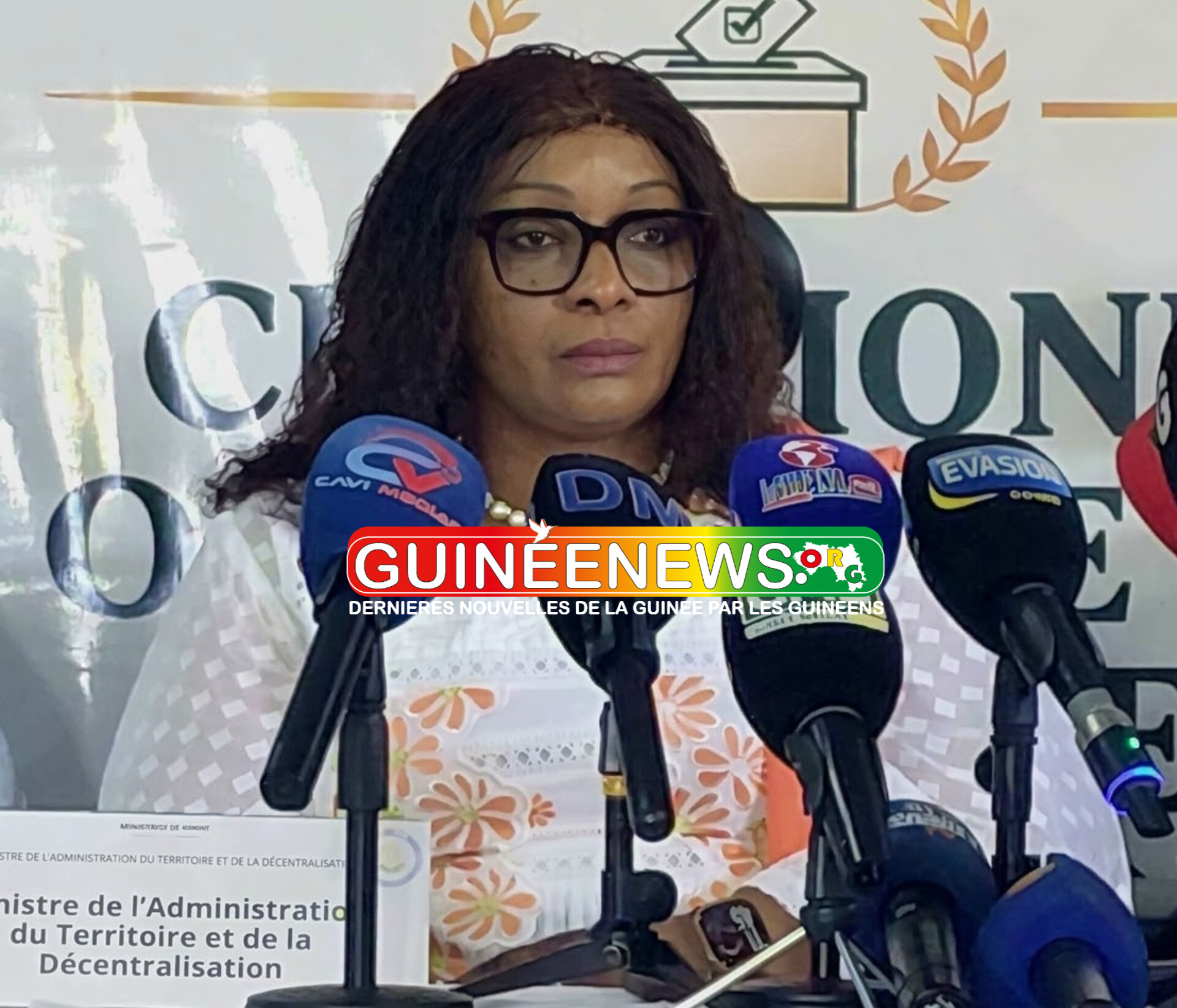
Guinée: Djénabou Touré Annonce Élections Complémentaires 2027 Pour Nouvelles Communes
Summary
- Guinea's Minister Djénabou Touré announced that complementary elections will be held in 2027.
- This announcement was made on Friday, November 13, 2026, during the installation of the new Director General of Elections.
- The upcoming polls are specifically intended for new communes created as a result of recent administrative redistricting.
- These elections are vital for establishing legitimate local authorities and ensuring representation in the newly defined administrative units.
- Legal professionals should actively monitor the official electoral calendar and any new legislation governing these elections.
Upcoming Complementary Elections in Guinea
Lawyers and legal professionals must closely monitor the evolving legal landscape, including any new decrees or legislation that will specifically govern these complementary elections.
Guinea is preparing for a series of complementary elections slated for 2027, as announced by Djénabou Touré, the Minister of Territorial Administration and Decentralization. This significant electoral update was provided on Friday, November 13, 2026, a date that also marked the official installation of the new Director General of Elections (DGE). The announcement signals a crucial phase in the nation's democratic process, particularly at the local governance level, aiming to solidify administrative structures with legitimate, elected leadership following recent reforms.
These forthcoming elections are specifically designed to address the administrative changes that have recently taken place across the country. The primary focus of these ballots will be the newly established communes, which have emerged as a direct consequence of a comprehensive administrative redistricting initiative. This means that citizens residing in these recently delineated areas will have the opportunity to elect their local representatives, thereby ensuring that the new administrative divisions are underpinned by democratic mandates. The process is essential for integrating these new entities fully into the national governance framework.
Legal and Administrative Framework
The necessity for these complementary elections stems directly from the recent redécoupage administratif Guinée, a process that has fundamentally reshaped local administrative boundaries. Such a redrawing of communal lines invariably requires new electoral processes to ensure that all citizens, particularly those in newly formed entities, are adequately represented and have a voice in their local governance. The installation of a new Directeur Général des Élections Guinée on the very day of this pivotal announcement underscores the institutional preparations already underway to manage these complex electoral undertakings, highlighting the government's commitment to implementing the administrative reforms through democratic means.
The mandate of the Director General of Elections is critical in orchestrating the "élections locales Guinée 2027," ensuring their fairness, transparency, and strict adherence to the national electoral code. This includes overseeing voter registration, candidate eligibility, and the logistical aspects of polling in the affected areas. Lawyers and legal professionals must closely monitor the evolving legal landscape, including any new decrees or legislation that will specifically govern these complementary elections. Understanding the precise legal framework for these polls, especially concerning the newly redrawn administrative boundaries, is paramount for advising clients on compliance and political engagement within these restructured local government units.
Implications for Local Governance and Political Engagement
The announcement by Minister Djénabou Touré regarding the "Guinée élections complémentaires 2027" carries substantial implications for local governance and political participation throughout the country. These elections are not merely procedural; they are fundamental to establishing stable and legitimate local authorities in areas affected by the administrative restructuring. The outcomes will directly influence the composition of local councils and the leadership within these new communes, impacting everything from local service delivery and infrastructure development to community planning and resource allocation.
For legal practitioners, the upcoming "calendrier électoral Guinée" for these complementary elections presents a unique set of challenges and opportunities. Lawyers should proactively engage with the official electoral calendar and any subsequent legislative acts to provide informed counsel to various stakeholders. This includes advising political parties, potential candidates, and civil society organizations on electoral laws, eligibility criteria, and campaign regulations within the context of the newly defined administrative units. The integrity and successful execution of these "Guinée élections complémentaires 2027" will be crucial for reinforcing the democratic health and administrative stability of Guinea, particularly as the nation continues to evolve its governance structures.
Practical Implications
Lawyers should monitor the official electoral calendar and any new decrees or legislation governing these complementary elections in Guinea, especially concerning the newly redrawn administrative boundaries, to advise clients on compliance and political engagement within the affected communes.
Source
Source: Based on ministerial statements.
How does this affect you?
Get an AI analysis of this article grounded in your jurisdictions, practice areas, and any policy documents you've uploaded to Wansom.
Finish Reading the Full Story and the Expert Analysis.
Get the latest legal & regulatory intelligence in Guinea
Wansom is AI and can make mistakes.