
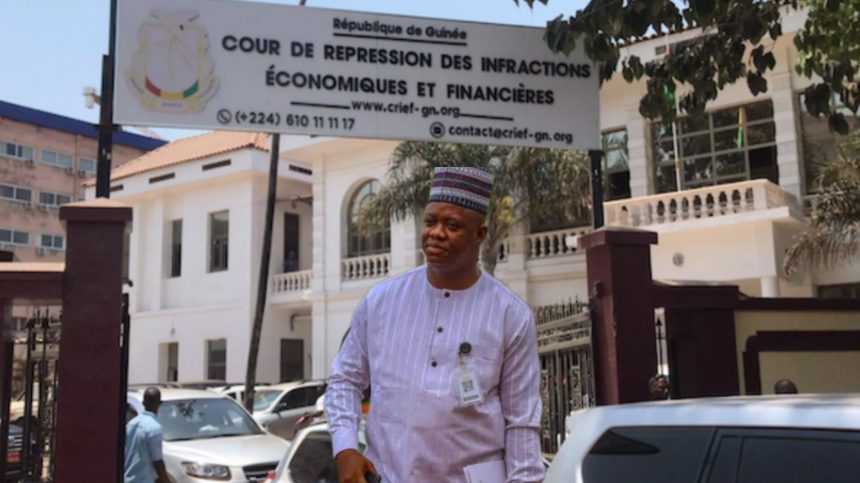
CRIEF Charles Wright: Updates on Sensitive Dossiers in Guinea
Summary
- Special Prosecutor Charles Wright of Guinea's CRIEF discussed sensitive judicial cases during a television interview on November 12, 2026.
- His appearance on "Guinée Today" via Télé 24 covered the CRIEF's ongoing efforts against financial misconduct.
- Key investigations mentioned included the AGETIPE case and matters involving Phamagui.
- Wright also provided updates on the status of frozen accounts and legal proceedings against former officials.
- These discussions underscore the CRIEF's continued focus on combating economic and financial infractions in Guinea.
What Happened
Lawyers and compliance officers in Guinea are advised to closely monitor these ongoing investigations by the CRIEF.
The Special Prosecutor for the Court for the Repression of Economic and Financial Offenses (CRIEF), Charles Wright, recently provided updates on several high-profile legal matters. His insights were shared during an appearance on the television program "Guinée Today," broadcast on Télé 24. This significant interview took place on Thursday, November 12, 2026, drawing attention to the ongoing efforts against financial malfeasance within the nation.
During the televised discussion, Prosecutor Wright delved into various sensitive judicial cases that are currently under the purview of the CRIEF. These discussions highlighted the court's active role in addressing complex financial crimes and the legal proceedings associated with them. The public address offered a rare glimpse into the progress and challenges faced by the specialized court in its mandate to uphold economic integrity.
Among the specific matters brought to light by the special prosecutor were the ongoing investigations related to AGETIPE, alongside other proceedings targeting former government officials. The scope of his remarks also encompassed the status of frozen accounts, indicating the breadth of the CRIEF's investigative reach into financial assets. These updates underscore the persistent focus on combating infractions économiques financières Guinée.
Legal Context: The CRIEF's Mandate
The Court for the Repression of Economic and Financial Offenses, known by its French acronym CRIEF, stands as a pivotal institution in Guinea's judicial landscape. Established with a specific mandate, this court is tasked with investigating, prosecuting, and adjudicating cases involving serious economic and financial infractions. Its creation reflects a concerted effort by the Guinean authorities to tackle corruption, embezzlement, and other forms of financial misconduct that can undermine national development and public trust.
Under the leadership of figures like Special Prosecutor Charles Wright, the CRIEF plays a crucial role in ensuring accountability for those implicated in such offenses. The court's jurisdiction extends to a wide array of financial crimes, making it a central player in the nation's broader anti-corruption strategy. Its operations are vital for maintaining transparency and integrity within both public and private sectors, thereby safeguarding the economic interests of the state and its citizens.
The ongoing work of the CRIEF, particularly as articulated by its special prosecutor, signals a firm commitment to judicial rigor in addressing financial irregularities. This consistent pursuit of justice for infractions économiques financières Guinée is a cornerstone of the current legal environment. The court's actions serve as a deterrent and a mechanism for recovering illicitly acquired assets, reinforcing the rule of law in economic governance.
Key Investigations Under Scrutiny
Among the specific "dossiers sensibles" highlighted by Charles Wright, the special prosecutor, were the ongoing investigations concerning AGETIPE. This particular case represents one of several complex inquiries undertaken by the CRIEF, reflecting the court's expansive reach into various sectors. The mention of AGETIPE underscores the judicial body's commitment to scrutinizing entities involved in significant economic activities within Guinea.
Furthermore, the prosecutor's remarks also touched upon the case involving Phamagui, indicating another significant area of focus for the CRIEF. The inclusion of Phamagui alongside AGETIPE suggests a broad investigative scope, encompassing different types of organizations and potential financial irregularities. These specific mentions provide insight into the active caseload and the diverse nature of the economic offenses being pursued by the court.
A critical aspect of the ongoing legal actions, as confirmed by Prosecutor Wright, involves the status of comptes gelés Guinée CRIEF. The freezing of accounts is a common measure employed in investigations into financial crimes, designed to prevent the dissipation of assets that may have been acquired through illicit means. Additionally, the CRIEF is actively pursuing legal proceedings against certain former officials, signaling a clear intent to hold past administrations accountable for any alleged financial misconduct. This comprehensive approach underscores the CRIEF Charles Wright dossiers sensibles.
Why These Cases Matter
The recent updates from Special Prosecutor Charles Wright regarding the CRIEF's activities carry significant implications for legal and compliance professionals operating within Guinea. The continued public discourse on cases such as AGETIPE and Phamagui, along with the emphasis on frozen accounts and actions against former officials, signals an unwavering commitment by the Guinean judiciary to combat economic and financial infractions. This environment necessitates heightened vigilance from all stakeholders.
Lawyers and compliance officers in Guinea are advised to closely monitor these ongoing investigations by the CRIEF. The pronouncements from Special Prosecutor Charles Wright serve as a clear indicator of the judicial priorities and the potential for intensified scrutiny across various sectors. Understanding the nuances of these cases, including the specific allegations and the legal frameworks being applied, is crucial for advising clients and ensuring adherence to regulatory standards.
The focus on economic and financial infractions, coupled with the potential for asset freezes and subsequent legal proceedings against implicated individuals or organizations, underscores the evolving risk landscape. These actualités judiciaires Guinée highlight the importance of robust internal controls and comprehensive compliance programs. The CRIEF's proactive stance, as articulated by Prosecutor Wright, reinforces the need for proactive legal strategies to navigate the current enforcement climate effectively.
Practical Implications
Lawyers and compliance officers in Guinea should closely monitor the ongoing investigations by the CRIEF, led by Special Prosecutor Charles Wright, particularly regarding entities like AGETIPE and Phamagui, as these cases signal a continued focus on economic and financial infractions and the potential for asset freezes and legal proceedings against implicated individuals or organizations.
Source
Source: Original reporting via Télé 24
How does this affect you?
Get an AI analysis of this article grounded in your jurisdictions, practice areas, and any policy documents you've uploaded to Wansom.
Finish Reading the Full Story and the Expert Analysis.
Get the latest legal & regulatory intelligence in Guinea
Wansom is AI and can make mistakes.