
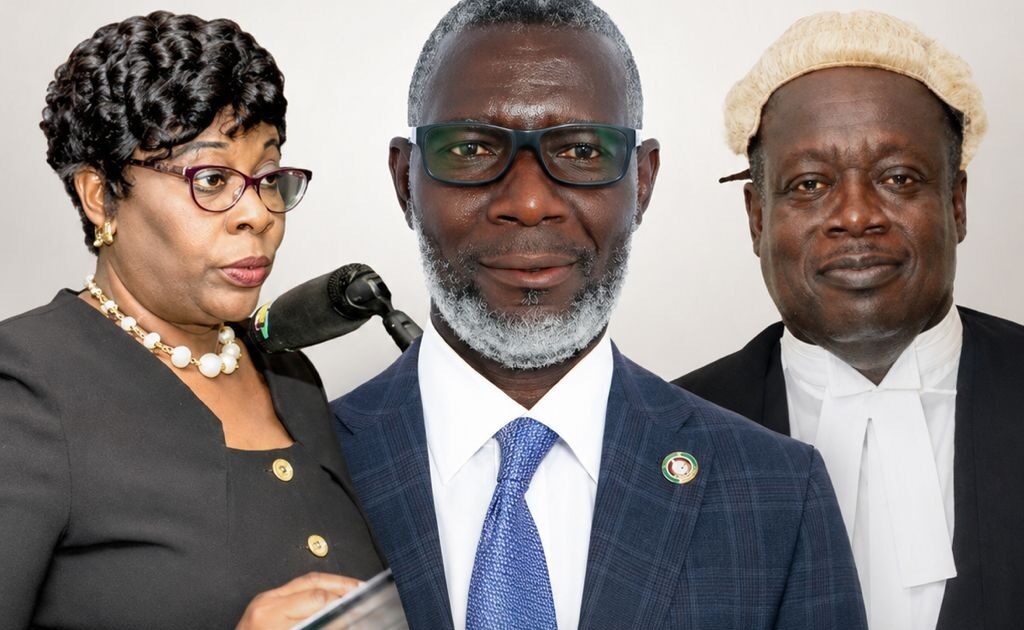
Ghana Parliamentary Appointments Committee: Recommends Ghana Supreme Court Nominees Approval
Summary
- Ghana's Parliamentary Appointments Committee has recommended three nominees for approval to the Supreme Court.
- The nominees are Justice Sophia Rosetta Bernasko Essah, Justice Edward Amoako Asante, and private legal practitioner Anthony Forson Jnr.
- Their approval would expand the Supreme Court from 18 to 21 justices, rather than filling existing vacancies.
- The vetting process was marked by a walkout from the Minority Caucus, who objected to the expedited timetable and lack of public input.
- President John Dramani Mahama made the nominations in consultation with the Judicial Council, with the Council of State deeming the candidates qualified.
Committee Recommends Supreme Court Expansion Amidst Controversy
These appointments are intended to expand the Supreme Court's membership rather than replace justices due to retirement, death, or removal.
Ghana's Parliamentary Appointments Committee has formally recommended the approval of three individuals for appointment to the Supreme Court. This significant development, if finalized, would lead to an expansion of the nation's highest court, increasing its composition from eighteen to twenty-one justices. The nominees put forward for this crucial role are Justice Sophia Rosetta Bernasko Essah, Justice Edward Amoako Asante, and private legal practitioner Anthony Forson Jnr.
The committee's recommendation followed a contentious vetting session held on Thursday, August 27, which was notably disrupted by a walkout staged by the Minority Caucus. The Minority Leader, Alexander Afenyo-Markin, initiated the protest by raising a preliminary objection concerning the procedure and the compressed timetable adopted for the vetting. He argued that the process was unduly rushed, especially given that the Supreme Court currently has no vacant seats requiring immediate replacement. The Minority contended that the nominations, referred to Parliament only at the commencement of an emergency sitting, did not allow for the usual public submission of memoranda.
Despite these objections, the committee chairman, Bernard Ahiafor, rejected the Minority's concerns, reportedly characterizing their grounds as "flimsy," "hollow," and "baseless." He ruled that the committee would proceed with the vetting. Consequently, the Minority Caucus exited the proceedings, leaving the Majority side to continue with the review process for the prospective justices.
Constitutional Process and Procedural Disputes
The nominations for these high judicial offices were initiated by President John Dramani Mahama, acting in accordance with the constitutional framework governing appointments to the Supreme Court. This process mandates consultation with the Judicial Council, which the President duly undertook. Subsequently, the Council of State informed the President that it considered the proposed nominees to be suitably qualified for the positions.
A central point of contention for the Minority Caucus revolved around the nature of these appointments. They highlighted that the three individuals were being considered to expand the Supreme Court's membership rather than to fill vacancies created by retirement, death, or removal of existing justices. This distinction underpinned their argument against the expedited consideration during Parliament's five-day emergency recall, questioning the justification for rushing such critical Ghana judicial appointments process. The Minority Leader emphasized that their objection was strictly procedural, not a challenge to the qualifications or personal integrity of the nominees themselves.
Nominees Bring Extensive Legal and Judicial Experience
The individuals recommended for the Ghana Supreme Court expansion bring a wealth of diverse legal and judicial experience to the apex court. Justice Sophia Rosetta Bernasko Essah currently serves as a Justice of the Court of Appeal, possessing considerable experience accumulated within Ghana’s judiciary. Her long-standing career in the judicial system positions her as a seasoned candidate for the highest court.
Justice Edward Amoako Asante, also a Justice of the Court of Appeal, boasts significant regional judicial experience. Prior to his return to Ghana’s judiciary, he served as President of the ECOWAS Court of Justice for three terms, spanning a total of six years. His tenure at the regional court provided him with extensive exposure to human rights and other areas of international law. Anthony Forson Jnr, the nominee from private legal practice, has a distinguished career in the legal profession, including a period as the former President of the Ghana Bar Association. Their collective backgrounds underscore a wealth of legal and judicial knowledge poised to contribute to the nation's highest court.
Emergency Parliamentary Recall Fuels Controversy
The controversy surrounding these Ghana Supreme Court nominees is inextricably linked to a broader emergency recall of Parliament, which commenced on August 24 and is scheduled to conclude on August 28. Speaker Alban Kingsford Bagbin clarified that this special session was convened at the specific request of President Mahama to address a range of urgent national matters. The Speaker had referred the three judicial nominations to the Appointments Committee as part of this expedited agenda.
In addition to the Ghana Supreme Court nominees approval recommendation, Parliament's emergency agenda included the consideration of two ministerial nominees and the Banks and Specialised Deposit-Taking Institutions (Amendment) Bill. The compressed timeline for addressing such critical legislative and appointment matters during this short emergency recall further intensified the procedural objections raised by the Minority Caucus regarding the vetting process for the judicial candidates.
Practical Implications
Ghanaian legal practitioners should monitor the final approval of these Supreme Court nominees, as their eventual appointment will expand the bench and introduce new judicial perspectives that could impact future case law and legal strategy at the apex court.
Source
How does this affect you?
Get an AI analysis of this article grounded in your jurisdictions, practice areas, and any policy documents you've uploaded to Wansom.
Finish this article free. Just your email for instant unlock.
Wansom is AI and can make mistakes.