
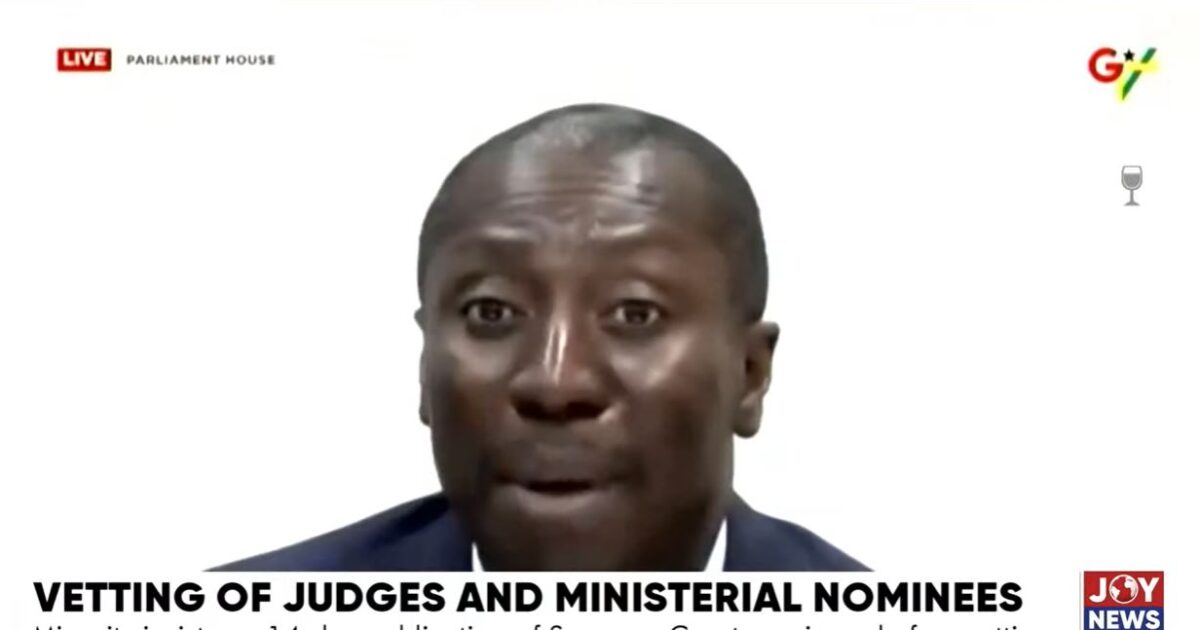
Ghana Minority Objects: Supreme Court Vetting Timeline Challenged
Summary
- Ghana's parliamentary Minority has formally objected to a three-day vetting timetable for three Supreme Court nominees.
- The Minority argues there is currently no vacancy on the Supreme Court, making the nominations additional rather than replacements.
- Concerns were also raised about the compressed schedule preventing sufficient scrutiny and public input, contrary to established parliamentary traditions.
- The nominees in question are Justice Sophia Bernasko-Essah, Justice Amoako Asante, and former GBA President Tony Forson.
- The Minority insists their objection is not against the nominees or the President's authority, but against the rushed process.
Parliamentary Standoff Over Judicial Vetting
A primary ground for the Minority's objection is the assertion that there is presently "no vacancy on the Supreme Court."
Ghana's Parliament is currently embroiled in a significant dispute regarding the vetting process for three individuals nominated to the Supreme Court. On August 27, 2026, the Minority caucus formally lodged an objection with the Appointments Committee, challenging the proposed three-day timeline for scrutinizing President John Dramani Mahama's selections. The nominees at the center of this controversy are Justice Sophia Bernasko-Essah, Justice Amoako Asante, and former Ghana Bar Association President Tony Forson.
The Minority Leader, Alexander Afenyo-Markin, clarified that the objection does not signify opposition to the specific nominees themselves, nor does it challenge the President's constitutional prerogative to appoint justices to the nation's highest court. Instead, the caucus contends that the compressed schedule fundamentally undermines the rigorous examination traditionally afforded to candidates for the Supreme Court. They argue that such a swift process cannot be "lawfully and safely" concluded within the remaining three days of Parliament's current sitting.
The 'No Vacancy' Argument and Procedural Concerns
A primary ground for the Minority's objection is the assertion that there is presently "no vacancy on the Supreme Court." The caucus maintains that the apex court currently operates with its full complement of justices, implying that the three nominations represent additional appointments rather than replacements for jurists who may have retired, passed away, or been removed from office. This perspective leads the Minority to question the rationale for treating these appointments as an urgent matter necessitating an expedited vetting timeline, stating that "urgency requires an urgent state of affairs."
Further procedural concerns were raised regarding the application of Order 217(11) of Parliament’s Standing Orders. The Minority pointed out that, since the adoption of the 1992 Constitution, it has been customary for Supreme Court nominees to receive ample public notice, often including newspaper publications, to allow for the submission of memoranda from the public. They expressed bewilderment at how nominations announced on a Monday could proceed to vetting from Tuesday through Thursday without this traditional period for public input and thorough preparation by committee members.
Calls for Consistent Scrutiny
The Minority emphasized that their actions are not intended to obstruct the appointments but rather to ensure a consistent and thorough vetting process. They referenced historical parliamentary proceedings to underscore their point, citing comments made by then-MP for Bawku Central, Mahama Ayariga, during a July 30, 2024, Appointments Committee sitting. At that time, when the National Democratic Congress (NDC) was in opposition, Ayariga had advocated against rushing the vetting of judicial nominees, stressing the need for adequate time to review candidates' backgrounds, judgments, writings, and publications.
This historical reference serves to highlight the Minority's argument for applying uniform standards to judicial appointments, irrespective of the political party in power. They also recalled remarks made by then-Deputy Minority Leader Alexander Afenyo-Markin during the same 2024 proceedings, reinforcing their stance against what they perceive as an unnecessarily accelerated process for these crucial judicial appointments. The caucus insists that their concerns be formally recorded and resolved by the committee before any further steps are taken.
Implications for Ghana's Judiciary
The ongoing dispute over the vetting timetable and the "no vacancy" argument could have significant ramifications for Ghana's judicial appointment process and constitutional interpretation. Should the Minority's objection prevail, it could lead to delays in confirming the nominated justices, potentially impacting the Supreme Court's composition and workload. The debate also brings into sharp focus the procedural integrity of parliamentary vetting and the balance between executive prerogative and legislative oversight.
The resolution of this controversy will be closely watched by legal professionals and the public alike, as it may set important precedents for future judicial nominations. The insistence on adequate scrutiny and adherence to established parliamentary traditions underscores the importance of maintaining public confidence in the independence and integrity of the judiciary. The outcome will determine whether the current administration can proceed with its nominations under the proposed timeline or if a more extended, publicly engaged process will be mandated.
Practical Implications
Lawyers should monitor the resolution of the Minority's objection, particularly the 'no vacancy' argument, as it could delay these Supreme Court appointments or set a precedent for future constitutional challenges to judicial nominations in Ghana.
Source
How does this affect you?
Get an AI analysis of this article grounded in your jurisdictions, practice areas, and any policy documents you've uploaded to Wansom.
Finish this article free. Just your email for instant unlock.
Wansom is AI and can make mistakes.