
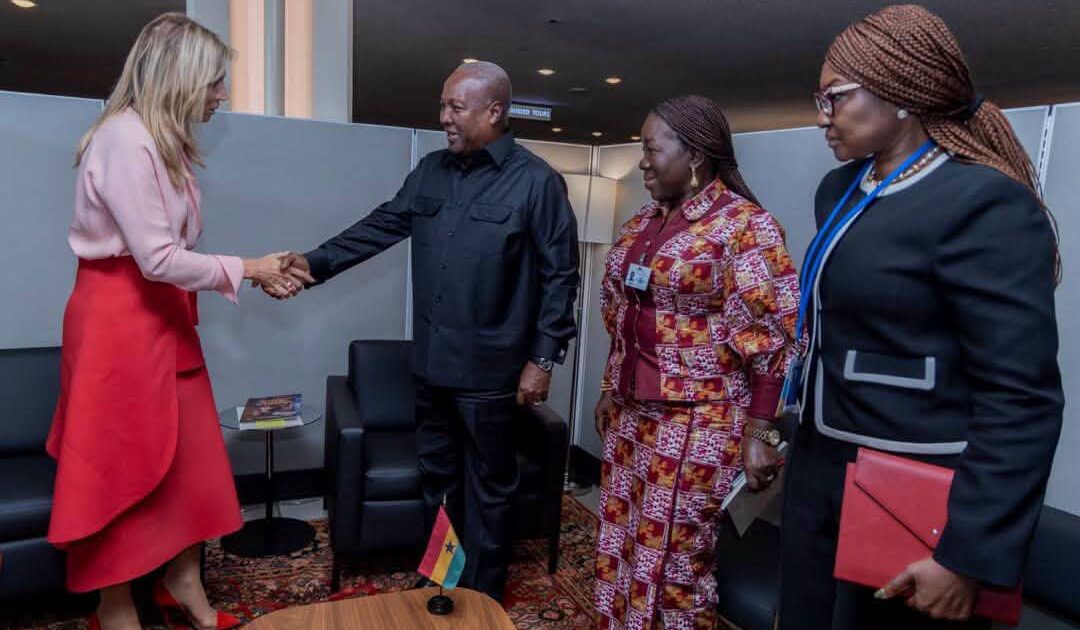
Ghana: Presidential Advisor Urges Financial Reforms for Women's Credit Access
In Ghana, on October 8, 2026, Joyce Bawah Mogtari, Senior Presidential Advisor and Aide to President John Dramani Mahama, publicly called for significant reforms to the nation's financial system to enhance access to capital for women and women-owned businesses, citing concerning Q2 2026 credit allocation figures. She highlighted that while women and women-owned businesses accounted for 82.8% of secured credit transactions, they received only GH¢3.1 billion in secured credit, a stark contrast to the GH¢19.4 billion allocated to male borrowers and male-owned businesses during the same period. Mogtari emphasized that mere participation in the financial system is insufficient; the system must provide women with the capital, terms, and opportunities necessary for growth.
This development carries substantial legal significance for practitioners, businesses, and the public, as it underscores potential systemic biases in credit allocation within Ghana's financial sector, which could hinder economic development and financial inclusion. The call for reforms implicitly targets the existing regulatory frameworks governing financial institutions and lending practices, likely overseen by the Bank of Ghana. While no specific statutes or court cases are detailed in the excerpt, the discussion around "secured credit transactions" points to the legal instruments and collateral requirements that underpin commercial lending in Ghana, suggesting a need for a critical review of these practices to ensure equitable and non-discriminatory application. This high-level advocacy signals a potential shift in policy focus towards gender-responsive financing and a re-evaluation of how financial services are delivered.
The key parties involved in this discourse include Joyce Bawah Mogtari, whose position as a Senior Presidential Advisor lends significant weight to her statements, the financial institutions operating within Ghana that provide credit, and crucially, women and women-owned businesses who are the primary beneficiaries of the proposed reforms. The comparison with male borrowers and businesses serves to highlight the existing disparity. Mogtari's specific recommendations, such as more affordable loans, flexible collateral requirements, access to patient capital, and deliberate support for women-led industries, including the proposed Women’s Bank, indicate a comprehensive approach to addressing the financing gap.
For legal practitioners, this signals an emerging and critical area of focus within Ghanaian financial law and policy. Attorneys should closely monitor any forthcoming legislative proposals, policy directives, or regulatory changes that may arise from these calls for reform, particularly those pertaining to credit access, collateral requirements, and the establishment of specialized financial institutions like the proposed Women's Bank. Advising financial institutions on compliance with evolving gender-responsive lending guidelines and assisting women-owned businesses in navigating new financing opportunities or challenging discriminatory practices will become increasingly relevant. Businesses, especially those led by women, should stay informed about these advocacy efforts and potential future avenues for more equitable financing.
How does this affect you?
Get an AI analysis of this article grounded in your jurisdictions, practice areas, and any policy documents you've uploaded to Wansom.
Finish Reading the Full Story and the Expert Analysis.
Get the latest legal & regulatory intelligence in Ghana
Wansom is AI and can make mistakes.