
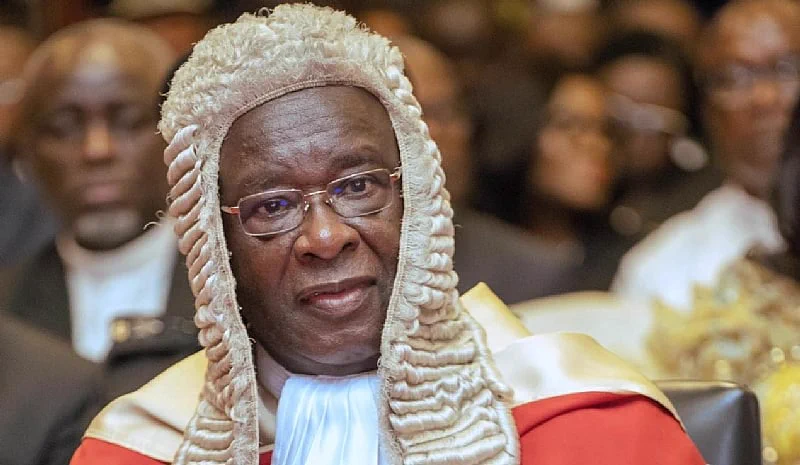
Ghana Chief Justice: Urges Employer Mental Health Policies
Summary
- Ghana's Chief Justice Paul Baffoe-Bonnie urged employers to create supportive workplaces where employees can seek mental health help without fear of stigma.
- The Chief Justice emphasized that mental well-being is essential for a healthy workplace and called for policies prioritizing staff welfare and accessible professional care.
- His message, delivered at the 2026 World Mental Health Day celebration, highlighted the need to recognize lived experiences and move beyond mere statistics.
- He noted the demanding environment of the Judicial Service and stressed that seeking help for mental health should not be seen as a weakness.
- Employers were encouraged to sustain mental health conversations, promote peer support, and advocate for professional assistance, suggesting a future focus on Ghana Chief Justice employer mental health policies.
Ghana's Chief Justice Urges Proactive Mental Health Policies
His address, delivered on October 9, 2026, at the Court Complex in Accra, underscored that mental well-being is not merely a secondary concern but an indispensable component of a healthy and productive workplace.
Ghana's Chief Justice, Paul Baffoe-Bonnie, has issued a significant call to action, urging employers and public institutions across the nation to cultivate workplace environments that actively support individuals facing mental health challenges. Speaking at the 2026 World Mental Health Day celebration, the Chief Justice emphasized the critical need for spaces where employees can seek assistance without the pervasive fear of stigma, discrimination, or exclusion.
His address, delivered on October 9, 2026, at the Court Complex in Accra, underscored that mental well-being is not merely a secondary concern but an indispensable component of a healthy and productive workplace. The Chief Justice advocated for the implementation of comprehensive Ghana employee wellbeing policies designed to prioritize staff welfare and enhance the accessibility of professional mental healthcare services. This directive signals a growing emphasis on Ghana Chief Justice employer mental health policies.
Addressing Stigma and Fostering Empathy
The Chief Justice's message, read on his behalf by Supreme Court Judge Justice Sophia Rosetta Bernasko-Essah, highlighted that discussions surrounding mental health must transcend mere statistics and diagnoses. Instead, they must deeply acknowledge the lived experiences of those affected, recognizing that the fear of judgment and social exclusion often deters individuals from openly discussing their struggles. He stressed the importance of empathetic listening, asserting that these personal narratives should directly inform the design of policies, the provision of support mechanisms, and the overall response to individuals navigating difficult periods in their lives.
The event, jointly organized by the Greater Accra Regional Health Service and the Judicial Service of Ghana, centered on the theme, “Lived Experiences Heard: Real Voices, Real Change.” Chief Justice Paul Baffoe-Bonnie specifically noted the demanding nature of the Judicial Service environment, where staff frequently encounter conflict, trauma, loss, crime, and family disputes—all factors that can profoundly impact their mental well-being. He firmly stated that seeking help for mental health concerns should never be perceived as a sign of weakness, directly confronting Ghana workplace mental health stigma.
Strategic Interventions for Employee Well-being
For an effective justice system to thrive, the well-being of judicial officers and staff is paramount, according to the Chief Justice. He proposed that proactive measures, such as regular screening for chronic medical conditions and comprehensive mental health assessments, could significantly contribute to prevention, facilitate early detection, and ensure timely intervention for those in need. This forward-thinking approach aligns with the broader goal of integrating mental health into overall employee health strategies.
The Chief Justice called for a fundamental societal shift, moving beyond mere sympathy for individuals experiencing mental health challenges to actively constructing robust systems of support. He urged employers to maintain ongoing conversations about mental health, foster an environment where colleagues feel empowered to support one another, and actively promote the seeking of professional help. These recommendations are crucial for developing effective Ghana employee wellbeing policies.
Implications for Ghanaian Workplaces
The pronouncements from Chief Justice Paul Baffoe-Bonnie regarding mental health in the workplace carry significant weight for all Ghanaian employers. His emphasis on establishing supportive environments and implementing specific policies suggests a potential future trajectory where Ghana labour law mental health provisions may become more explicit or stringent. Employers are now on notice to proactively review and develop comprehensive mental health policies, not only to mitigate compliance risks but also to genuinely ensure employee well-being.
This high-level advocacy underscores the increasing importance of Ghana HR mental health compliance. Businesses and public institutions should consider this a strong signal to move beyond basic welfare provisions and integrate mental health support as a core component of their human resources strategies. By doing so, they can foster a more resilient workforce, reduce Ghana workplace mental health stigma, and align with the evolving expectations for responsible corporate citizenship.
Practical Implications
This statement from Ghana's Chief Justice signals a growing emphasis on workplace mental health, potentially foreshadowing future legislative or regulatory requirements. Lawyers should advise employers to proactively review and develop comprehensive mental health policies to mitigate compliance risks and ensure employee wellbeing.
Source
How does this affect you?
Get an AI analysis of this article grounded in your jurisdictions, practice areas, and any policy documents you've uploaded to Wansom.
Finish Reading the Full Story and the Expert Analysis.
Get the latest legal & regulatory intelligence in Ghana
Wansom is AI and can make mistakes.