
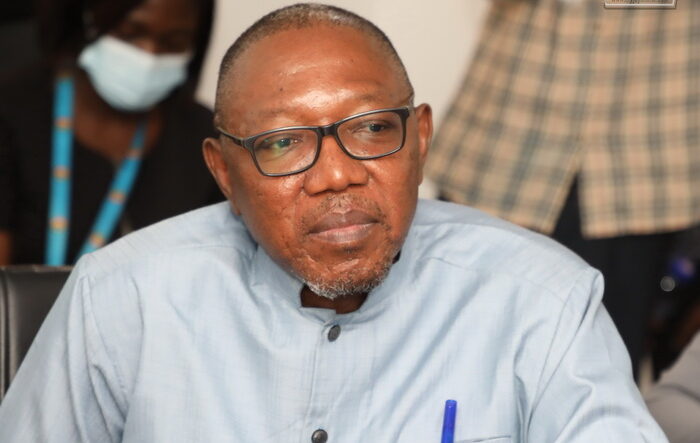
Ghana Education Ministry: Free School Placement Warning Issued
Summary
- Ghana's Ministry of Education confirms that all senior high school placements under the CSSPS are free, with no legitimate 'protocol placement' requiring payment.
- Deputy Education Minister Dr Clement Apaak urged parents and candidates to report any demands for money for placement to the Ghana Police Service or the Office of the Special Prosecutor.
- The CSSPS self-placement portal is open for unmatched candidates and those with specific scores, with 85 private Senior High Schools now participating in the Free SHS programme for 2026/2027.
- A new admission portal allows digital enrolment, and resolution centers are available at regional and national levels, including the GNAT Hall in Accra.
- School heads are strictly warned against admitting students outside the CSSPS, as unauthorized admissions lead to data discrepancies and affect resource allocation, incurring sanctions.
Ministry's Firm Stance on Free Placement
Dr Apaak advised that any individual demanding payment for securing or altering a candidate's placement should be immediately reported to appropriate law enforcement agencies.
Ghana's Ministry of Education has issued a strong caution to parents and prospective students, reiterating that the process for securing senior high school placement through the Computerised School Selection and Placement System (CSSPS) is entirely free of charge. This clear directive, aimed at preventing fraudulent activities, underscores the government's commitment to equitable access to education.
Deputy Education Minister, Dr Clement Apaak, delivered the Ghana Education Ministry free school placement warning during a press briefing on Monday, September 7, coinciding with updates on the 2026/2027 school placement exercise. He explicitly stated that no legitimate 'protocol placement' exists that requires any form of payment, directly addressing a common misconception and a potential avenue for exploitation. The Ministry's message is unequivocal: no individual should solicit or receive money in exchange for influencing or securing a school placement.
Dr Apaak emphasized that school placements are determined solely by established criteria, including candidates’ choices, specific programme requirements, and the availability of vacancies within institutions. This transparent process is designed to ensure fairness and merit-based admissions, making any financial transaction for placement inherently illegitimate. The Ministry urges all stakeholders to be vigilant against individuals who might falsely represent themselves as officials from the Ministry of Education, Ghana Education Service, Ghana TVET Service, or individual schools to demand payment for placement services.
Reporting Fraud and Protecting Credentials
In light of potential scams, the Ministry has provided clear channels for reporting any attempts to solicit money for school placement. Dr Apaak advised that any individual demanding payment for securing or altering a candidate's placement should be immediately reported to appropriate law enforcement agencies. This includes the Ghana Police Service and, notably, the Office of the Special Prosecutor, highlighting the serious anti-corruption implications of such illicit activities.
Beyond reporting, parents and candidates are also urged to take proactive steps to safeguard their personal information. Protecting placement credentials and refraining from sharing them with unauthorized individuals is crucial to prevent manipulation or misuse of their application status. This measure is vital in maintaining the integrity of the Ghana CSSPS placement payment warning system and ensuring that only legitimate processes are followed.
Expanded Options and Streamlined Access
The Ministry's announcement comes as the CSSPS self-placement portal has opened, offering an alternative for candidates who were not automatically matched with their preferred schools. This portal is also accessible to eligible candidates who achieved a score of 9 in either English Language, Mathematics, or both subjects. These students are encouraged to explore the full spectrum of available schools and programmes, including a significant number of private Senior High Schools now participating in the Free SHS initiative.
For the 2026/2027 academic year, 85 private Senior High Schools have joined the Free SHS programme, substantially increasing placement options for students. This strategic inclusion aims to broaden access to education, effectively utilize existing educational infrastructure, and alleviate pressure on public schools that typically experience high demand. Furthermore, the CSSPS has been upgraded with an admission portal, allowing parents and guardians to complete enrolment procedures and download admission forms digitally, eliminating the need for physical travel to schools and streamlining the entire process. To assist with genuine placement challenges, resolution centres have been established at both regional and national levels, with the GNAT Hall in Accra serving as the National Placement Resolution Centre, and regional GES or Ghana TVET Service offices as initial points of contact.
Institutional Compliance and Sanctions
A critical component of the Ministry's directive involves a stern warning to heads of schools regarding unauthorized admissions. Dr Apaak explicitly cautioned against admitting or enrolling students outside the established CSSPS framework. Non-compliance with this directive will result in appropriate sanctions, underscoring the Ministry's resolve to enforce adherence to official procedures.
Unauthorized admissions pose significant risks, primarily by creating data discrepancies within the educational system. These inaccuracies can subsequently affect the accurate disbursement of resources to schools, potentially disadvantaging legitimate students and undermining the efficiency of the Free SHS programme. The Ministry's firm stance on Ghana Free SHS unauthorized admissions reinforces the importance of institutional integrity and accountability in the placement process, ensuring that the Ministry of Education Ghana protocol placement system remains fair and transparent for all.
Practical Implications
Lawyers should advise clients on the illegality of paying for school placement under Ghana's CSSPS and the potential for anti-corruption enforcement by the Office of the Special Prosecutor. Compliance officers in educational institutions must ensure strict adherence to official placement procedures to avoid sanctions for unauthorized admissions.
Source
How does this affect you?
Get an AI analysis of this article grounded in your jurisdictions, practice areas, and any policy documents you've uploaded to Wansom.
Finish Reading the Full Story and the Expert Analysis.
Wansom is AI and can make mistakes.