
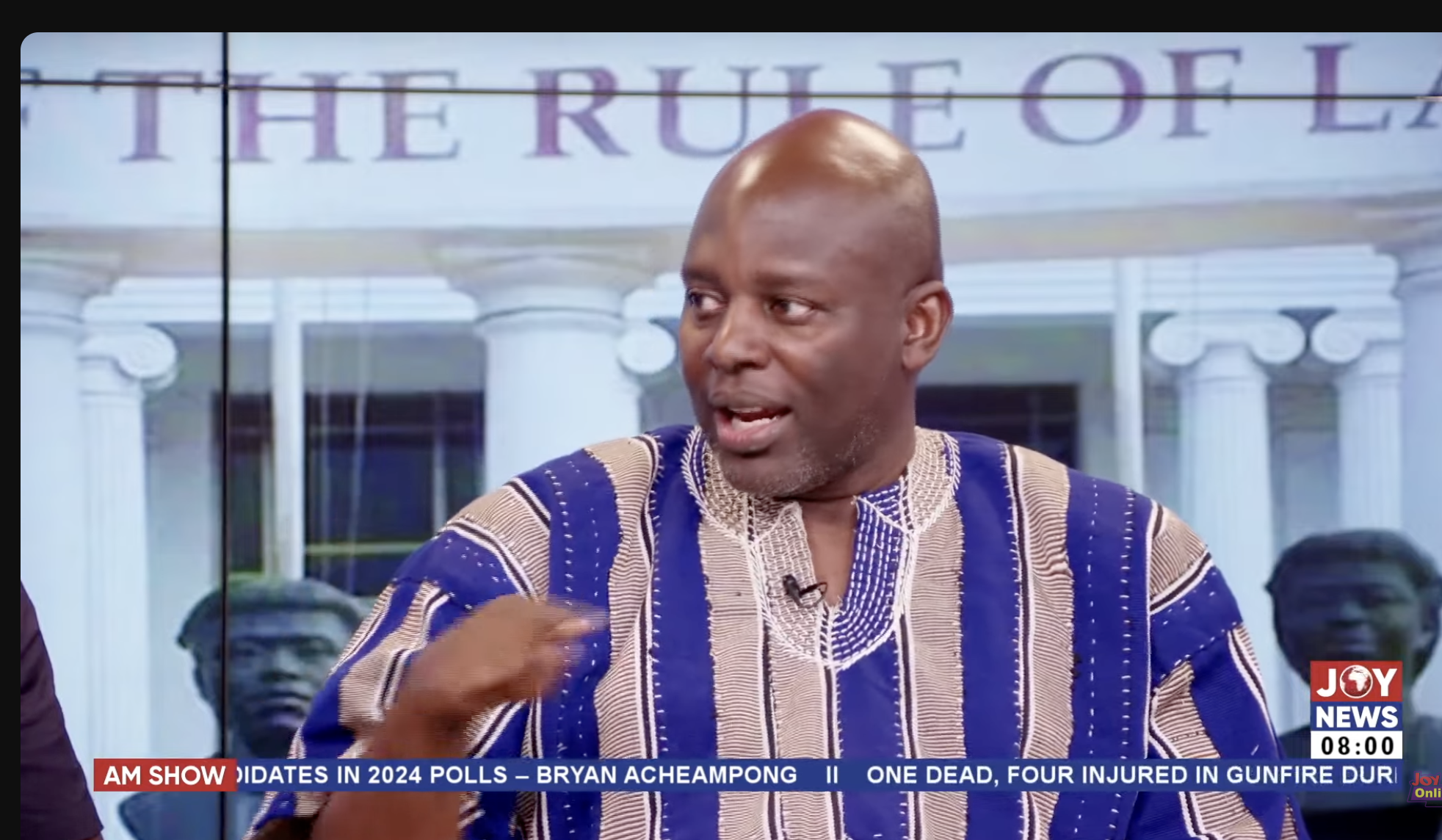
Ghana EC: New Deputy Chairpersons Face Akufo-Addo Test
Summary
- Dr. John Osae-Kwapong proposed an "Akufo-Addo test" for new Electoral Commission appointees.
- The test assesses appointees on integrity, fairness, professionalism, and independent judgment, criteria outlined by former President Akufo-Addo in 2023.
- President John Mahama recently swore in Dr. Joseph Kwaku Asamoah and Emelia Afi Agbenyo as EC deputy chairpersons.
- Osae-Kwapong questioned public discomfort with openly partisan appointees versus privately partisan ones in independent bodies.
- He also considered whether internal EC safeguards could prevent a single partisan commissioner from influencing decisions.
What Happened
Ensuring that EC officials embody the highest standards of integrity, fairness, professionalism, and independent judgment is paramount for maintaining the credibility of Ghana's elections.
President John Mahama recently oversaw the induction of Dr. Joseph Kwaku Asamoah and Emelia Afi Agbenyo as new deputy chairpersons for Ghana's Electoral Commission (EC). This ceremony took place on Monday, October 12, with President Mahama emphasizing the critical need for the new appointees to uphold the integrity of the electoral process and bolster public trust in the institution. These appointments were necessitated by the departure of Dr. Bossman Eric Asare, who resigned, and Samuel Tettey, who retired from their respective positions.
The 'Akufo-Addo Test' Explained
The "Akufo-Addo test" refers to a set of principles articulated by former President Nana Akufo-Addo in 2023 during the swearing-in of previous Electoral Commission commissioners. Dr. Osae-Kwapong views these past remarks as providing valuable guidance on the essential qualities expected from anyone serving as an electoral commissioner. He specifically cited Akufo-Addo's emphasis on an individual's capacity to serve with unwavering integrity, demonstrate impartiality and fairness, maintain a high degree of professionalism, and exhibit genuine independence of mind and judgment in their duties.
According to Dr. Osae-Kwapong, the primary objective of this "test" is to ascertain whether the newly appointed deputy chairpersons can indeed meet these stringent standards. He stated that if an appointee can adequately measure up to these criteria, then their suitability for the role is affirmed. This framework serves as a benchmark for public and expert assessment, aiming to ensure that the EC's leadership embodies the highest ideals of public service and electoral impartiality.
Debate on Partisanship and Integrity
Beyond the specific qualities outlined in the "Akufo-Addo test," Dr. Osae-Kwapong also raised pertinent questions concerning the public's perception of political affiliation among appointees to independent constitutional bodies. He drew a distinction between individuals whose political sympathies are openly declared and those who may hold equally strong partisan views but keep them private. He observed that there appears to be a significant level of public discomfort when an individual known for their open partisan leanings is appointed to an institution designed to be independent and non-partisan.
This observation led him to ponder whether the public's concern is primarily rooted in the *knowledge* of partisanship rather than the partisanship itself. He further questioned the efficacy of internal mechanisms within the Electoral Commission to counteract potential partisan influence. Dr. Osae-Kwapong asked whether the worry about a single openly partisan individual advancing a political party's agenda is overstated, especially when that person operates within a body comprising six other commissioners. He suggested that his apprehension regarding an appointee's political bias would be significantly reduced if the collective body of commissioners possessed the capacity to effectively scrutinize and restrain any attempts to act on such biases, thereby safeguarding the Commission's neutrality.
Why It Matters
The call for an "Akufo-Addo test" and the subsequent discourse on partisanship within the Electoral Commission underscore a critical ongoing national conversation about the integrity and independence of Ghana's constitutional bodies. The EC's role as the primary arbiter of elections makes its perceived impartiality fundamental to democratic stability and public confidence in electoral outcomes. The scrutiny applied to these recent appointments reflects a societal demand for transparency and accountability, particularly in roles that directly impact the fairness of democratic processes.
Ensuring that EC officials embody the highest standards of integrity, fairness, professionalism, and independent judgment is paramount for maintaining the credibility of Ghana's elections. The public discourse initiated by Dr. Osae-Kwapong serves as a vital reminder that while appointments are made by the executive, the ultimate legitimacy of these officials, and by extension the institution they serve, rests on their ability to transcend political affiliations and uphold the constitutional mandate without bias. This ongoing vigilance is crucial for the health of Ghana's democratic institutions.
Practical Implications
Lawyers advising on public sector governance or electoral law in Ghana should be aware of the 'Akufo-Addo test' and the ongoing public discourse regarding integrity and independence in Electoral Commission appointments. This scrutiny could inform arguments in future electoral disputes or policy advocacy concerning the impartiality of constitutional bodies.
Source
How does this affect you?
Get an AI analysis of this article grounded in your jurisdictions, practice areas, and any policy documents you've uploaded to Wansom.
Finish Reading the Full Story and the Expert Analysis.
Get the latest legal & regulatory intelligence in Ghana
Wansom is AI and can make mistakes.