
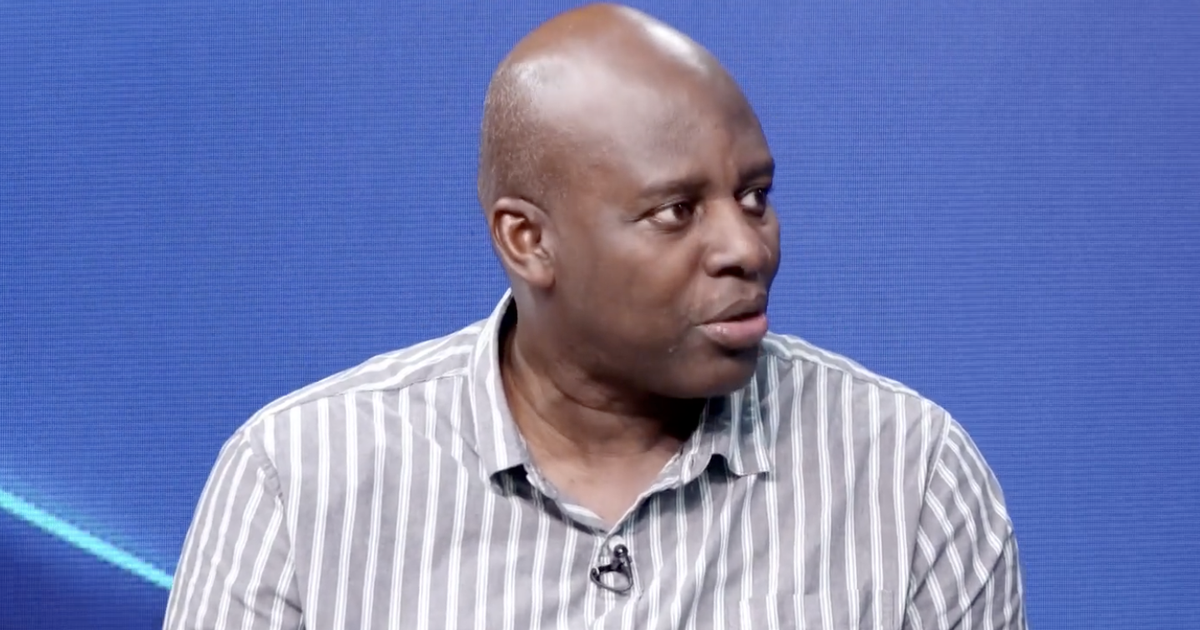
Dr. Osae-Kwapong Questions Ghana EC Bias Safeguards
Summary
- Dr. John Osae-Kwapong of CDD-Ghana questioned the effectiveness of internal safeguards within the Electoral Commission against partisan commissioners.
- His comments followed President John Mahama's recent appointment of two new EC deputy chairpersons, Dr. Joseph Kwaku Asamoah and Emelia Afi Agbenyo.
- Osae-Kwapong proposed applying the "Akufo-Addo test," which assesses appointees based on integrity, fairness, professionalism, and independence.
- He highlighted public discomfort with openly partisan individuals serving on independent constitutional bodies.
- The discussion emphasizes the need for robust checks to ensure the Ghana Electoral Commission's impartiality.
What Happened
Dr. Osae-Kwapong’s assessment underscored the dual importance of an appointee’s personal conduct and the collective capacity of fellow commissioners to mitigate partisan influences.
Dr. John Osae-Kwapong, a Fellow at CDD-Ghana, recently raised significant questions regarding the internal mechanisms designed to prevent partisan bias within Ghana's Electoral Commission (EC). Speaking on Joy News’ PM Express on a Tuesday, he specifically queried whether existing safeguards are robust enough to stop a commissioner with strong political affiliations from acting in the interest of a particular political party. His remarks underscore a broader concern about the appointment of individuals perceived as openly partisan to independent constitutional bodies.
The context for Dr. Osae-Kwapong's comments was the recent swearing-in of two new EC deputy chairpersons by President John Mahama. On Monday, October 12, Dr. Joseph Kwaku Asamoah and Emelia Afi Agbenyo officially assumed their roles, filling vacancies created by the resignation of Dr. Bossman Eric Asare and the retirement of Samuel Tettey. President Mahama, during the ceremony, specifically charged the new deputies with upholding impartiality and working to strengthen public confidence in the institution.
Dr. Osae-Kwapong further elaborated on the dynamics within the commission, suggesting that the presence of other commissioners could serve as a vital check against any individual attempting to advance partisan interests. He indicated that his apprehension would be considerably reduced if an appointee lacked the necessary influence to override their six peers and unilaterally push a political agenda. This perspective highlights the importance of collective responsibility and internal checks and balances within the Ghana Electoral Commission.
Legal Context
Beyond the inherent checks provided by the collective body of commissioners, Dr. Osae-Kwapong proposed a more formal framework for evaluating appointees, referring to it as the "Akufo-Addo test." This standard draws from criteria outlined by former President Nana Akufo-Addo in 2023 when he swore in other commissioners. The test mandates that appointees be assessed on their capacity to serve with integrity, demonstrate fairness, maintain professionalism, and exhibit independence of mind and judgment.
This "Akufo-Addo test" is presented as a crucial benchmark to determine whether an individual is truly fit for a role within an independent constitutional body, particularly given the sensitive nature of the Ghana Electoral Commission's work. The suggestion is that all EC Ghana commissioner appointments should be rigorously subjected to these specific standards to ensure that appointees can genuinely measure up to the demands of impartiality and public trust.
Dr. Osae-Kwapong also delved into the public's perception of partisanship, questioning the distinction often made between appointees who openly declare their political leanings and those whose political sympathies remain private. He pointed out that while both types of individuals could potentially harbor partisan biases, it is the visible political affiliation that tends to generate a "certain level of discomfort" when such a person is appointed to an independent constitutional body. This observation suggests a challenge in managing public confidence, regardless of the actual level of bias.
Why It Matters
The discourse initiated by Dr. Osae-Kwapong holds significant implications for the integrity and public perception of the Ghana Electoral Commission. His concerns about Dr. Osae-Kwapong Ghana EC bias directly challenge the notion that internal structures are inherently sufficient to counteract individual partisan agendas. The effectiveness of Ghana election commission safeguards is paramount for ensuring free and fair elections, and any perceived weakness in these checks can erode public trust.
The emphasis on the "Akufo-Addo test" provides a tangible framework for future scrutiny of EC Ghana commissioner appointments. By advocating for clear, measurable standards such as integrity, fairness, professionalism, and independence, Dr. Osae-Kwapong is pushing for greater accountability and transparency in the selection process. This approach aims to fortify the commission against accusations of political manipulation, thereby bolstering the Ghana Electoral Commission's impartiality.
Ultimately, the ongoing debate about the impartiality of the Electoral Commission and the conduct of its commissioners is vital for Ghana's democratic health. The ability of the EC to operate without partisan influence is fundamental to its credibility. Dr. Osae-Kwapong’s assessment underscored the dual importance of an appointee’s personal conduct and the collective capacity of fellow commissioners to mitigate partisan influences, highlighting the continuous need for vigilance and robust institutional design to safeguard the electoral process.
Practical Implications
Lawyers advising on electoral matters or constitutional law in Ghana should be aware of ongoing scrutiny regarding the impartiality and internal safeguards of the Electoral Commission. This discourse, including the 'Akufo-Addo test' for appointee integrity, could inform future legal strategies concerning election processes or challenges to regulatory body appointments.
Source
How does this affect you?
Get an AI analysis of this article grounded in your jurisdictions, practice areas, and any policy documents you've uploaded to Wansom.
Finish Reading the Full Story and the Expert Analysis.
Get the latest legal & regulatory intelligence in Ghana
Wansom is AI and can make mistakes.