
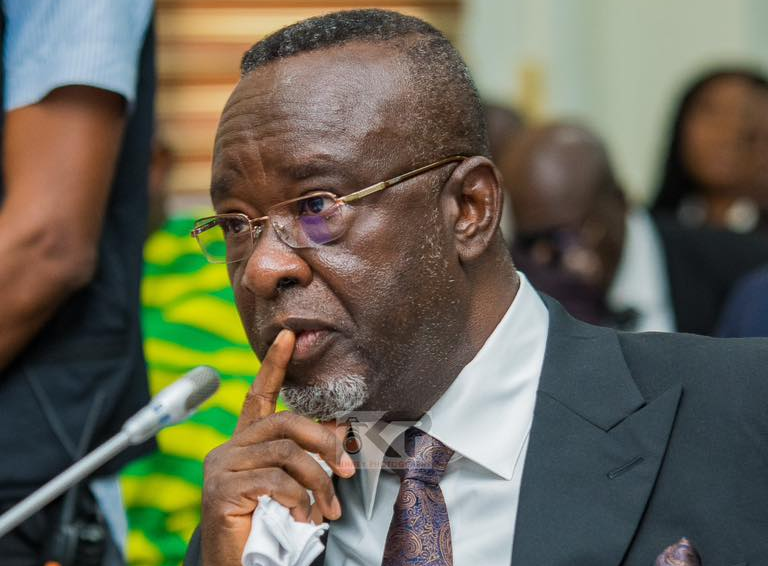
Ghana Chief Justice Baffoe-Bonnie: Bishops Issue Impartiality Warning
Summary
- The Ghana Catholic Bishops' Conference urged Chief Justice Paul Baffoe-Bonnie to avoid comparing government records after his recent remarks.
- The Chief Justice's reference to the 'past eight years' during institutional visits was interpreted as a potential political comparison.
- The Bishops stressed that judicial independence requires both actual impartiality and its visible, unmistakable appearance.
- While accepting the Judicial Service's clarification, the Conference highlighted the high standards expected of the Judiciary's head.
- The Bishops did not accuse the Chief Justice of partisanship but called for restraint from all political parties and public office holders.
Chief Justice's Remarks Spark Concern
Judicial independence is not only a matter of actual impartiality; it also depends on the visible, unmistakable appearance of impartiality.
The Ghana Catholic Bishops' Conference has issued a public call to Chief Justice Paul Baffoe-Bonnie, urging him to refrain from making statements that could be perceived as comparing the performance records of successive governments. This admonition follows remarks made by the Chief Justice on September 2, 2026, during official visits to the Social Security and National Insurance Trust (SSNIT) and the Minerals Income Investment Fund (MIIF).
During these visits, Chief Justice Baffoe-Bonnie referenced the "past eight years," a phrase the Bishops' Conference interpreted as a potential political comparison between the current administration and its predecessor. While acknowledging that there was nothing inherently improper about the Chief Justice visiting public institutions, assessing their operations, or commending genuine improvements, the Conference highlighted that the specific phrasing of his comments lent them a political character. This concern about Chief Justice political comments was echoed by the Ghana Centre for Democratic Development (CDD-Ghana), which warned that such remarks could foster an impression of political endorsement and erode public confidence in judicial impartiality.
In response to the growing discourse, the Judicial Service clarified that the Chief Justice's comments were made in good faith and without any intention to compromise judicial independence. The Ghana Catholic Bishops' Conference stated it accepted this clarification in good faith. However, the incident prompted a broader discussion from the Bishops regarding the elevated standards of conduct expected from the head of the Judiciary, underscoring the importance of maintaining the integrity of judicial impartiality in Ghana.
The Imperative of Visible Impartiality
The Bishops' Conference emphasized that the office of Chief Justice transcends that of an ordinary public commentator, carrying a unique responsibility to uphold public trust in the justice system. This is particularly critical because Ghana's courts are frequently called upon to adjudicate disputes involving the government, various political parties, and other public institutions. For citizens to approach the judiciary with unwavering confidence, it is paramount that no doubts exist about the Chief Justice's alignment with any particular political era or administration.
Central to this principle is the understanding that judicial independence in Ghana is not merely about the actual impartiality of judges; it fundamentally relies on the visible and unmistakable appearance of impartiality. This standard demands that all actions and statements by the head of the judiciary are perceived as neutral and unbiased, thereby safeguarding the institution's credibility. The Ghana Chief Justice Baffoe-Bonnie impartiality warning serves as a reminder of this crucial distinction between internal integrity and external perception.
A Call for Restraint and Nuance
Despite their concerns, the Ghana Catholic Bishops' Conference was careful to avoid accusing Chief Justice Baffoe-Bonnie of partisanship or suggesting that the Judiciary had been compromised. They explicitly stated that such conclusions would extend beyond the available evidence and deemed calls for his resignation over these remarks alone as disproportionate. Instead, the Conference proposed that a more appropriate approach would have been to commend the achievements of institutions like SSNIT and MIIF based solely on their own merits, rather than by drawing comparisons between different administrations.
Furthermore, the Bishops appealed to all political actors to exercise restraint in their reactions. They advised the governing party not to interpret criticism of the Chief Justice as an attack on its own record, nor should the opposition view his remarks as evidence of a 'captured' judiciary. This same standard of restraint, they argued, should apply to every public office holder, irrespective of which party is in power, reinforcing the need for a balanced and measured approach to public discourse surrounding judicial matters.
Practical Implications
This development underscores the heightened scrutiny on judicial impartiality in Ghana, particularly concerning the Chief Justice's public statements. Lawyers should be aware of the emphasis on the *appearance* of impartiality, as this public discourse could influence perceptions of the judiciary and potentially impact legal strategies or client advice in politically sensitive cases.
Source
How does this affect you?
Get an AI analysis of this article grounded in your jurisdictions, practice areas, and any policy documents you've uploaded to Wansom.
Finish Reading the Full Story and the Expert Analysis.
Wansom is AI and can make mistakes.