
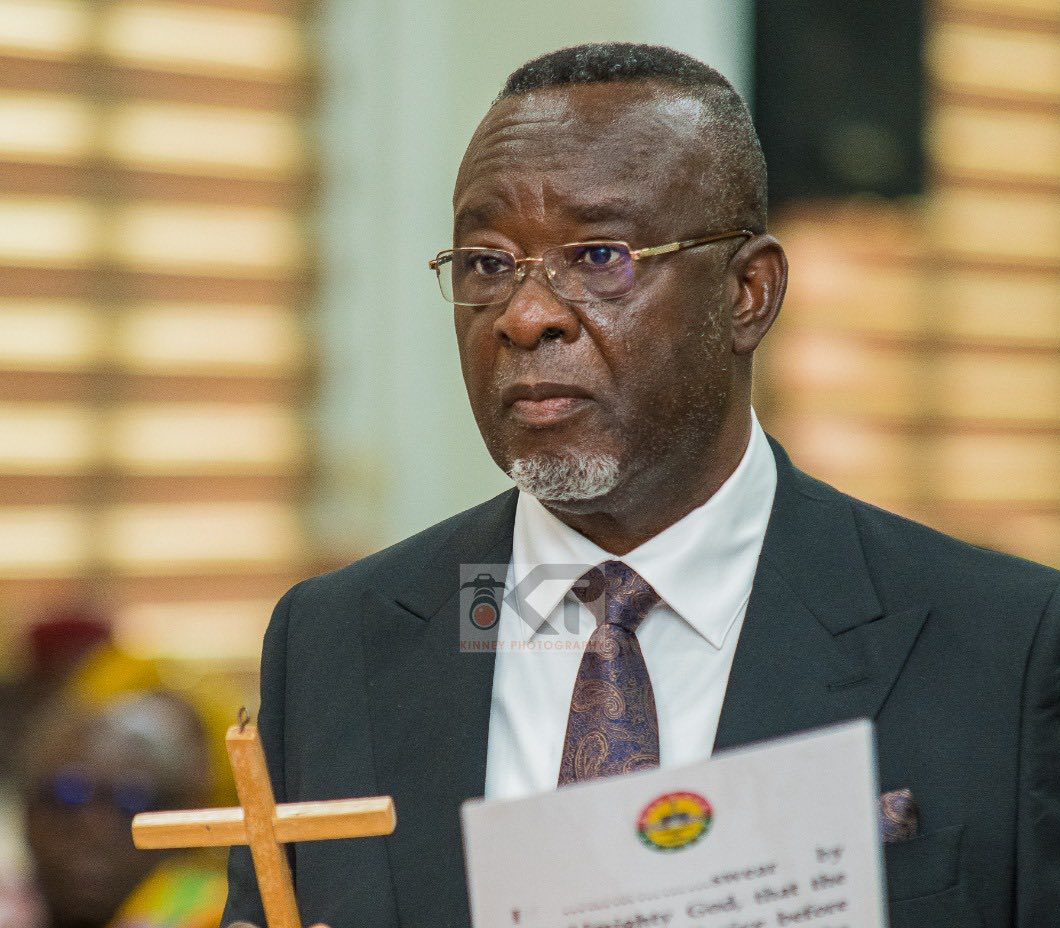
Ghana Catholic Bishops: Reject CJ Baffoe-Bonnie Resignation
Summary
- The Ghana Catholic Bishops' Conference has rejected calls for Chief Justice Paul Baffoe-Bonnie's resignation.
- Demands for his resignation arose from remarks made during visits to SSNIT and MIIF, which were perceived as politically partisan.
- While acknowledging concerns about the appearance of judicial impartiality, the Bishops deemed the resignation calls disproportionate.
- The Ghana Centre for Democratic Development also raised concerns that the Chief Justice's comments could weaken public confidence in the judiciary.
- The Bishops emphasized the critical importance of visible judicial impartiality and urged restraint from all political actors.
Controversy Over Chief Justice's Remarks
The Conference underscored that judicial independence relies not only on genuine impartiality but also on the clear, undeniable perception of fairness.
The Ghana Catholic Bishops' Conference has publicly rejected calls for the resignation of Chief Justice Paul Baffoe-Bonnie, following a controversy sparked by comments he made during official visits. The Chief Justice had toured the Social Security and National Insurance Trust (SSNIT) and the Minerals Income Investment Fund (MIIF), where his remarks drew criticism for their perceived political undertones.
While the Conference acknowledged that some of Chief Justice Baffoe-Bonnie's statements could reasonably raise concerns about the appearance of judicial impartiality, it ultimately deemed the demands for his resignation disproportionate. The Bishops clarified that there was nothing inherently improper about the Chief Justice visiting public institutions, assessing their operations, or commending improvements. However, they highlighted that the political character of certain remarks, particularly his reference to the "past eight years," was problematic, as such a phrase is commonly interpreted in Ghana as a comparison between current and previous administrations.
The Ghana Centre for Democratic Development (CDD) also voiced concerns, noting that the Chief Justice's comments could create an impression of political endorsement, thereby eroding public confidence in the judiciary's impartiality. In response to the growing debate, the Judicial Service issued a clarification, stating that the Chief Justice's observations were made in good faith and without any intention to compromise judicial independence. The Judicial Service also reaffirmed his commitment to the integrity of the judiciary and the principle of equality before the law, a clarification which the Bishops' Conference stated it received in good faith.
Upholding Judicial Impartiality and Ethics
Despite accepting the Judicial Service's explanation, the Ghana Catholic Bishops' Conference stressed that the incident brings to the forefront critical questions regarding judicial ethics and public trust. They underscored that the Chief Justice holds a unique position, distinct from an ordinary public commentator, given that courts are frequently called upon to adjudicate disputes involving the government, political parties, and various public institutions.
The Conference underscored that judicial independence relies not only on genuine impartiality but also on the clear, undeniable perception of fairness. They emphasized that the controversy, while significant, did not provide sufficient evidence to conclude that the Chief Justice was partisan or that the judiciary had been compromised. Consequently, they maintained that calls for his resignation based solely on the available evidence were disproportionate to the perceived offense.
While acknowledging that Chief Justice Baffoe-Bonnie, like any citizen, is entitled to his personal convictions, the Bishops insisted that his public conduct must not create reasonable doubt about his judicial position. They suggested that he could have commended the achievements of SSNIT and MIIF on their own merits, without drawing comparisons between different administrations' records.
A Call for Restraint Across the Political Spectrum
The Ghana Catholic Bishops' Conference extended an appeal for restraint to both the governing party and the opposition, recognizing the broader political implications of the Chief Justice's remarks. They urged the governing party not to interpret criticism of the Chief Justice as an attack on its own record. Similarly, they cautioned the opposition against using the Chief Justice's comments as definitive proof that the courts have been unduly influenced or "captured."
This incident highlights the ongoing scrutiny of judicial impartiality and ethics in Ghana, underscoring the sensitive nature of public perception regarding judicial independence. The Conference concluded by urging all public office holders to adhere to the same high standard of restraint, regardless of which political party is in power, to maintain public trust in state institutions.
Practical Implications
This incident highlights the ongoing scrutiny of judicial impartiality and ethics in Ghana. Lawyers should be aware that public perception of judicial independence remains a sensitive issue, potentially influencing client confidence in the justice system and requiring careful consideration when advising on matters involving the judiciary.
Source
How does this affect you?
Get an AI analysis of this article grounded in your jurisdictions, practice areas, and any policy documents you've uploaded to Wansom.
Finish Reading the Full Story and the Expert Analysis.
Wansom is AI and can make mistakes.