
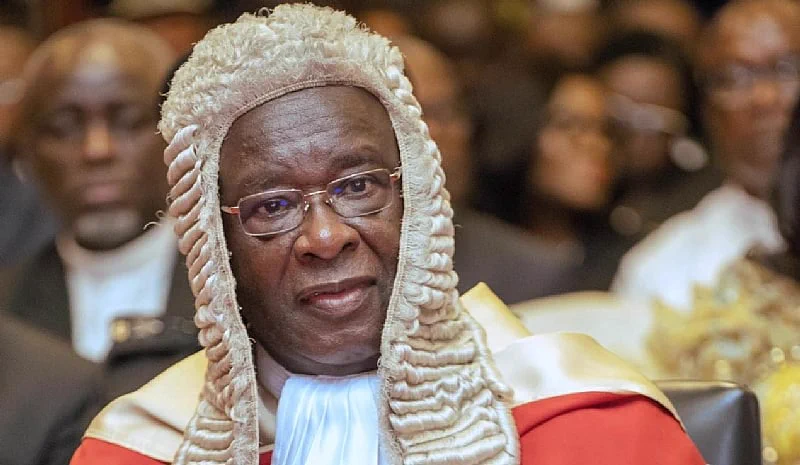
Ghana Chief Justice Paul Baffoe-Bonnie: Impartiality Comments Draw Scrutiny
Summary
- Ghana's Chief Justice Paul Baffoe-Bonnie made comments referencing "the past eight years" during visits to SSNIT and MIIF on September 2, 2026.
- The Ghana Catholic Bishops’ Conference cautioned the Chief Justice, stating his remarks could create doubts about the judiciary's political neutrality.
- The Bishops emphasized that while commending institutions is acceptable, the phrase "past eight years" is politically charged and implies a partisan comparison.
- Despite a Judicial Service clarification, the Conference stressed that judicial independence requires both actual and visible impartiality.
- The Bishops urged political actors to use the incident for reflection, not partisan gain, and rejected calls for the Chief Justice's resignation.
The Controversy Unfolds
Judicial independence is not solely about actual impartiality but critically depends on the visible and unmistakable appearance of neutrality.
On September 2, 2026, Ghana's Chief Justice, Paul Baffoe-Bonnie, made a series of comments during official visits to the Social Security and National Insurance Trust (SSNIT) and the Minerals Income Investment Fund (MIIF). During these engagements, the Chief Justice's remarks included a specific reference to "the past eight years," a phrase that quickly drew scrutiny for its potential political implications. While the Chief Justice's observations were reportedly intended to commend improvements in the operations of these public institutions, the phrasing immediately sparked concerns regarding judicial impartiality.
The Ghana Centre for Democratic Development (CDD) was among the first to voice apprehension, suggesting that such statements could inadvertently create an impression of political endorsement. This, in turn, was seen as potentially undermining public confidence in the judiciary's neutrality. The incident prompted a formal statement from the Ghana Catholic Bishops’ Conference (GCBC) on September 6, 2026, which formally cautioned Chief Justice Baffoe-Bonnie against making public remarks that could cast doubt on the political neutrality of the Judiciary.
Upholding Judicial Neutrality
The Ghana Catholic Bishops’ Conference, led by its President, Most Rev. Matthew Kwasi Gyamfi, acknowledged that there was nothing inherently improper about the Chief Justice visiting public institutions or offering commendations for operational enhancements. However, the Conference specifically highlighted the problematic nature of the "past eight years" reference. In Ghana's political landscape, this particular phrase is widely understood as a direct comparison between the performance of the current government and its immediate predecessor.
Consequently, the Bishops argued that even if the Chief Justice's comment was genuinely intended as an assessment of institutional performance, it nonetheless acquired the character of a partisan judgment, at least in its public perception. This incident underscored significant Ghana judicial impartiality concerns, emphasizing that judicial independence is not solely about actual impartiality but critically depends on the visible and unmistakable appearance of neutrality. The GCBC stressed that the head of the judiciary, in particular, must be, and must be seen to be, above the partisan contest, thereby addressing the broader issue of the appearance of judicial bias in Ghana.
Navigating Public Trust and Political Discourse
Following the initial public reaction, the Judicial Service issued a clarification, asserting that Chief Justice Baffoe-Bonnie's observations were made in good faith and were not intended to compromise judicial independence. The Ghana Catholic Bishops’ Conference stated that it received this clarification in good faith. Nevertheless, the Conference maintained that the incident raised a crucial question concerning public confidence in the Judiciary, underscoring the delicate balance required for Chief Justice Baffoe-Bonnie's political neutrality.
The Bishops further elaborated on the unique nature of the Chief Justice's office, distinguishing it from that of an ordinary public commentator. They pointed out that courts are frequently called upon to adjudicate disputes involving the government, various political parties, and other public institutions. Therefore, citizens must be able to approach the judicial system without any apprehension that the Chief Justice might be aligned with one political era over another. While emphasizing these concerns, the Conference was careful not to accuse the Chief Justice of partisanship or suggest that the Judiciary had been compromised, and they explicitly rejected calls for his resignation as disproportionate.
The Enduring Imperative of Impartiality
The Ghana Catholic Bishops’ Conference suggested that the Chief Justice could have effectively commended SSNIT and MIIF for their achievements without resorting to comparisons with a previous administration, thereby avoiding the appearance of judicial bias. This incident serves as a potent reminder of the paramount importance of both actual and perceived judicial impartiality in maintaining public trust. The judiciary's credibility hinges on its ability to demonstrate unwavering neutrality, especially when its leader speaks publicly.
Beyond the immediate controversy, the Bishops urged all political actors to view this episode as an opportunity for constructive reflection rather than a chance for partisan advantage. They specifically advised the governing party against interpreting criticism of the Chief Justice as an attack on its own record, and similarly cautioned the opposition against using his remarks as purported evidence of judicial capture. The Conference concluded by advocating for the same standard of restraint from all public office holders, irrespective of their political affiliation, reinforcing the critical need for judicial independence in Ghana.
Practical Implications
This incident serves as a critical reminder for legal practitioners in Ghana regarding the paramount importance of both actual and perceived judicial impartiality. Lawyers should be acutely aware of the ongoing public discourse surrounding judicial neutrality, as it can influence public confidence in court proceedings and potentially inform arguments related to due process or fairness, particularly in cases involving state institutions or political actors.
Source
How does this affect you?
Get an AI analysis of this article grounded in your jurisdictions, practice areas, and any policy documents you've uploaded to Wansom.
Finish Reading the Full Story and the Expert Analysis.
Wansom is AI and can make mistakes.