
Ghana Officials Personal Liability Wetlands: Frimpong-Boateng Proposes
Summary
- Prof Kwabena Frimpong-Boateng proposed personal criminal liability for public officials approving development in protected wetlands, watercourses, drainage channels, and forest reserves.
- The proposal aims to end the current system where institutions, rather than individuals, bear responsibility for harmful permit decisions.
- This liability would persist even after officials leave office, similar to fraud charges.
- Weak land-use planning, leading to wetland loss and obstructed waterways, has caused recurring floods and contributed to the 2015 Accra disaster that killed over 150 people.
- The former minister also called for forest reserves and water bodies to be completely excluded from mining licenses, without ministerial discretion.
The Call for Individual Accountability
An officer who signs a development permit for a gazetted wetland, a watercourse, a drainage reserve or a forest reserve should commit a personal offence, not an institutional one.
A significant proposal has emerged from Prof Kwabena Frimpong-Boateng, Ghana's former Minister for Environment, Science, Technology and Innovation, advocating for the introduction of personal criminal liability for public officials. This measure would target those who authorize development projects in environmentally sensitive zones, specifically protected wetlands, watercourses, drainage channels, and forest reserves. The core of this Prof Frimpong-Boateng proposal Ghana is to shift accountability from institutions to the individuals making the decisions, thereby directly addressing the issue of Ghana officials personal liability wetlands.
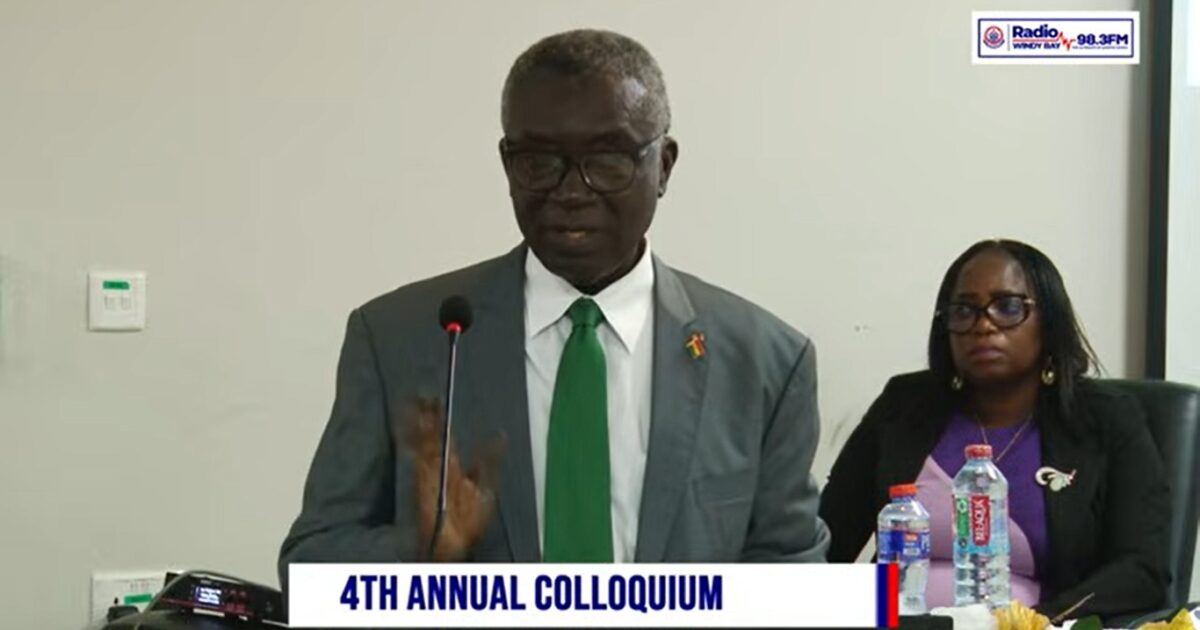
Prof. Frimpong-Boateng articulated this vision during his keynote address at the Fourth Annual Colloquium of the Department of Political Science Education at the University of Education, Winneba, held on Wednesday, September 2, 2026. Speaking under the theme, “Politics, the Environment, and Our Future: Ghana at Crossroads?”, he highlighted a critical flaw in the current system: permits deemed unlawful or harmful are often treated as institutional decisions, effectively shielding individual officials from direct consequences. He underscored this by noting that while an institutional body cannot face imprisonment, the individual signatory to such a permit could and should.
His proposal emphasizes that liability for granting permits in these protected areas should endure even after an official has left public service, drawing a parallel to how fraud charges persist. He explicitly stated that an officer who approves a development permit for a gazetted wetland, a watercourse, a drainage reserve, or a forest reserve should be deemed to have committed a personal offense, not merely an institutional one. This aims to ensure that decision-makers bear direct responsibility for their actions concerning wetlands forest reserves development Ghana.
Unpacking the Environmental Crisis
The former minister's call for enhanced Ghana environmental permit accountability stems from observed failures in land-use planning, which he attributes to weak oversight. This systemic issue has led to significant environmental degradation, including the loss of vital wetlands, the obstruction of natural waterways, and a surge in recurring floods, particularly within the Greater Accra region. He pointed out that all nine drainage basins in this region have been either narrowed, encroached upon, or converted for development purposes, with parts of the Korle Lagoon and the Densu Delta also being overtaken by various projects.
Prof. Frimpong-Boateng starkly illustrated the consequences of these planning deficiencies, explaining that rainfall itself does not cause floods; rather, floods occur when water has no natural course due to development approvals in critical areas. He cited the devastating June 3, 2015, flood and fire disaster in Accra, which claimed over 150 lives, as a poignant example of the deadly outcomes resulting from failures in planning and permitting. He starkly reframed this catastrophe, asserting that what is commonly recalled as a disaster was, in essence, the direct outcome of a permit.
Despite the clear link between development approvals and the disaster, no individual was prosecuted, as responsibility was ultimately attributed to institutions. This lack of individual accountability for wetlands forest reserves development Ghana underscores the urgency of his proposed reforms, aiming to prevent future tragedies by holding specific officials responsible for their decisions.
Redefining Official Responsibility
The proposed framework for public official criminal liability Ghana seeks to attach names and personal responsibility directly to permit decisions. This, Prof. Frimpong-Boateng argues, would serve as a powerful deterrent, discouraging officials from authorizing developments that pose a threat to human lives and undermine Ghana’s overall environmental security. The enduring nature of this liability, even after an official leaves office, is a critical component designed to ensure long-term accountability.
Beyond development permits, the former minister also advocated for a complete overhaul of the mining licensing system. He proposed that forest reserves and water bodies should be entirely excluded from mining activities, with no ministerial discretion or exemptions allowed. This comprehensive approach to Ghana land use planning reform aims to fortify environmental protections across multiple sectors, ensuring that critical natural resources are safeguarded from detrimental exploitation and that Ghana environmental permit accountability is significantly strengthened.
Practical Implications
Lawyers advising clients on development projects in Ghana, particularly in environmentally sensitive areas, should monitor this proposal for potential legislative changes. If enacted, it would introduce significant personal criminal liability risks for public officials approving permits, potentially impacting the ease and process of obtaining such approvals and increasing scrutiny on due diligence for permit applications.
Source
How does this affect you?
Get an AI analysis of this article grounded in your jurisdictions, practice areas, and any policy documents you've uploaded to Wansom.
Finish Reading the Full Story and the Expert Analysis.
Wansom is AI and can make mistakes.