
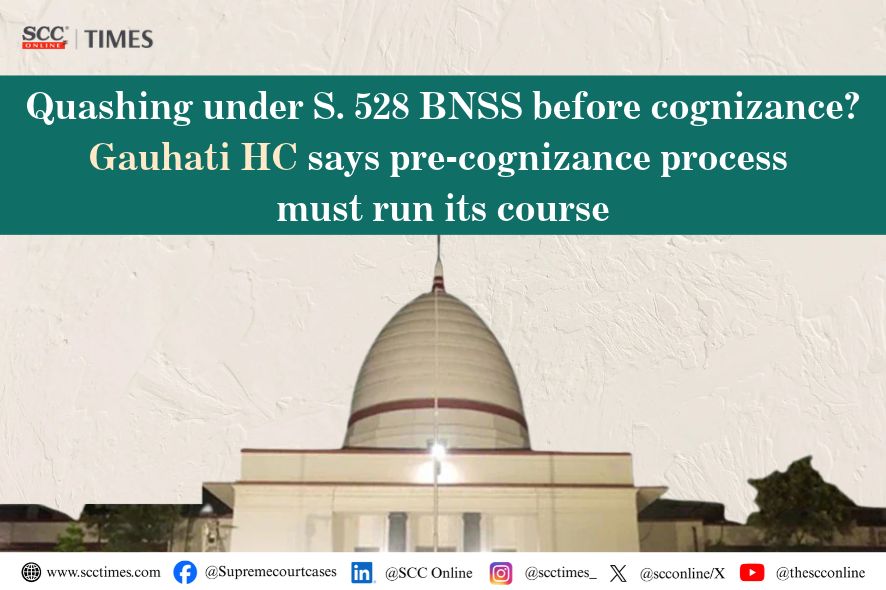
Gauhati High Court: Pre-Cognizance Process Must Run Its Course for Quashing
In India, the Gauhati High Court recently held that the pre-cognizance process in a criminal matter must be allowed to run its course, declining to quash proceedings under Section 528 of the Bharatiya Nagarik Suraksha Sanhita (BNSS) where neither cognizance had been taken nor a pre-cognizance notice issued to the petitioner.
This ruling clarifies the High Court's stance on the timing and appropriateness of exercising its inherent powers to quash criminal proceedings, particularly in the nascent stages before a trial court formally takes cognizance of an offense. It reinforces the principle of judicial restraint, emphasizing the importance of allowing the investigative and preliminary judicial processes to unfold at the lower court level. This approach ensures that the accused is provided with ample opportunities to present their case and raise objections at the appropriate stage before the trial court, rather than prematurely seeking intervention from the High Court.
The primary legal context for this decision is Section 528 of the Bharatiya Nagarik Suraksha Sanhita (BNSS), which is the new criminal procedure code that has replaced the Code of Criminal Procedure, 1973 (CrPC). Section 528 BNSS is analogous to the inherent powers granted to High Courts under Section 482 of the erstwhile CrPC, allowing them to make orders necessary to prevent abuse of the process of any court or otherwise to secure the ends of justice. The concept of
How does this affect you?
Get an AI analysis of this article grounded in your jurisdictions, practice areas, and any policy documents you've uploaded to Wansom.
Finish Reading the Full Story and the Expert Analysis.
Get the latest legal & regulatory intelligence in India
Wansom is AI and can make mistakes.