
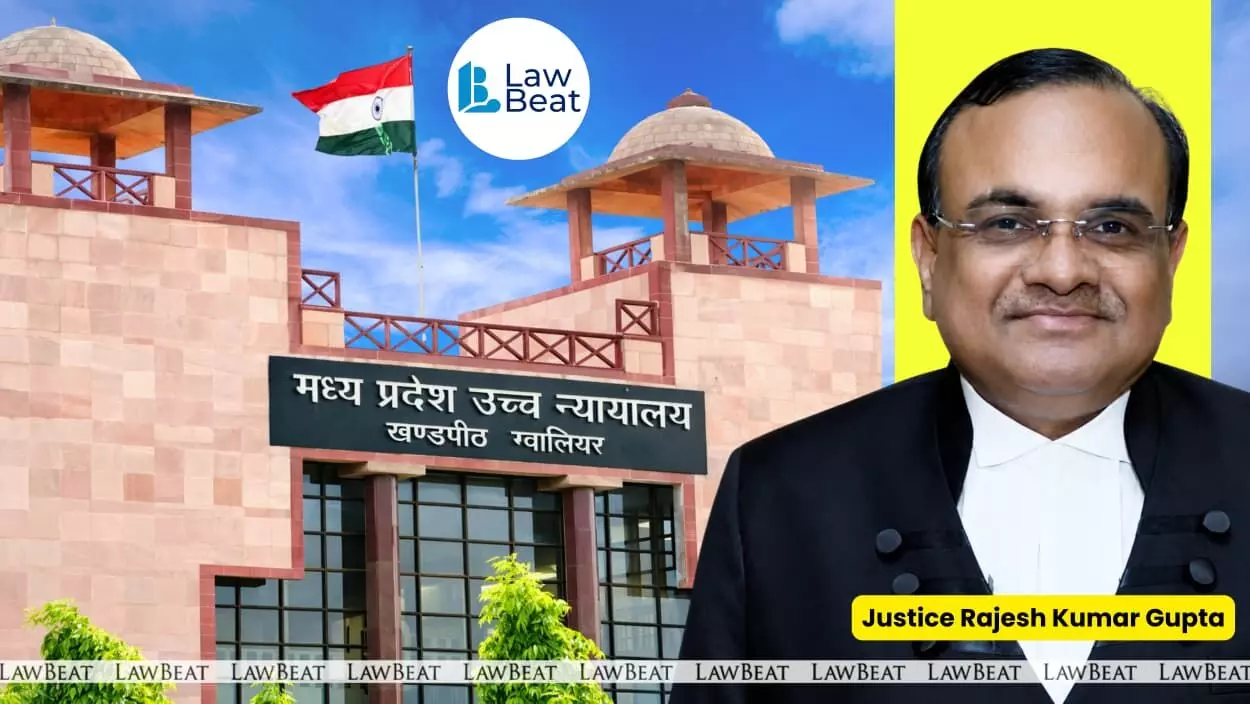
MP HC: Compromise Alone Cannot Quash FIR Over Firing Incident
Summary
- The Madhya Pradesh High Court at Gwalior refused to quash an FIR related to a firing incident, despite a compromise between the involved parties.
- The case involved allegations of a woman labourer being shot during an altercation between multiple individuals.
- Petitioners sought to quash the FIR under Section 528 of the BNSS, citing the voluntary settlement.
- The court ruled that a compromise alone cannot justify quashing an FIR for serious offenses involving firearms and attempts on life.
- The decision emphasized the public interest in prosecuting serious crimes, citing Supreme Court precedents like *State of Madhya Pradesh v. Laxmi Narayan*.
Court Rejects Quashing of Firing Case
The court acknowledged the existence of the compromise but firmly stated that it cannot, by itself, serve as a sufficient basis for invoking inherent jurisdiction under Section 528 BNSS when the alleged offense is serious and has broader implications for society.
The Madhya Pradesh High Court, sitting in Gwalior, recently declined a petition seeking to nullify a First Information Report (FIR) related to a firing incident, even though the involved parties had reached a settlement. Justice Rajesh Kumar Gupta, on November 2, dismissed the application filed by Santosh Gurjar and another co-accused. The petitioners had invoked Section 528 of the Bharatiya Nagarik Suraksha Sanhita (BNSS), which corresponds to the former Section 482 of the Criminal Procedure Code, to request the quashing of FIR Crime No. 343/2023, registered at Police Station Sirol, District Gwalior, along with all subsequent proceedings.
The charges against the accused include Sections 308, 294, and 34 of the Indian Penal Code (IPC). The incident in question occurred on September 15, 2023, when a woman labourer was working with her family at a plot in Pawan Sut Colony, Sirole. According to the prosecution, Bharat Gurjar, Ram Lakhan Gurjar, and Santosh Gurjar, positioned on opposite sides of the road, allegedly engaged in a verbal altercation before discharging firearms. Four additional individuals subsequently joined the firing. During the shootout, a bullet reportedly penetrated the complainant's saree, striking her below the navel and causing her to bleed. She was then transported by her husband and sister-in-law to District Hospital, Murar, Gwalior, where her statement, known as a Dehati Nalishi, was recorded, leading to the registration of the case.
Compromise and Legal Precedent
Despite the gravity of the allegations, the parties involved submitted Interlocutory Applications (I.A. Nos. 7872/2026 and 7873/2026) to the court, expressing their desire to resolve the matter through a compromise. The Principal Registrar subsequently verified the identities of the parties and their signatures, confirming that the settlement appeared to be voluntary and free from any coercion, threats, or undue influence. Advocate Arvind Kumar Dwivedi, representing the petitioners, urged the court to quash the FIR based on this compromise, a plea that was also supported by Advocate Harshat Ali, who appeared for the complainants (respondent Nos. 2 and 3). Public Prosecutor Dinesh Savita represented the State of Madhya Pradesh.
However, the court remained unconvinced by the argument that a compromise alone could justify terminating the proceedings. The bench emphasized that the dispute was not merely of a private or civil nature, highlighting that the allegations clearly indicated the commission of a serious offense involving the use of a firearm and an attempt on the life of the injured party. The court acknowledged the existence of the compromise but firmly stated that it cannot, by itself, serve as a sufficient basis for invoking inherent jurisdiction under Section 528 BNSS when the alleged offense is serious and has broader implications for society.
Societal Impact and Public Interest
The High Court's decision was significantly influenced by established Supreme Court precedents concerning the quashing of serious criminal cases based on settlements. The court specifically referenced *State of Madhya Pradesh v. Laxmi Narayan*, where the Supreme Court had cautioned against routinely quashing serious offenses, such as attempted murder, solely on the grounds of a compromise between the parties. This principle, the court noted, remains applicable to Section 109 of the Bharatiya Nyaya Sanhita (BNS), which corresponds to the former Section 307 of the IPC.
Furthermore, the court cited the Supreme Court's recent judgment in *Vijay Kumar Kela & Anr. v. Central Bureau of Investigation & Anr.*, decided on May 29, 2026, which reiterated the necessity for courts to consider the nature and gravity of an offense when deciding whether to quash proceedings based on a settlement. The court underscored that the continuation of prosecution in such cases is driven by an "overriding element of public interest" in ensuring that perpetrators of serious crimes are brought to justice. The nature and manner of the alleged occurrence, the court concluded, could not be characterized as having an overwhelmingly civil or private character, and therefore, the post-incident compromise does not diminish the seriousness of the alleged offense or the public interest inherent in its prosecution.
Source
Source: Original reporting via Live Law
How does this affect you?
Get an AI analysis of this article grounded in your jurisdictions, practice areas, and any policy documents you've uploaded to Wansom.
Finish Reading the Full Story and the Expert Analysis.
Get the latest legal & regulatory intelligence in India
Wansom is AI and can make mistakes.