
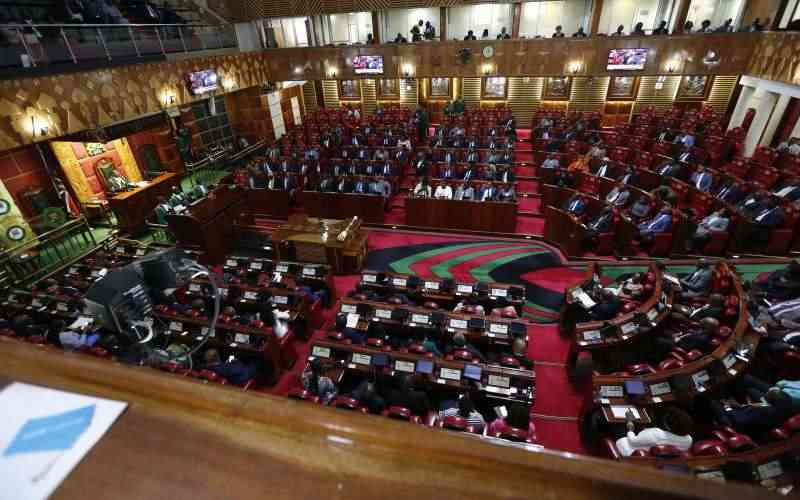
Francis Awino Sues Kenya Parliament: Demands Voting Records Disclosure
Summary
- Activist Francis Awino has filed a petition at the Milimani High Court seeking to compel the Kenyan Parliament to disclose MPs' voting and attendance records.
- The lawsuit, citing Article 35 of the Constitution and the Access to Information Act, challenges Parliament's transparency and accountability in legislative processes.
- Awino demands certified records for key legislation, including the Finance Act, 2026, and proposes a publicly accessible final-vote register and timely publication of records.
- The petition highlights concerns over reported widespread non-participation by MPs during the Finance Act, 2026 vote, emphasizing the need for official verification.
- Proposed reforms include a framework for secure remote participation and the preservation of electronic voting and audit records.
Legal Challenge to Parliamentary Secrecy
This significant petition seeks to compel the disclosure of Kenyan Members of Parliament's (MPs) final voting records, attendance, and other legislative documentation.
A legal challenge has been mounted in Kenya's Milimani High Court by activist Francis Awino, targeting the transparency of parliamentary proceedings. This significant petition seeks to compel the disclosure of Kenyan Members of Parliament's (MPs) final voting records, attendance, and other legislative documentation. Awino's lawsuit, which directly addresses the issue of Francis Awino sues Kenya Parliament voting records, names several key parliamentary figures and bodies as respondents. These include the Speaker of the National Assembly, the National Assembly itself, its Clerk, the Speaker of the Senate, the Senate, its Clerk, and the Attorney-General. The activist's central contention revolves around what he describes as insufficient transparency and accountability within the legislative process, particularly concerning critical final votes on legislation.
Awino's legal action is grounded in fundamental constitutional principles and statutory provisions. He asserts that Article 35 of the Kenyan Constitution, which guarantees the right to access information, alongside the Access to Information Act Kenya Parliament, mandates the timely public availability of various legislative records. These include final-vote tallies, attendance registers, division lists, quorum determinations, records of leave, and other related legislative data. The petition aims to establish a precedent for greater openness in the legislative branch, emphasizing the public's right to scrutinize the actions of their elected representatives.
Demands for Openness and Accountability
Central to Awino's Kenya MPs voting transparency petition is the argument that meaningful public participation in governance extends beyond merely submitting memoranda or attending parliamentary hearings. He contends that for public participation to be truly effective, the legislative process must be open, allowing for the final decisions made by representatives to be subject to public scrutiny and verification. Consequently, Awino is seeking a court declaration that all final legislative voting procedures must be conducted in a manner that is demonstrably open, transparent, auditable, and reasonably accessible to the citizenry through their elected officials.
The petition outlines a comprehensive list of specific records that Awino is demanding Parliament be compelled to provide. These include Hansard reports, Votes and Proceedings, Order Papers, attendance registers, member-specific voting records, division lists, electronic voting reports, audit logs, quorum records, Speaker’s rulings, and records pertaining to leave or excused absences. Furthermore, the activist is specifically requesting certified records related to several significant pieces of legislation, namely the Social Health Insurance Act, 2023, the Finance Act, 2025, the Finance Act 2026 voting records lawsuit, and other legislation concerning university funding. This broad request underscores a push for systemic change in how legislative information is managed and disseminated.
The Finance Act 2026 Catalyst
A pivotal issue highlighted in the petition, and a key driver for this legal challenge, is the final vote on the Finance Act, 2026. This particular legislation garnered significant media attention due to reports suggesting widespread non-participation among MPs. According to various local media outlets cited in the petition, a substantial number of legislators—specifically 186 or 187 Members of Parliament—did not participate in the vote. These reports further indicated that 122 Members voted in favor of the Act, while 40 voted against it, with the remaining Members reportedly absent from the vote.
Awino, however, carefully clarifies that these media reports should not be considered conclusive evidence regarding the conduct or individual status of MPs. He emphasizes that official parliamentary records are indispensable for accurately establishing whether each Member was present, absent, on approved leave, excused, participating remotely, abstaining, suspended, or otherwise recorded. The activist argues that the reported scale of non-participation raises significant constitutional questions, especially given that the Finance Act has direct and profound implications for taxation, public revenue, the cost of living, and the provision of public services. This focus on the Parliamentary attendance records disclosure for such a critical Act underscores the petition's urgency.
Proposed Reforms for Enhanced Transparency
Beyond the immediate disclosure of past records, Awino's petition proposes several forward-looking reforms aimed at institutionalizing greater transparency within Parliament. He seeks orders compelling Parliament to establish a publicly accessible final-vote register. This register would systematically identify each Act, the date of the vote, the legislative stage, the voting method employed, the quorum determination, the announced result, and the status of every Member involved. Such a register would significantly enhance Article 35 Kenya Constitution transparency in legislative decision-making.
Additionally, the activist demands that Parliament publish attendance and division records within 48 hours of final votes, ensuring timely access to crucial information. He also advocates for the preservation of all underlying electronic voting and audit records, which are vital for verifying the integrity of the voting process. Finally, Awino is seeking orders for Parliament to develop a robust framework that would allow for secure, authenticated, and auditable remote participation in narrowly defined exceptional circumstances, such as genuine incapacity, disability, maternity or paternity leave, or emergencies. These proposed measures collectively aim to transform parliamentary operations into a more open and accountable system.
Practical Implications
This High Court petition could establish a significant precedent for parliamentary transparency and public access to legislative records in Kenya, impacting constitutional law, administrative law, and public participation advocacy. Lawyers advising on government accountability or access to information should monitor the court's decision for its implications on the scope of the Access to Information Act and the conduct of legislative processes.
Source
How does this affect you?
Get an AI analysis of this article grounded in your jurisdictions, practice areas, and any policy documents you've uploaded to Wansom.
Finish Reading the Full Story and the Expert Analysis.
Wansom is AI and can make mistakes.