
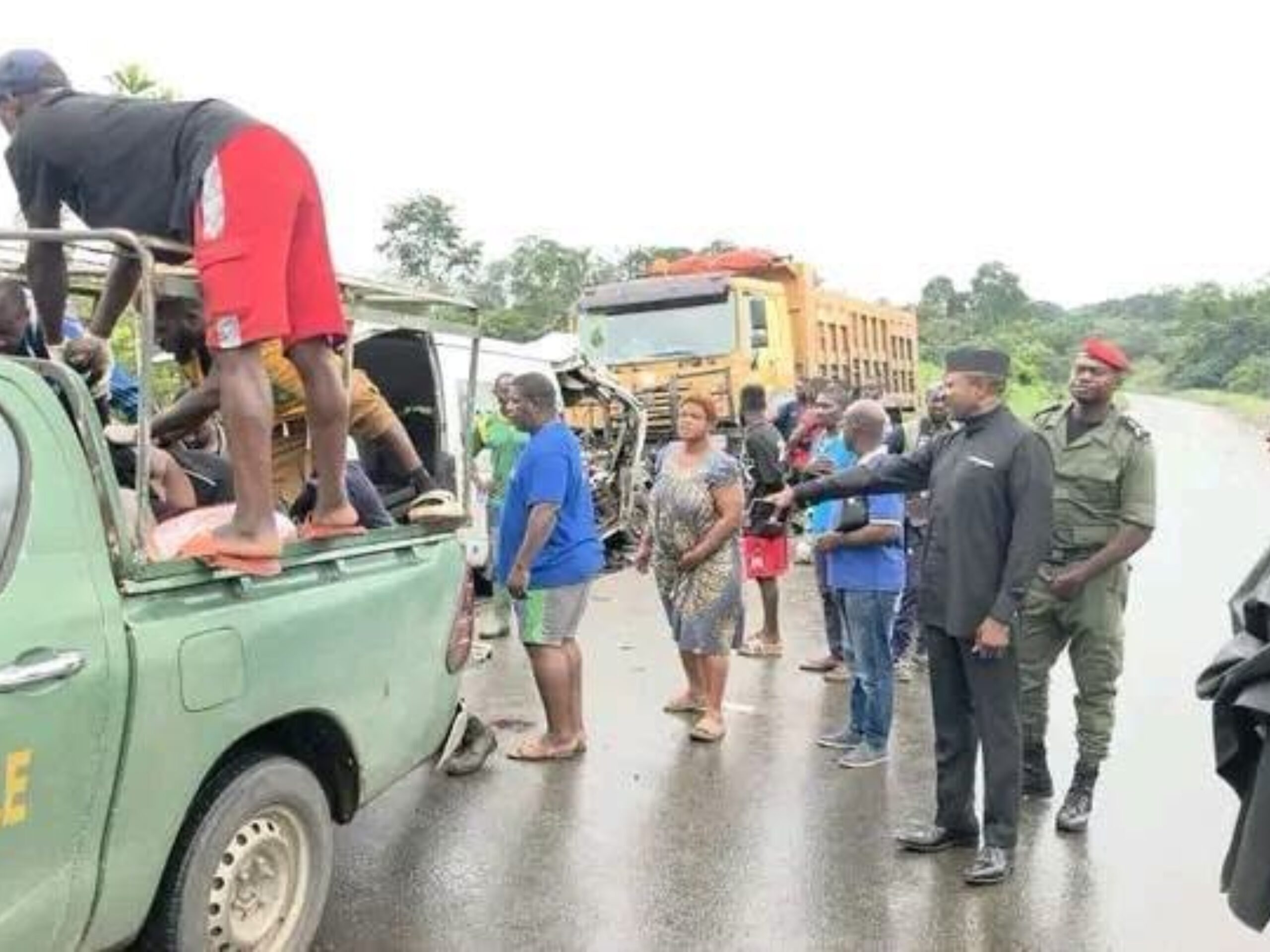
FOCACO: Alerte Insécurité Routière Cameroun N3 Après Accident Meurtrier
Summary
- Seven people died and ten were seriously injured in a head-on collision on Cameroon's National Road N3 near Sikoum on August 23, 2026.
- The accident, involving a bus and a gravel truck, was allegedly caused by dangerous overtaking.
- The Fondation Camerounaise des Consommateurs (FOCACO) denounced the structural road insecurity, citing narrow national roads (N3, N4) lacking central separation.
- FOCACO demanded urgent, comprehensive medical care for the injured and called for the complete achievement of the Douala-Yaoundé highway.
- The consumer group emphasized that protecting road users' lives is a non-negotiable sovereign obligation of the state.
Tragic Accident on N3 Prompts Consumer Group Outcry
The protection of road users' lives is a non-negotiable sovereign obligation of the state, a responsibility that cannot be deferred or ignored.
The Fondation Camerounaise des Consommateurs (FOCACO) has voiced profound distress following a devastating road accident that claimed seven lives and left ten others seriously injured. The tragic incident occurred on Saturday, August 23, 2026, around 6 AM, at a location known as Sikoum (PK 41), near Logbadjeck, along the critical Douala-Yaoundé axis, specifically on National Road N3. This head-on collision involved a bus operated by a travel agency and a truck heavily laden with gravel, resulting in immediate fatalities for seven individuals.
Emergency services swiftly transported the ten seriously wounded victims to the Regional Annex Hospital of Edéa for urgent medical attention. Initial reports suggest that dangerous overtaking was the primary cause of this latest catastrophe on Cameroon's roads. FOCACO, expressing immense sorrow and a deep sense of indignation, extended its heartfelt condolences to the families mourning their sudden loss and wished a rapid recovery to those injured, demanding comprehensive and unconditional medical care for all affected. The accident Sikoum Douala-Yaoundé 2026 underscores the persistent dangers faced by travelers on this vital route.
FOCACO Alerte Insécurité Routière Cameroun N3: A Pattern of Fatal Flaws
This recent tragedy at Sikoum is not an isolated event but rather another grim chapter in a recurring pattern of road fatalities, coming just days after a similar incident in Nomale, Ndikiniméki, on National Road N4. FOCACO has issued a strong condemnation, highlighting what it describes as structural road insecurity across the nation. The consumer advocacy group points out that all major national roads, including N3 and N4, are inherently dangerous due to their design. These routes are characterized by their narrowness, measuring less than eight meters wide, and critically, by the complete absence of any physical central separation.
This design flaw means that even a minor misjudgment or deviation can instantly escalate into a catastrophic head-on collision, often with fatal consequences. The FOCACO alerte insécurité routière Cameroun N3 serves as a stark reminder of the perilous état routes nationales Cameroun. With the impending school year approaching, traffic density is expected to increase significantly, further exacerbating these inherent risks. FOCACO argues that mere appeals for caution are woefully inadequate in addressing such deeply embedded systemic issues.
Urgent Demands for Infrastructure and Accountability
In light of the escalating death toll and persistent dangers, FOCACO has directly challenged public authorities, demanding immediate and decisive action. The organization's primary call is for the complete and effective achèvement autoroute Douala-Yaoundé. This crucial infrastructure project is seen as a vital solution to alleviate the congestion and inherent hazards of the existing narrow national roads. FOCACO emphasizes that the protection of road users' lives is a non-negotiable sovereign obligation of the state, a responsibility that cannot be deferred or ignored.
The consumer group's statement, issued from Douala on August 23, 2026, and signed by Alphonse AYISSI ABENA, underscores the urgency of these demands. They believe that the current state of the national road network, particularly the N3, represents a "corridor of death" that requires immediate and comprehensive intervention beyond superficial measures. The repeated tragedies, including the recent one near Logbadjeck, highlight a critical failure in infrastructure and safety management that demands governmental accountability.
Heightened Scrutiny and Potential Legal Ramifications
The persistent and vocal warnings from FOCACO regarding the insécurité routière Cameroun N3 and other national arteries carry significant implications for various stakeholders. The consumer group's sustained pressure could lead to increased public scrutiny of both transport operators and government bodies responsible for infrastructure. For transport companies operating on these hazardous routes, the documented risks and FOCACO's advocacy could heighten their exposure to litigation in the event of future accidents. The alleged cause of dangerous overtaking in the Sikoum incident further emphasizes the need for stringent operational safety protocols.
Moreover, the explicit demand for the achèvement autoroute Douala-Yaoundé and the assertion of the state's responsabilité accidents routiers Cameroun could pave the way for legal challenges against public authorities for negligence related to infrastructure. The lack of physical central separation on roads less than eight meters wide, as highlighted by FOCACO, represents a clear design deficiency that could be cited in legal proceedings. This ongoing public discourse and the tragic events underscore a growing expectation for accountability from both private entities and the government concerning road safety.
Practical Implications
This article highlights systemic road safety failures and public pressure from FOCACO, which could increase litigation risk for transport companies operating on these routes and potentially for the state regarding infrastructure negligence. Lawyers should monitor developments in road safety regulations and infrastructure project completion, especially for clients involved in transportation or public works.
Source
How does this affect you?
Get an AI analysis of this article grounded in your jurisdictions, practice areas, and any policy documents you've uploaded to Wansom.
Wansom is AI and can make mistakes.