
IRAD CENEEMA Mémorandum d’entente Cameroun 2026: Boosting Agricultural Modernization
Summary
- On August 20, 2026, IRAD and CENEEMA signed a Mémorandum d’entente in Yaoundé, Cameroon.
- The agreement aims to boost agricultural yields through research, mechanization, and innovative agropastoral techniques.
- IRAD will contribute expertise in agronomic research and improved varieties, while CENEEMA will focus on agricultural machinery and equipment dissemination.
- The partnership seeks to improve agricultural production to reduce import dependence and ensure national food security.
- This initiative aligns with Cameroon's National Development Strategy (SND30) and Vision 2035 for agricultural modernization.
Strategic Partnership for Agricultural Modernization
The overarching ambition behind this Cameroon agricultural modernization partnership is to mechanize farming practices to achieve higher quality and quantity of produce, thereby addressing critical national priorities.
A significant Mémorandum d’entente (MOU) was formally executed on Thursday, August 20, 2026, in Yaoundé, marking a pivotal step for Cameroon's agricultural sector. This accord, signed between the Institut de Recherche Agricole pour le Développement (IRAD) and the Centre National d’Etudes et d’Expérimentation du Machinisme Agricole (CENEEMA), aims to substantially enhance agricultural yields. The core strategy involves integrating advanced research, mechanization, and innovative agropastoral techniques, aligning with the nation's broader development goals.
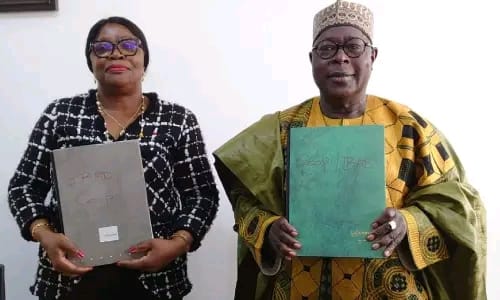
The signing ceremony saw Dr. Noé WOIN, the Director General of IRAD, and Mme. MEBANDE BATE née EKOTTO MINKOUNA Andrée Mélanie, the Director General of CENEEMA, officially endorse the framework. This collaboration is designed to foster a synergistic relationship between agricultural research and the practical application of mechanization. The overarching ambition behind this Cameroon agricultural modernization partnership is to mechanize farming practices to achieve higher quality and quantity of produce, thereby addressing critical national priorities.
This IRAD CENEEMA Mémorandum d’entente Cameroun 2026 establishes a general framework for mutualizing the distinct expertise of both institutions. It represents a concerted effort to leverage scientific advancements and technological applications to transform traditional farming methods. The agreement underscores a commitment to driving agricultural progress through a comprehensive approach that combines intellectual capital with practical implementation, setting a new trajectory for the sector's growth and efficiency.
Collaborative Expertise and Operational Focus
Under the terms of this strategic accord, each institution commits to deploying its specialized knowledge to achieve the partnership's objectives. IRAD, the Institut de Recherche Agricole pour le Développement, will contribute its extensive savoir-faire in agronomic research. This includes the development of improved crop varieties and the pioneering of innovative agropastoral techniques, which are crucial for enhancing productivity and sustainability in the agricultural landscape of Cameroon.
Complementing IRAD's research focus, CENEEMA, the Centre National d’Etudes et d’Expérimentation du Machinisme Agricole, will provide its deep expertise in agricultural machinery. This encompasses the experimentation with new equipment and the vital task of disseminating agricultural tools and technologies that are specifically adapted to the unique realities of Cameroon's diverse production basins.
The Centre National Machinisme Agricole MOU ensures that practical, context-specific solutions are developed and made accessible to farmers.
The combined efforts of IRAD and CENEEMA are directed towards a clear and impactful goal: to significantly improve both agricultural yields and overall production. This collaborative framework is designed to create a robust system where cutting-edge research informs practical mechanization, ultimately leading to more efficient and productive farming operations across the country. This integration of research and mechanization is expected to yield tangible benefits for the agricultural community.
Alignment with National Development Goals
The strategic partnership between IRAD and CENEEMA is not merely an operational agreement but a direct embodiment of Cameroon's long-term national development aspirations. This initiative is explicitly aligned with the orientations outlined in the National Development Strategy (SND30) and the broader Vision 2035 for Cameroon. These national blueprints emphasize sustainable growth, economic diversification, and enhanced self-sufficiency, with agriculture playing a central role.
By focusing on boosting agricultural yields and production, the IRAD CENEEMA Mémorandum d’entente Cameroun 2026 directly contributes to two critical national objectives: reducing the country's reliance on imported food products and ensuring robust food security for its population. The emphasis on agricultural mechanization investment Cameroon, coupled with advanced agropastoral research Cameroon, is a cornerstone of the government's strategy to transform the sector from subsistence farming to a modern, productive industry.
This concerted governmental push towards agricultural modernization and mechanization, as evidenced by the Cameroon SND30 Vision 2035 agriculture framework, signals a clear direction for stakeholders. The collaboration between these key institutions is poised to drive significant progress in achieving food sovereignty and fostering a resilient agricultural economy, thereby securing a more prosperous future for the nation.
Practical Implications
Lawyers advising clients in Cameroon's agricultural sector should monitor upcoming tenders, regulatory incentives, or investment opportunities stemming from this strategic partnership. It signals a governmental push towards agricultural modernization and mechanization, aligning with national development goals, which could impact business strategies and compliance requirements for stakeholders.
Source
How does this affect you?
Get an AI analysis of this article grounded in your jurisdictions, practice areas, and any policy documents you've uploaded to Wansom.
Wansom is AI and can make mistakes.