
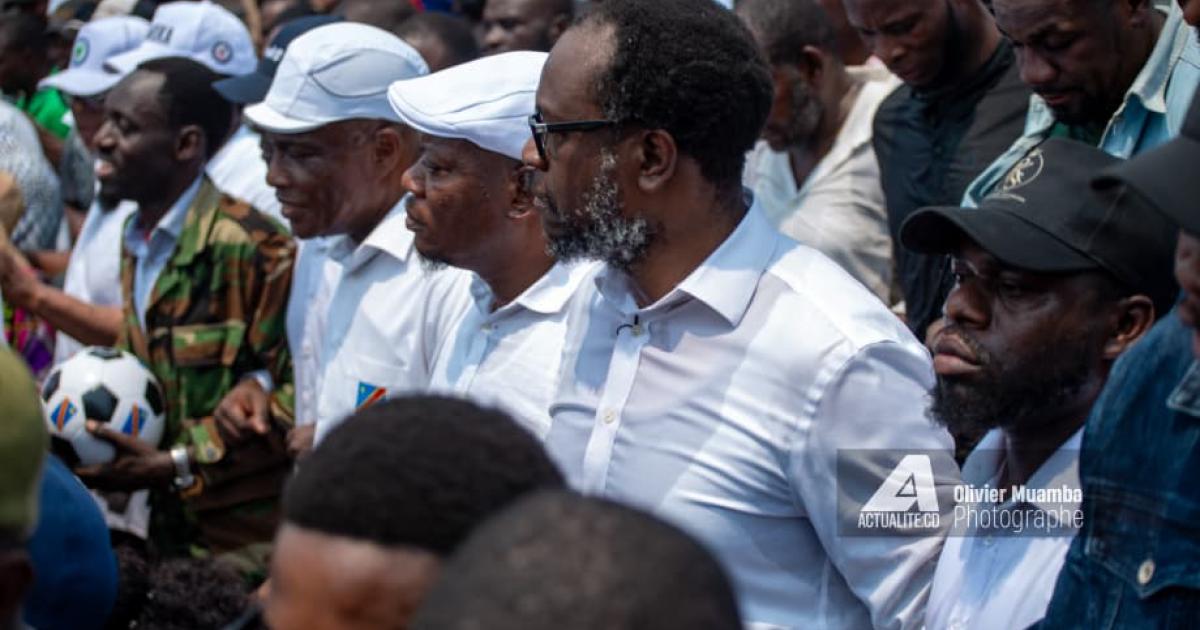
Martin Fayulu: Dénonce Détention Prince Epenge en RDC
Summary
- Martin Fayulu, president of ECIDé, has condemned the detention of Prince Epenge.
- Prince Epenge, spokesperson for the Lamuka coalition, was arrested last Sunday at N'djili International Airport.
- Fayulu is demanding that Prince Epenge's fundamental rights be respected.
A Prominent Opposition Figure's Arrest
Fayulu's call for the protection of droits fondamentaux RDC Fayulu emphasizes the importance of constitutional guarantees for all citizens, particularly those involved in political activities, and highlights the need for judicial independence.
Martin Fayulu Madidi, who leads the Engagement for Citizenship and Development (ECIDé) political party, has publicly condemned the detention of Prince Epenge. Epenge, known for his role as the spokesperson for the Lamuka coalition, was taken into custody recently, sparking immediate concern among political observers and human rights advocates in the Democratic Republic of Congo. This development highlights ongoing tensions within the country's political sphere and brings the issue of political detentions back into sharp focus.
The arrest of Prince Epenge occurred at N'djili International Airport last Sunday, an event that has quickly drawn sharp criticism from Fayulu, a significant figure in the RDC's opposition landscape. Fayulu's declaration regarding Epenge's detention underscores a broader call for adherence to legal norms and protections for political actors, emphasizing the need for transparency and due process in such cases. The incident has quickly become a point of contention, with many looking to see how authorities will respond to the demands for Epenge's rights.
Political Context and Key Players
Martin Fayulu, as the president of ECIDé, holds a prominent position in the Congolese political opposition, having been a presidential candidate in past elections. His consistent advocacy for democratic principles and good governance has made him a vocal critic of various government actions and policies. The denunciation of Prince Epenge's detention by such a high-profile figure amplifies the gravity of the situation and brings it to national and potentially international attention, signaling a potential flashpoint in the country's political discourse.
Prince Epenge serves as the official spokesperson for the Lamuka coalition, a significant political alliance that has played a crucial role in shaping the RDC's opposition narrative. His position as the Lamuka porte-parole means his detention is not merely an isolated incident concerning an individual, but rather impacts a collective political movement and its ability to freely express dissent. The circumstances surrounding the Prince Epenge arrestation N'djili raise pertinent questions about the treatment of opposition figures and the space afforded for political expression within the country's current political climate.
Upholding Fundamental Rights
In his strong statement, Martin Fayulu explicitly demanded the respect for Prince Epenge's fundamental rights, a core tenet of democratic governance. This insistence on due process and legal safeguards is a critical aspect of his condemnation, reflecting a broader concern for human rights in the RDC. Fayulu's call for the protection of droits fondamentaux RDC Fayulu emphasizes the importance of constitutional guarantees for all citizens, particularly those involved in political activities, and highlights the need for judicial independence.
The demand for respecting fundamental rights in the RDC is not a new plea, but it gains renewed urgency with each instance of political detention, especially when involving prominent opposition figures. Such declarations serve as a powerful reminder to authorities about their obligations under national and international law regarding human rights and the rule of law. The situation surrounding Prince Epenge's arrest will likely be closely watched by those concerned with civil liberties and political freedoms in the Democratic Republic of Congo, potentially influencing future political dynamics and legal interpretations.
Practical Implications
This development signals continued scrutiny over human rights and due process in the DRC, particularly concerning political detentions. Lawyers should monitor such cases for potential patterns of arbitrary arrests or violations of fundamental rights, which could inform risk assessments for clients involved in political or civil society activities, and guide strategies for legal defense or advocacy.
Source
How does this affect you?
Get an AI analysis of this article grounded in your jurisdictions, practice areas, and any policy documents you've uploaded to Wansom.
Finish Reading the Full Story and the Expert Analysis.
Wansom is AI and can make mistakes.