
C64 Conférence Présidents: Rejette Médiation Tshisekedi-Kabila
Summary
- The Conférence des présidents of Coalition Article 64 (C64) reasserted its authority as the platform's primary decision-making body.
- It explicitly rejected any mediation initiative between President Félix Tshisekedi and Joseph Kabila, contrary to the Présidium's earlier announcement.
- The Conférence des présidents demanded strict adherence to the C64's founding texts and governance mechanisms by its Présidium.
- The coalition called for the immediate and unconditional release of three of its members: Marley Vuvu, Prince Epenge, and Stéphane Shiso.
- These actions highlight significant internal divergences within the C64 regarding its strategic direction and leadership.
Internal Power Dynamics within C64
A central point of contention and a key directive from the Conférence des présidents was the outright rejection of any mediation efforts between President Tshisekedi and former President Kabila.
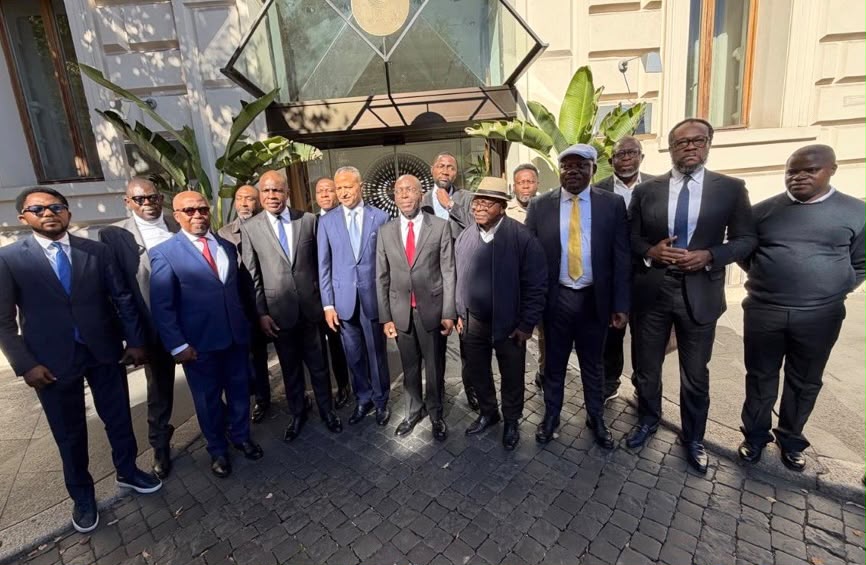
The Coalition Article 64 (C64) recently saw its Conférence des présidents reassert its authority, effectively recadrant or reframing the role of its Présidium. This significant declaration, issued on Wednesday, October 28, 2026, from Kinshasa, underscored the Conférence des présidents' position as the ultimate decision-making body for the political platform. The move came directly after the Présidium concluded its Conclave de Rome on October 27, where it had announced plans to initiate dialogue between President Félix Tshisekedi and his predecessor, Joseph Kabila.
The Conférence des présidents explicitly called upon the Présidium to adhere strictly to the foundational documents governing the coalition. It emphasized that all decisions binding the C64 must be made in full compliance with the governance mechanisms outlined in the coalition's Pacte de confiance. Furthermore, the declaration reiterated that the Conférence des présidents holds the sole mandate to define the strategic direction of the platform, stressing that the principle of collegiality must guide every political endeavor undertaken by the C64. This public clarification highlights significant divergences internes C64 regarding leadership and strategic priorities.
Rejection of Mediation and Policy Stance
A central point of contention and a key directive from the Conférence des présidents was the outright rejection of any mediation efforts between President Tshisekedi and former President Kabila. The Conférence des présidents firmly opposed any initiative that would position the Présidium as a mediator in such a high-stakes political engagement. It articulated that the fundamental mission of the Coalition Article 64 RDC is to safeguard the constitutional order and protect the democratic achievements within the country.
The Conférence des présidents clarified that any potential political mediation could only be considered legitimate if it were part of a broader, inclusive national dialogue. Such a dialogue, it specified, would need to involve widely recognized stakeholders, including the National Episcopal Conference of Congo (CENCO), the Church of Christ in Congo (ECC), the African Union, or other international partners. This stance directly countered the Présidium's earlier announcement from the Conclave de Rome C64 regarding its intention to facilitate such a dialogue.
Call for Member Release and Democratic Principles
Beyond internal governance and political strategy, the Conférence des présidents of the C64 also issued a strong demand concerning the judicial sphere. The coalition called for the immediate and unconditional liberation of its members, specifically naming Marley Vuvu, Prince Epenge, and Stéphane Shiso. Marley Vuvu had been released on August 27, 2026, but the Conférence des présidents asserted that Prince Epenge and Stéphane Shiso must be released without delay.
The declaration underscored the C64's unwavering commitment to upholding public liberties and democratic principles throughout the Democratic Republic of Congo. The coalition affirmed its intention to continue its advocacy in this regard, signaling that the demand for the release of its members is integral to its broader mission of defending human rights and due process in the nation. This firm position on the release of its members, coupled with the internal leadership dispute, paints a complex picture of the C64's current operational environment.
Practical Implications
Lawyers advising on political risk or human rights in the DRC should note the internal divisions within C64 and the demand for the release of its members, as these developments reflect ongoing political tensions that could influence legal stability and due process in the country. This internal conflict may affect the coalition's future political actions and legal standing.
Source
How does this affect you?
Get an AI analysis of this article grounded in your jurisdictions, practice areas, and any policy documents you've uploaded to Wansom.
Finish Reading the Full Story and the Expert Analysis.
Wansom is AI and can make mistakes.